The main points
- Milos's sailing season runs May through October, and the Aegean around Milos sits at 23-26°C (73-79°F) in July to September.[1][2]
- Full-day boat trips run 6-8 hours and can reach up to 12 depending on sea conditions; the tour booked here is listed at 10 hours.[3][4]
- Low, central seats outside are often the easiest place to sit, and fresh air with the horizon in view helps most people settle.
- Seasickness tablets work as prevention, so take them before you step on board and follow the packet instructions.
- If a full day sounds like too much, a half-day speedboat cruise runs 5 hours and still reaches Kleftiko Caves and Sykia Cave.[5]
- Top choice Kleftiko & Polyaigos from US$185 Duration10 hours[4]Rating4.82 from 282 reviews[4]GuideEnglish[4]Free cancellation24 hours ahead[4] Check availability
- Guided Kleftiko day cruise from US$152 Duration9.5 hours[6]Rating4.96 from 781 reviews[6]GuideEnglish, French, Greek[6]Free cancellation24 hours ahead[6] See this tour
- Milos & Polyaigos sailboat from US$144 Duration10 hours[7]Rating4.92 from 1,913 reviews[7]GuideGreek, English[7]Free cancellation24 hours ahead[7] See this tour
It is a strong seasonal northerly wind that usually blows from late spring to early autumn, often reaching its peak in July and August. In the right conditions, it creates an ideal sailing breeze for experienced crews.
Is a Milos boat trip worth it if you get seasick?
Before you board
- Choose a trip that anchors often, such as the Kleftiko and Polyaigos day from Adamantas[4]
- Keep the booking on your phone: free cancellation up to 24 hours in advance[4]
- The tour booked here is listed at 10 hours, so plan a quiet evening afterwards[4]
- Take motion sickness tablets before you leave your room, not after you feel ill
On board
- Sit outside in the shade with a view of the horizon, and keep sun cream handy
- The Aegean around Milos is 23-26°C (73-79°F) in July to September, so a light layer is enough[2]
- Wait for the anchor before moving around the deck, and use the handrails
- The tour booked here offers reserve now and pay later booking[4]
What the sea is like on a Milos boat trip
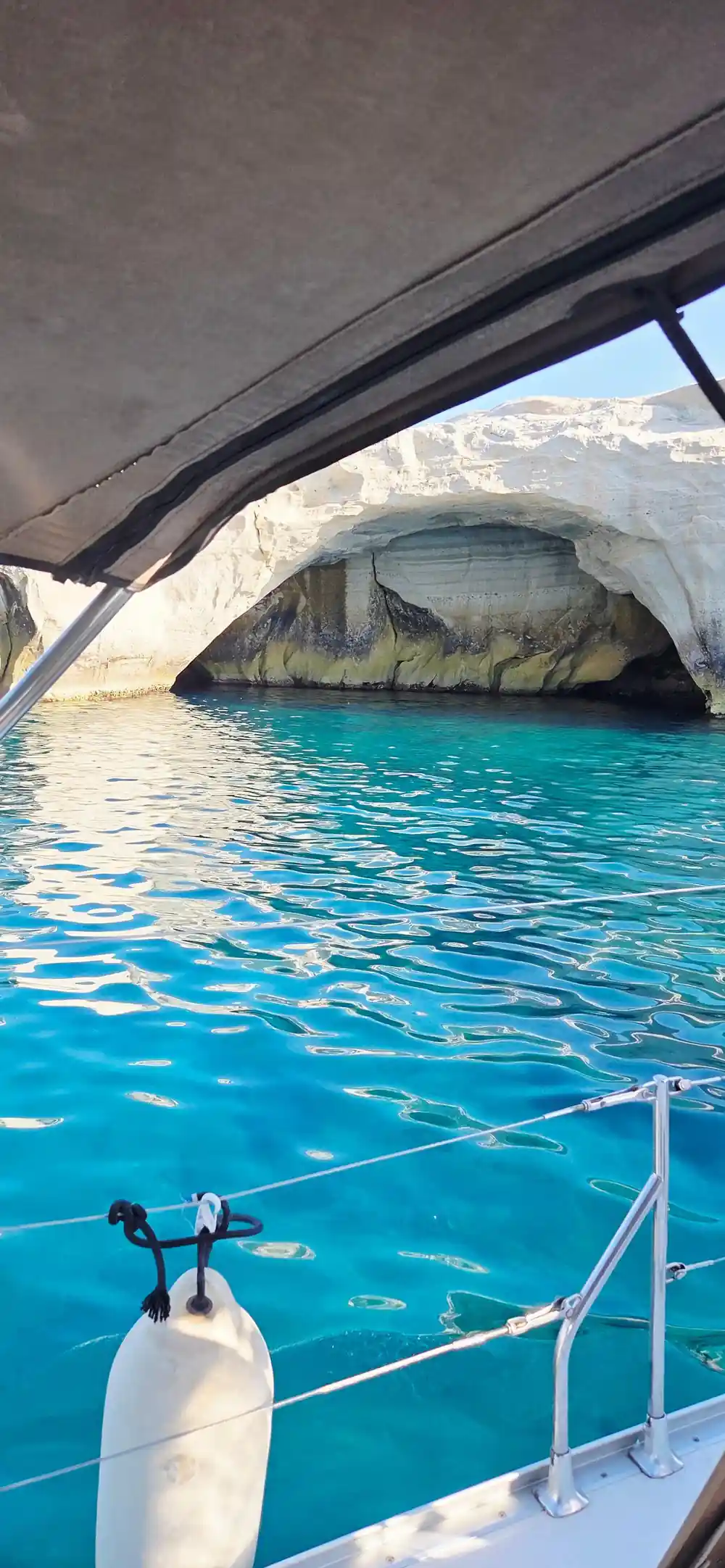
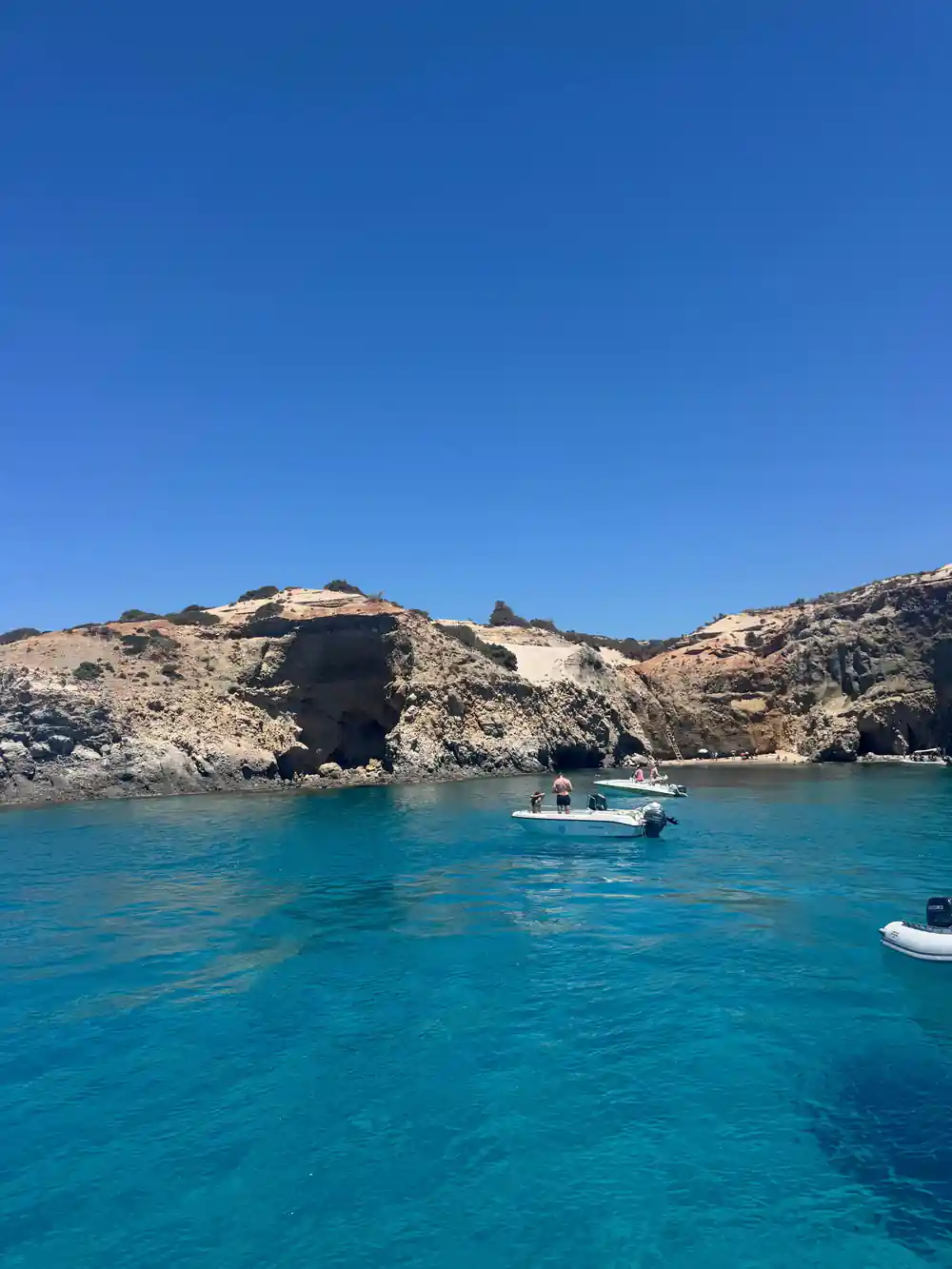
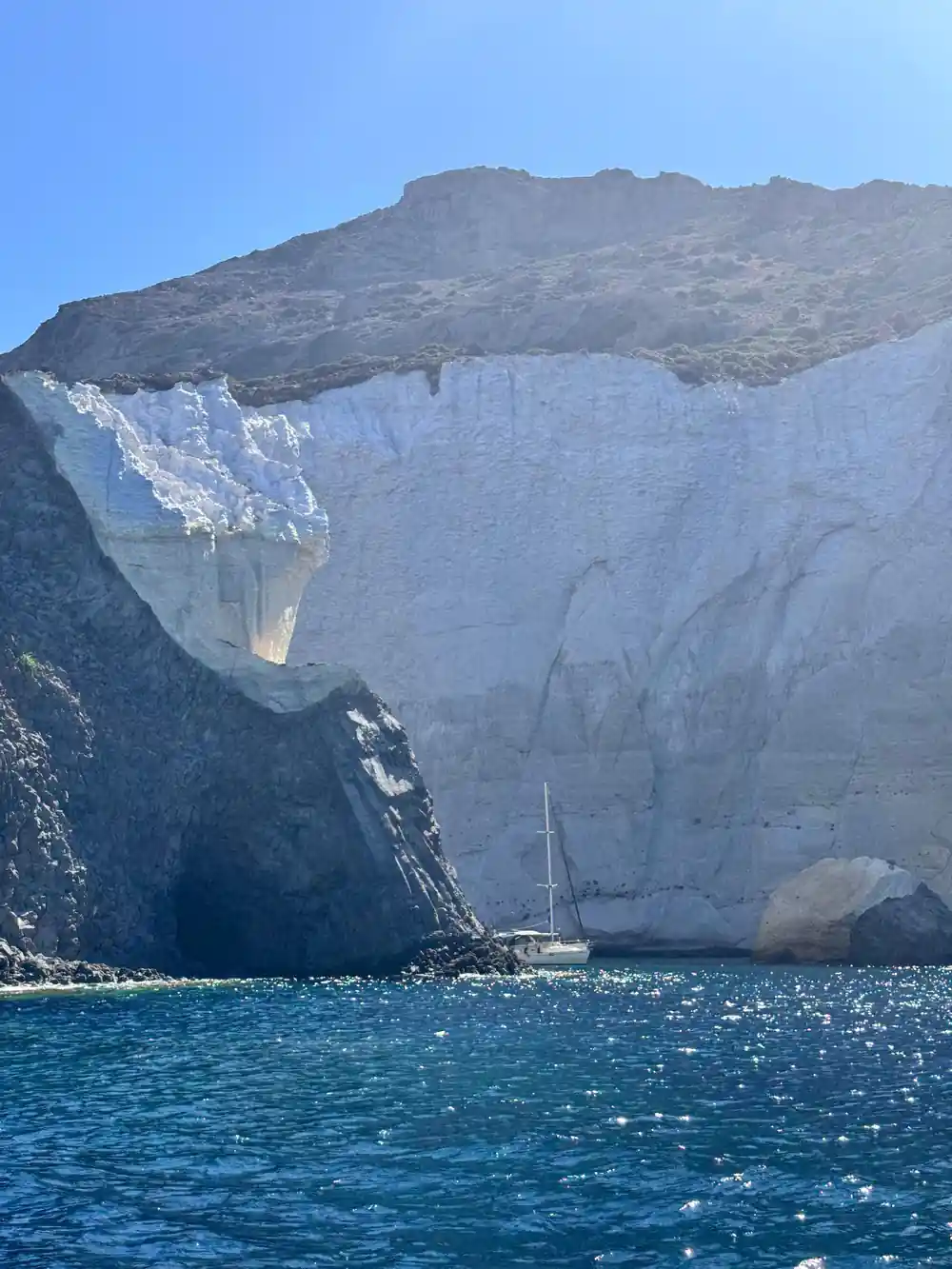
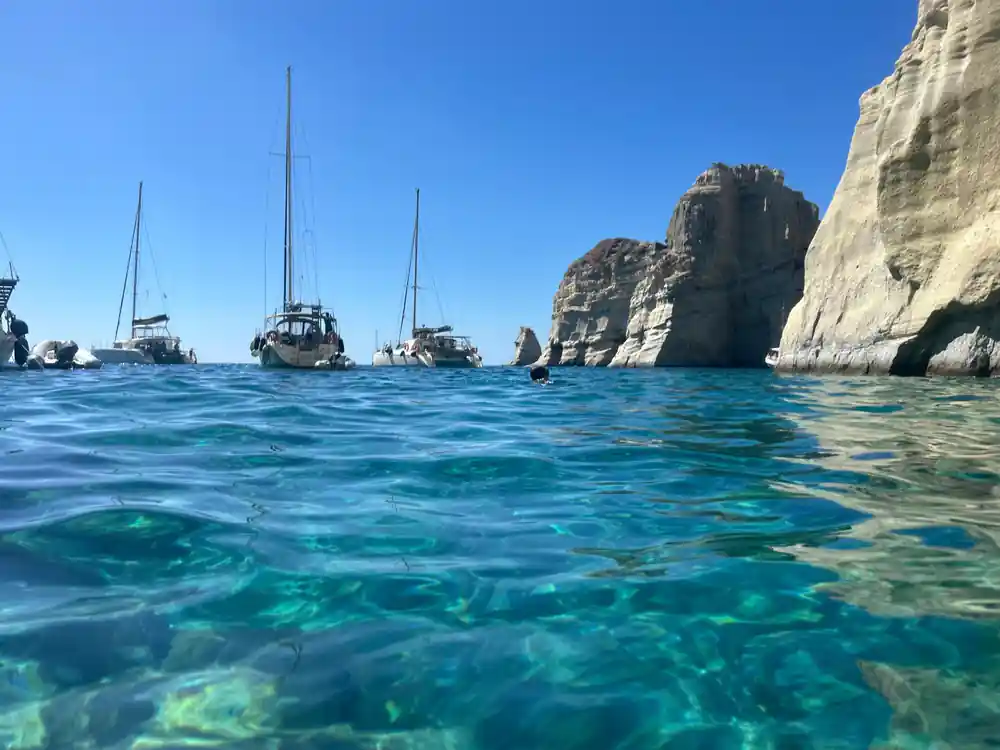
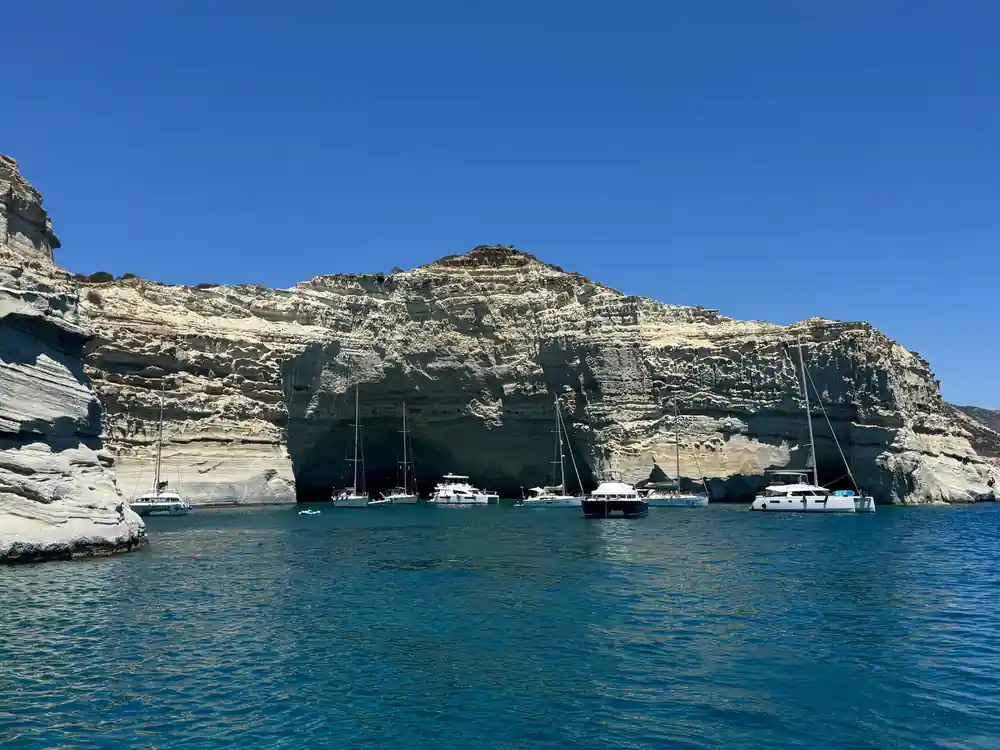
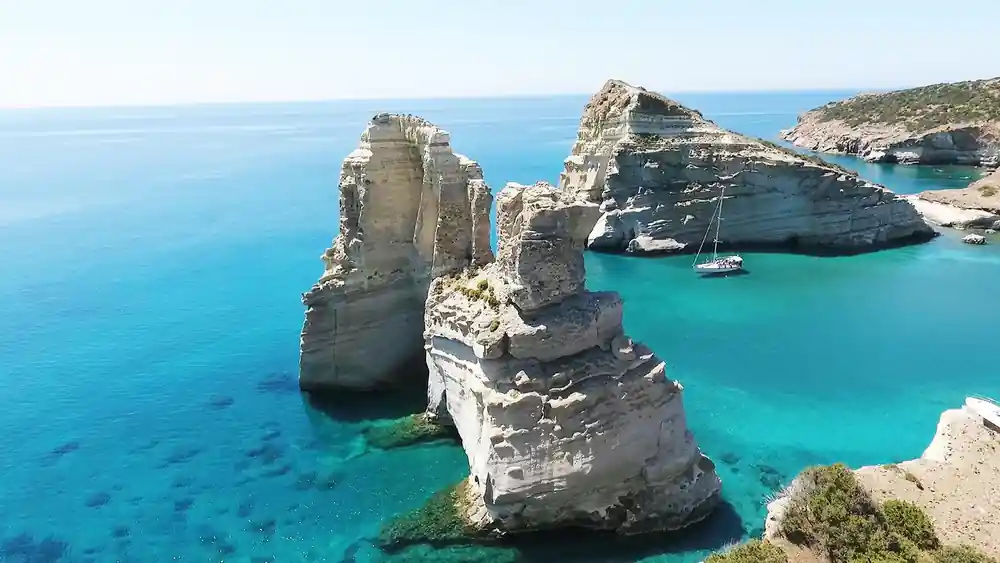
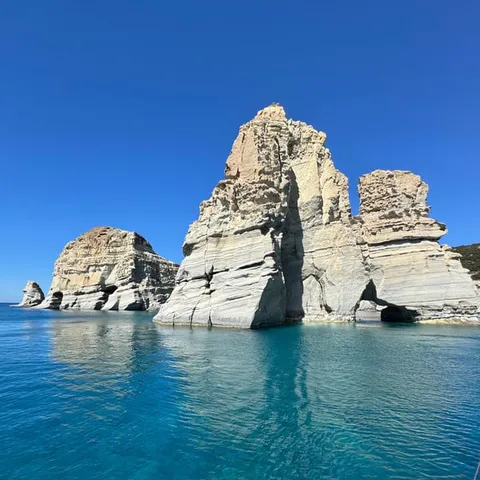
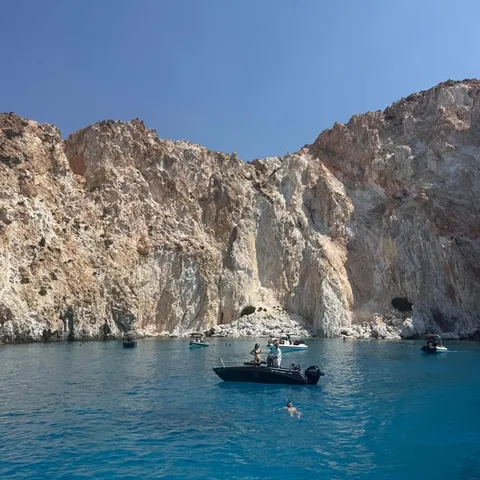
Milos is a volcanic island in the western Cyclades, and its west and south coasts are a wall of white rock, arches and sea caves. Kleftiko, the best known of them, has a history as a pirate hideout, and its name means stolen in Greek, taken from the pirates who stole supplies from passing ships and hid them in its caves and coves.[8] Sailing is how most people see this coast, and the island you cross to on the longest trips is Polyaigos, the Aegean Sea's biggest uninhabited island.[9] From the water the cliffs look close and the water below them is unusually clear.
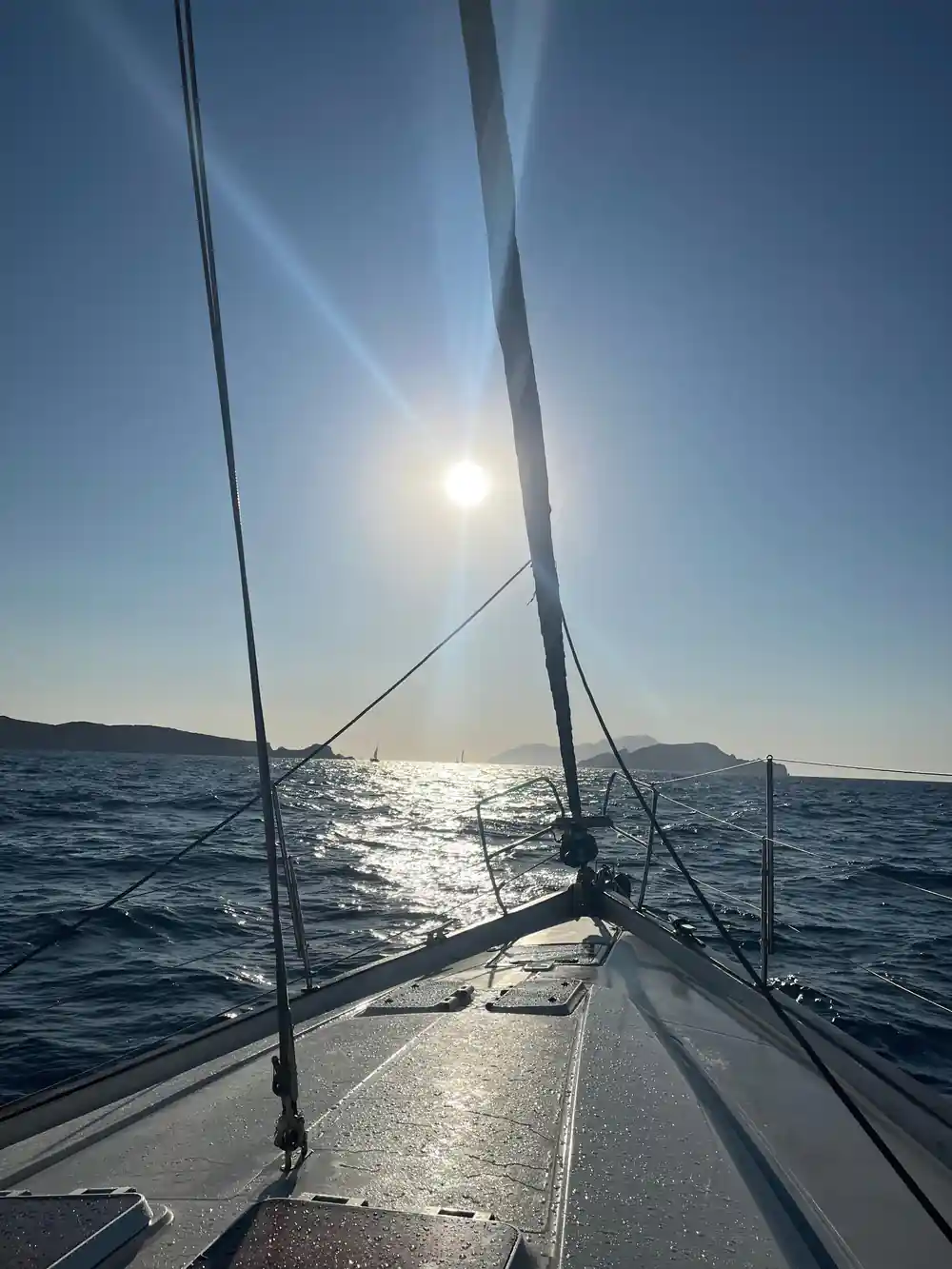
Sea conditions follow the season. The Meltemi is a strong seasonal northerly wind that blows from late spring to early autumn, often reaching its peak in July and August, and in the right conditions it creates an ideal sailing breeze for experienced crews.[10] Milos's sailing season runs from late spring through early autumn, specifically May through October.[1] Around Milos in July to September the Aegean sits at 23-26°C (73-79°F), described as ideal temperatures for long swims and snorkeling.[2] A light wind day and a strong wind day can feel like two different islands, so keep some slack in your plans.
How much movement there really is
Most of the motion happens while the boat is under way, not while you are in the water. A full day out is genuinely long: full-day boat trips on Milos range from 6-8 hours and can even go up to 12 depending on sea conditions.[3] The trip booked here is listed at 10 hours, with swimming stops that include Kleftiko Caves and Sykia Cave.[4] The good news is that the two headline stops sit in flat water. Kleftiko's caves and Sykia's collapsed sea cave are anchorages, and at an anchorage the boat simply stops and you swim.
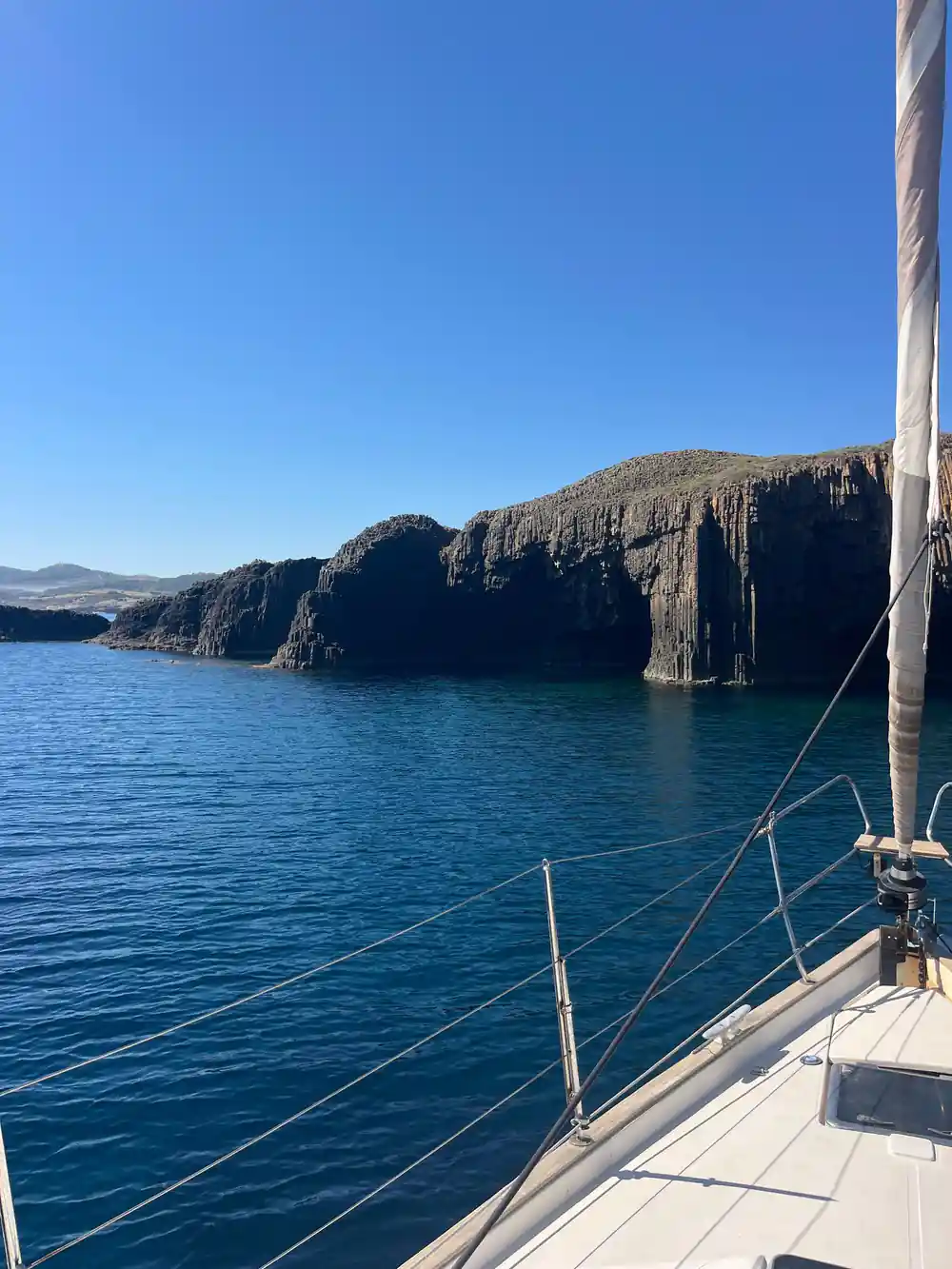
The long open stretches are the ones to think about. The run out to Polyaigos crosses open water, and it is the part of the day where most people first notice the swell. Glaronisia, a group of three small uninhabited volcanic islets off the north coast of Milos, known for hexagonal basalt columns that rise straight from the sea, is another stretch with nothing to hide behind.[11] Boat type matters as much as the forecast. A catamaran has two hulls and tends to stay level, a monohull sailboat leans when the sails fill and then settles, and a speedboat is fast and light and thumps into chop. If you are worried, choose by hull and route rather than by price alone.
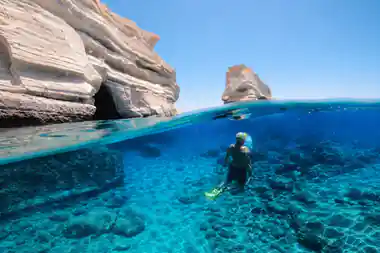
Swimmers in clear water below the white rock stacks at Kleftiko.
Where to sit on the boat
Low, central and outside is the rule on any boat. The middle of the main deck moves less than the bow, the upper deck or a bunk below, and sitting in fresh air with the horizon in front of you helps your eyes and your inner ear agree with each other. Face forward, rest your head against something solid, and leave the phone in your bag. Scrolling through photos while the boat rolls is a classic way to bring on a wave of nausea.
Every trip on Milos starts from Adamantas, which sits in the centre of the island.[12] Get to the port in good time so you can pick a seat rather than take what is left, and ask the crew where they would sit if the wind picks up, because they know the boat. On a catamaran the shaded cockpit behind the cabin is steadier than the front trampoline. On a sailboat the benches around the mast and the aft cockpit are more comfortable than the foredeck. On a speedboat, sit towards the stern.
Tablets and when to take them
Motion sickness tablets work as prevention, not as a rescue. Take them before you step on board, while you are still on solid ground, and follow the instructions on the packet. The common ingredients are hyoscine, dimenhydrinate and meclizine, and there are also ginger chews and acupressure bands for anyone who would rather avoid medication. Some of them make you drowsy, which matters little when you are dozing in the shade on deck, so plan a quiet evening afterwards.
Pack the tablets in your day bag, not in the suitcase you left at the hotel, and take water with you. If you are pregnant, on other medication or managing a condition, ask a pharmacist or doctor before you sail. It also helps to know you can change your mind: the tour booked here offers reserve now and pay later booking, and free cancellation up to 24 hours in advance.[4]
from US$185
The tour booked from this site is a full-day Kleftiko and Polyaigos trip with meals, rated 4.82 from 282 reviews.[4]
Eating on a moving boat
Eat something plain and familiar before you leave the port, and keep it small. A heavy, greasy breakfast, a lot of coffee or a few drinks the night before all make a boat day harder. Once you are on the water, nibbling works better than a feast: bread, rice, plain biscuits, fruit, water and ginger tea are the usual standbys. Fizzy drinks and very sweet things are the ones people tend to regret.
On most full-day trips the main meal is served at an anchorage, when the boat has stopped and people are swimming between courses, and that is the easiest time of day to eat. The tour booked here is listed as a Kleftiko and Polyaigos swimming trip with meals.[4] If you would rather pick at bread and stay on deck in the air than sit down to a full plate, that is a perfectly reasonable way to spend the afternoon.
Facilities and moving about
There is a toilet on board, usually a marine head down below, and it is small. When you feel queasy, going down into a warm enclosed space is the last thing you want to do, so wait for the anchor and go then. Hold the handrails, take the steps one at a time and come straight back up into the air. If the boat is moving and you must get up, keep the trip short and keep your eyes on the horizon on the way.
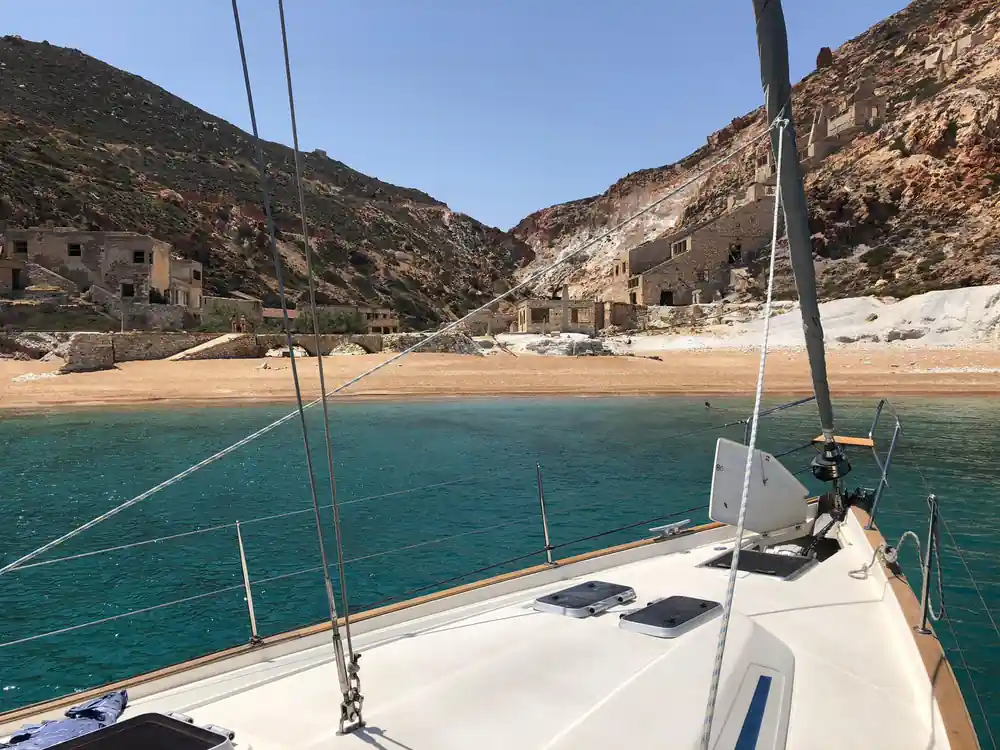
The itinerary gives you plenty of reasons to stay put on deck. The tour booked here calls at Klima, Arkoudes, Sarakiniko Beach, Glaronisia, Pollonia, Poliegos, Thiorichia Beach, Gerakas Beach, Kleftiko Caves, Sykia Cave and Vani Beach.[4] Sarakiniko Beach is the most well-known shore on Milos, five kilometres from Plaka.[13] Sikia Cave was once completely covered, and its roof collapsed at some point in the past, leaving an open top that shows the blue Aegean sky.[14] Use the anchorages to swim, eat and move about comfortably.
Children, and who tends to struggle
Young children often cope better than their parents expect: they sit low in the boat, they stay busy, and nobody has told them they are supposed to feel ill. The people who tend to struggle are adults with a history of motion sickness, migraine sufferers, pregnant travellers and anyone with an inner ear problem. If you know you are in one of those groups, the shortest trip that still reaches Kleftiko is the half-day speedboat cruise, which runs 5 hours.[5]
A full day on the water is a long time for small children, and the tour booked here is listed at 10 hours.[4] It is worth remembering that you do not need a boat tour to see Kleftiko; while most visitors arrive by sea, it is also possible to hike there on your own.[15] For families, a half-day morning cruise with an early finish and a nap back at the hotel is often the shape of day that works best.
How long the Kleftiko trips last
Durations are the listed trip lengths on GetYourGuide.[4][5][6][7]
What the Kleftiko trips cost
All amounts are GetYourGuide from-prices in US dollars.[4][5][6][7]
When to go for a calmer crossing
Beat seasickness on board
Pick a trip length you can handle
Full-day trips run 6-8 hours and can reach 12 depending on sea conditions; the tour here is listed at 10 hours.[3][4]
Take tablets before you board
Motion sickness tablets are prevention, not a cure. Take them before you leave solid ground and follow the packet instructions.
Sit low, central and outside
The middle of the boat on the main deck moves least. Face forward, keep your head still and watch the horizon.
Stay out of the cabin
A warm cabin below deck is the fastest way to feel worse. Stay in the fresh air and use the head only when the boat is anchored.
Eat light and sip water
Plain bread, rice, dry biscuits and water sit well. Skip heavy, greasy food, strong coffee and alcohol before you sail.
Book the Kleftiko and Polyaigos day trip
from US$185Reserve now & pay later