The main points
- Kleftiko means stolen in Greek, a nod to the pirates who stole supplies from passing ships and hid them in its caves and coves.[1]
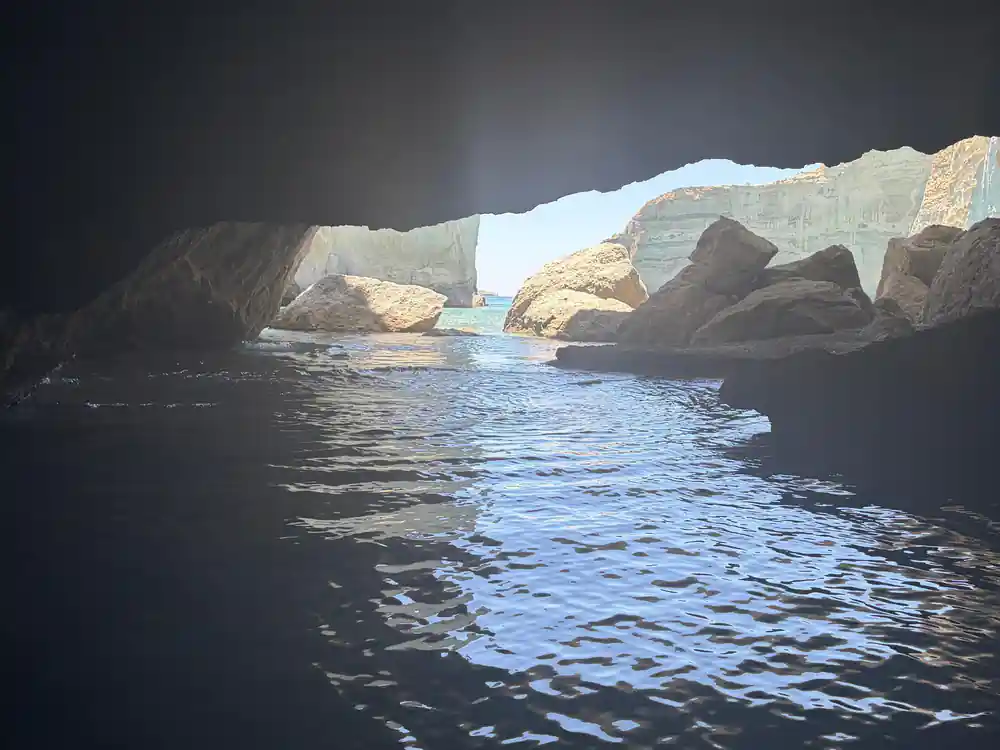
- Sikia Cave lost its roof and now opens to the sky, while the bay's pillars and arches were cut by wind, salt and winter swell.[2]
- Boat tours leave from Adamantas in the centre of the island, and hiking in on your own is possible too.[3][4]
- The Milos sailing season runs from May through October, with sea temperatures of 23-26°C (73-79°F) from July to September.[5][6]
- A 10-hour full-day trip to Kleftiko and Polyaigos with meals, an English-speaking guide and free cancellation up to 24 hours ahead.[7]
- Top choice Kleftiko & Polyaigos trip from US$185 Duration10 hours[7]Rating4.82 from 282 reviews[7]GuideEnglish[7]Free cancellationUp to 24 hours ahead[7] Check availability
- Guided cruise to Kleftiko from US$152 Duration9.5 hours[8]Rating4.96 from 781 reviews[8]GuideEnglish, French, Greek[8]Free cancellationUp to 24 hours ahead[8] See this tour
- Milos & Polyaigos sailboat from US$144 Duration10 hours[9]Rating4.92 from 1,913 reviews[9]GuideGreek, English[9]Free cancellationUp to 24 hours ahead[9] See this tour
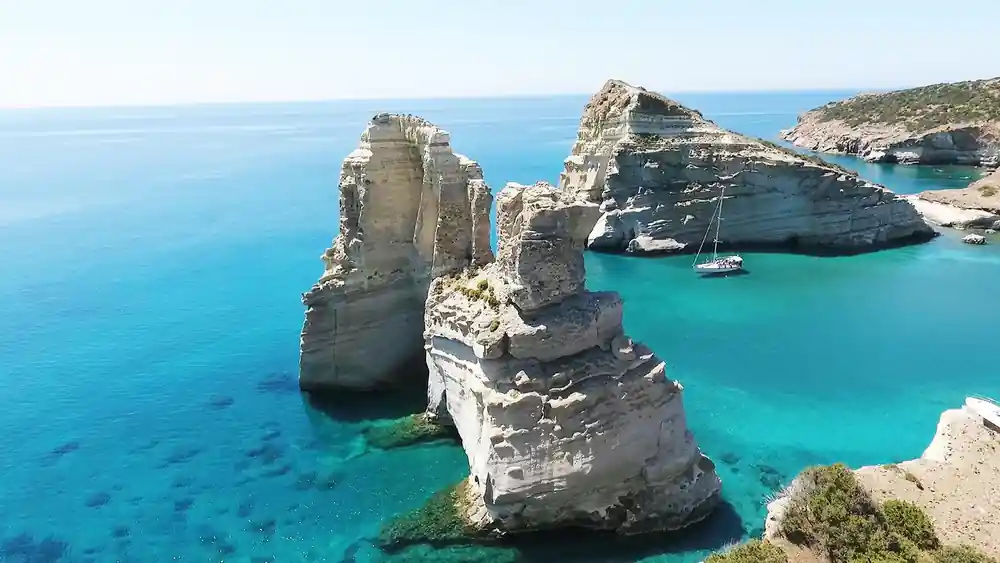
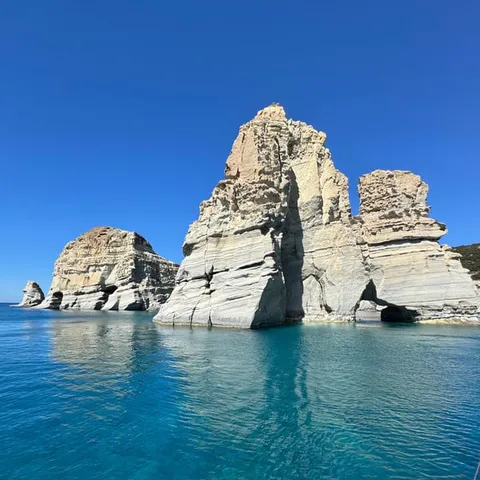
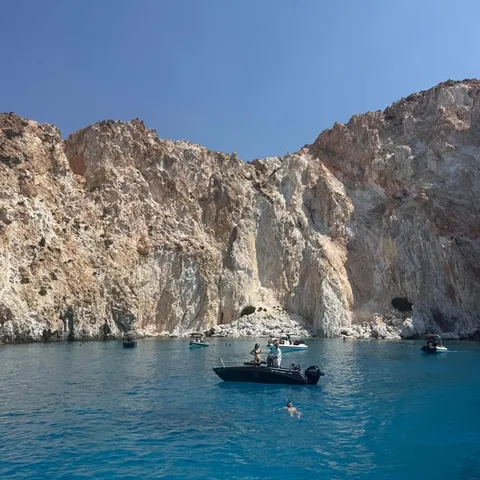
Kleftiko has a rich history dating back to ancient times when it was used as a pirate hideout. The word Kleftiko actually means "stolen" in Greek, and the name is said to come from the pirates who were stealing supplies from passing ships and hiding them in the caves and coves of the area.
Is the Kleftiko boat tour worth it?
Check before booking
- Prices on the listings are per-person from-prices, so check the figure for your own date
- Departure times vary by day, so confirm yours when you reserve
- Free cancellation is standard on the main Kleftiko boat listings
- Trips leave from the port area at Adamantas, in the centre of the island
On the day
- Sun cream, a hat and a light long-sleeved shirt for the crossing
- Shoes with grip for wet rock, and nothing you mind getting salty
- Tell the crew early if you want to snorkel or stay in the water longer
- The sea stays warm through high summer, but the wind can feel cool when you are wet
What the name Kleftiko actually means
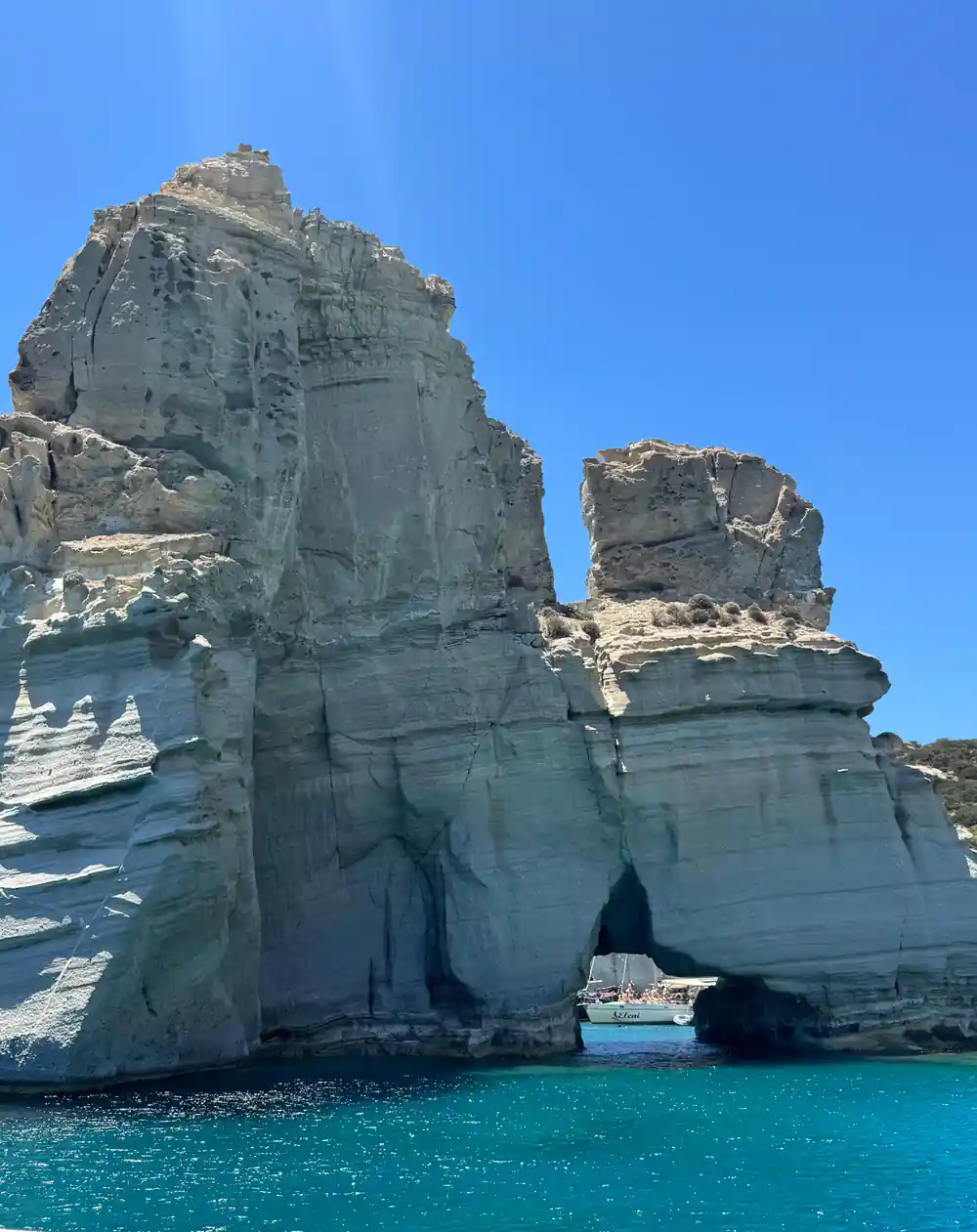
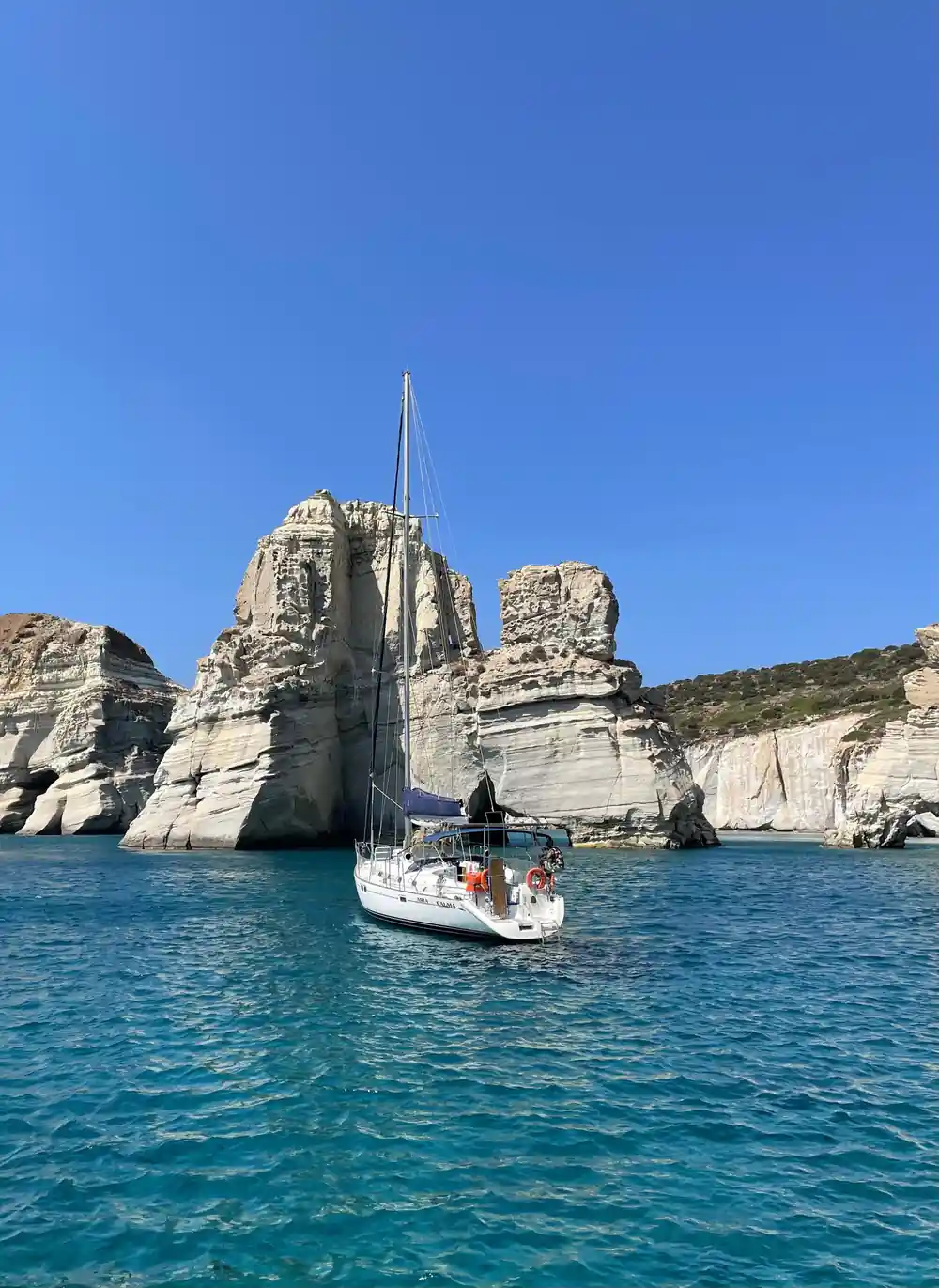
Kleftiko means stolen in Greek, and the name is said to come from the pirates who stole supplies from passing ships and hid them in the caves and coves of the bay.[1] Sail in and the story sits easily on the place. A pale headland hides the entrance, and behind it the coast breaks into stacks, arches and dark cave mouths, with a narrow channel of blue water running between them. Nothing about the approach looks like a harbour.
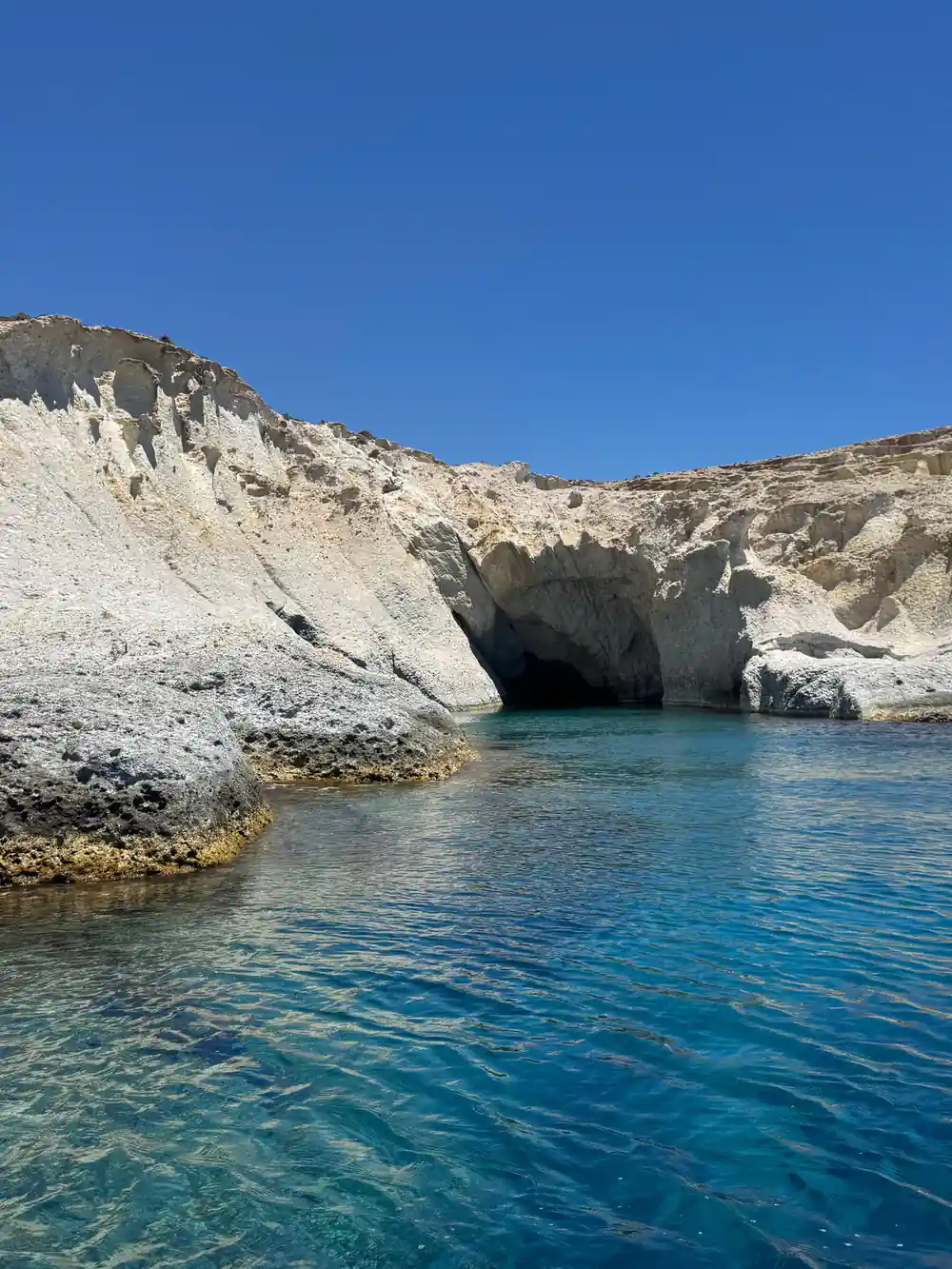
The bay sits on the southwest coast of Milos, the volcanic island at the western end of the Cyclades. It is marked on charts and in skipper talk simply as Kleftiko, and it behaves like the rest of this coast: white rock above, deep blue below, and a handful of boats swinging on their anchors in what looks like the middle of nowhere. The rock itself is limestone and volcanic stone, worked by wind, salt and winter swell into the shapes that now draw the boats in.
Kleftiko Greece: a pirate hideout in the Cyclades
Pirates working the Aegean did not need a fortress. They needed a quiet anchorage, shade in the middle of the day, and a channel wide enough to slip out of when a sail appeared on the horizon. Kleftiko offers all three in a very small space: an entrance that is hard to pick out from open water, rock walls that give cover, and deep water close in where a boat can sit without a jetty. The name is a memory of that trade, and of the goods kept in the caves and coves of the area.[1]
Position does the rest. The bay lies on the wild southwest coast, well away from the island's main town, so anyone anchored there has crossed open water to get in. That distance is a large part of what people come for now: no taverna on the shore, no line of sunbeds, just water moving in and out of the caves, gulls circling the stacks and the smell of thyme coming off the cliffs above.
White rock stacks and arches standing clear of the water at Kleftiko
How the white cliffs and caves were formed
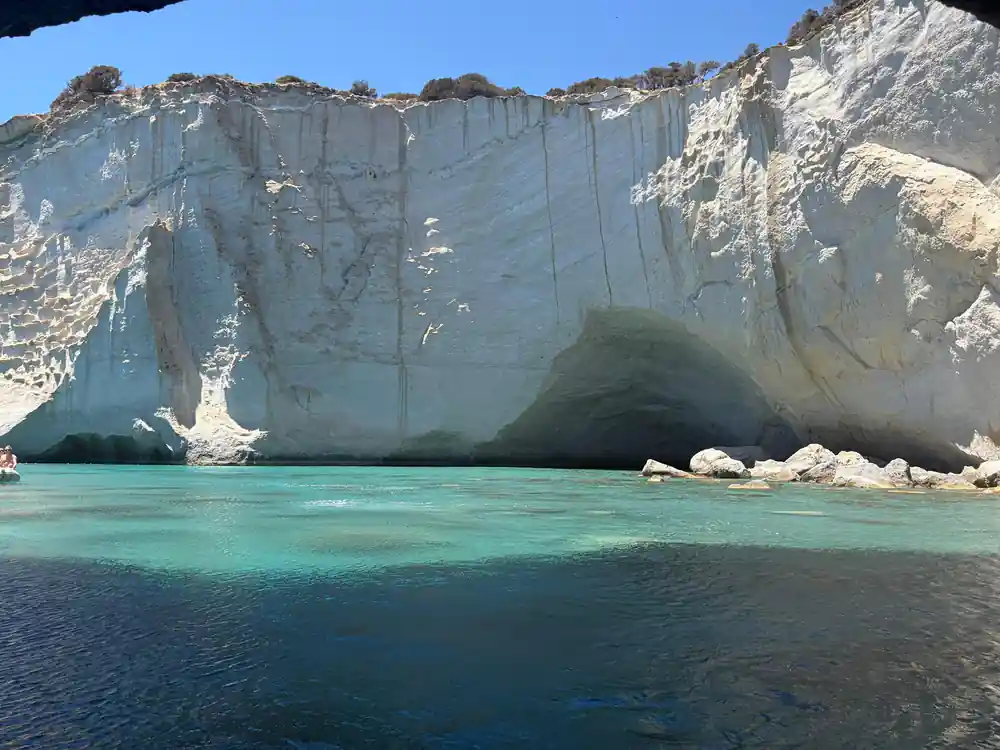
Milos is a volcanic island, and that is the first clue to everything you see at Kleftiko. The pale rock that frames the bay is a mix of limestone and volcanic material, laid down in layers and then tilted and faulted as the island rose and settled. Wind, salt and winter swell did the rest, widening cracks into gullies, hollowing softer bands into caves, and cutting the arches and pillars that now stand clear of the water.
The sea keeps working on it. A little along the coast, Sikia Cave was once completely covered, until its roof collapsed and left an open top showing the blue Aegean sky.[2] People have used the island's stone for a very long time as well: at the dawn of the Neolithic age, around 8000 BC, mineral activity began on Milos with the mining and trading of obsidian, a hard black volcanic stone suitable for making tools and weapons.[10] That dark stone still shows through the white faces around the bay.
Why the water in the bay glows
Colour here is mostly about light and what lies underneath it. The cliffs are pale, so sunlight bounces back up into the water; the bottom is a patchwork of pale sand, seagrass and dark rock; and there is little sediment in the water to scatter the light and dull it down. On a still morning the shallows read as green over sand and turquoise over rock, while the deeper channel outside the entrance keeps its own dark blue.
The hour changes it more than anything else. Early and late in the day the sun is low, the cliffs throw long shade across the bay, and the water turns ink blue while the white rock picks up a warm gold edge. Around midday, with the sun overhead, the caves seem to light up from inside and you can see the bottom clearly in the shallows. Flat grey days take the shine off it, though the water still keeps a bright green rim along the rocks.
from US$185
The Kleftiko and Polyaigos tour runs 10 hours with an English-speaking guide and meals, and offers free cancellation up to 24 hours ahead.[7]
Getting to Kleftiko: boats, hikes and day trips
Nearly everyone arrives by boat. Tours around Milos start from Adamantas, the port in the centre of the island, where you can walk the quay and see the options for yourself.[3] The season runs from late spring through early autumn, and in practice from May through October.[5] Full-day boat trips range from 6-8 hours and can even go up to 12 depending on sea conditions.[11]
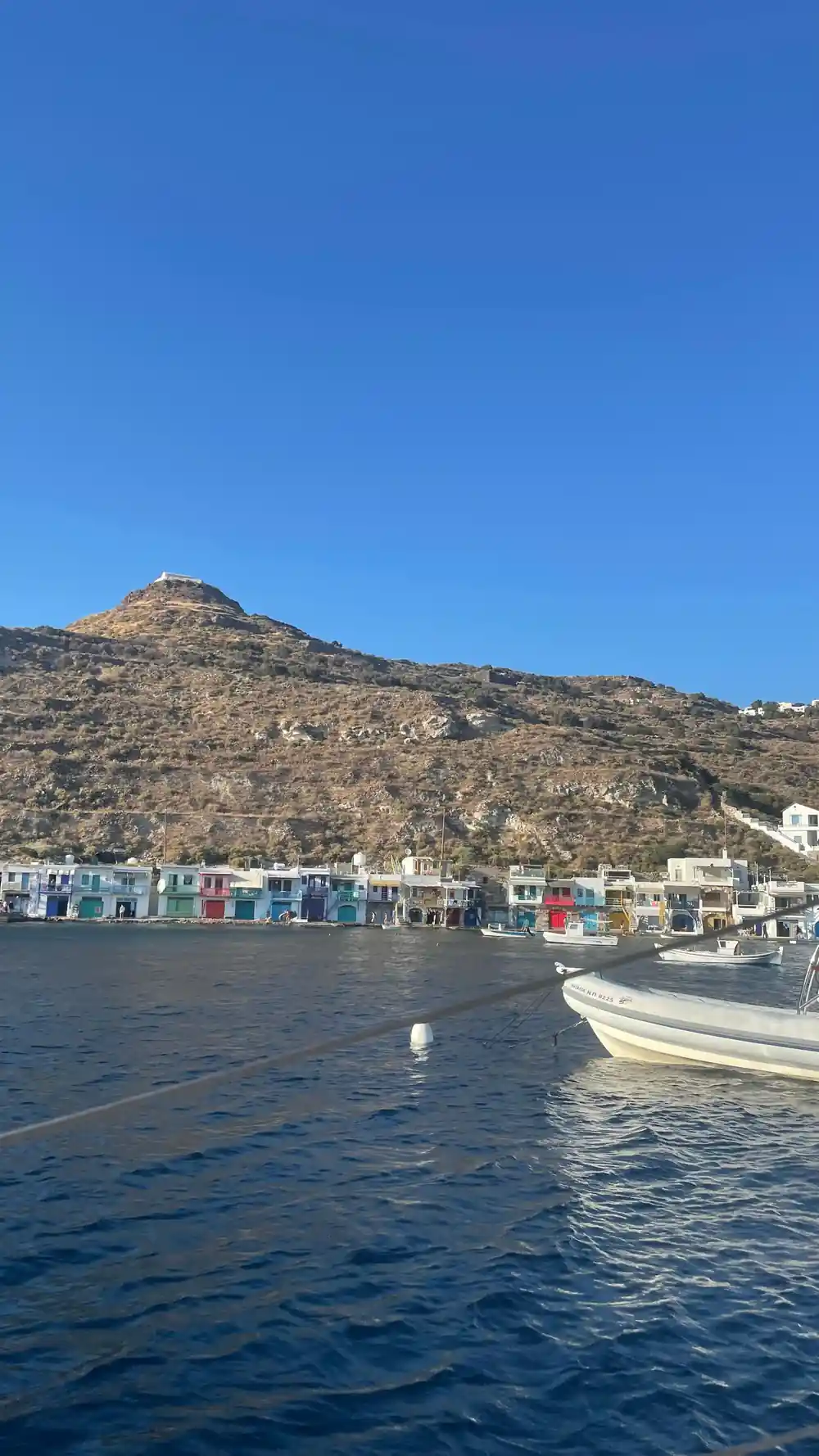
Kleftiko beach Milos Greece sits at the end of the island's wildest stretch of coast, and the crossing is part of the day rather than dead time. A boat is not the only way in, either: you do not need a boat tour to reach Kleftiko, since it is also possible to hike there on your own.[4] The walk is long, hot and exposed, and you carry all your own water. One stop on the way out is often Klima, the village of multi-coloured fishing houses about five kilometres from the port of Adamas.[12]
What a Kleftiko boat stop is really like
The Kleftiko beach stop on these trips lasts long enough to swim twice and eat once. The full-day Kleftiko and Polyaigos trip runs ten hours with an English-speaking guide and meals, and its stop list takes in Klima, Arkoudes, Sarakiniko Beach, Glaronisia, Pollonia, Poliegos, Thiorichia Beach, Gerakas Beach, Kleftiko Caves, Sikia Cave and Vani Beach.[7]
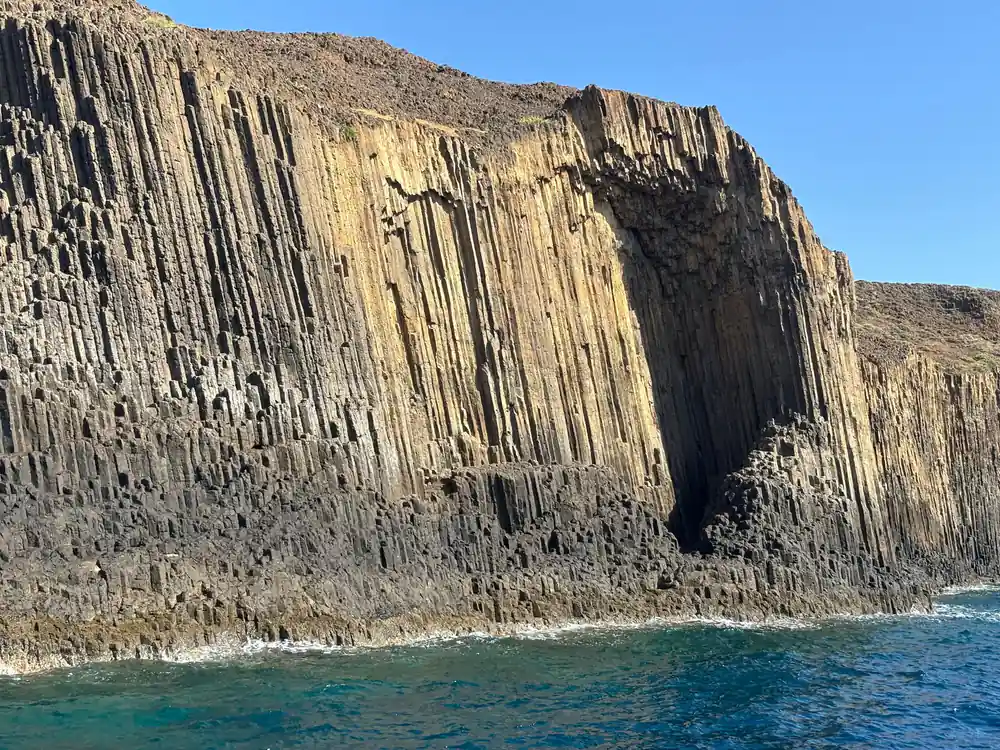
Glaronisia is a group of three small uninhabited volcanic islets off the north coast whose name means Seagull Islands, known for hexagonal basalt columns rising straight from the sea.[13] Polyaigos, the Aegean's biggest uninhabited island, comes later in the day.[14] Kleftiko beach Milos, meanwhile, is really a bay rather than a beach: white rock, deep water, a small pebble shelf and caves you can swim into, with the boat anchored a short distance off.
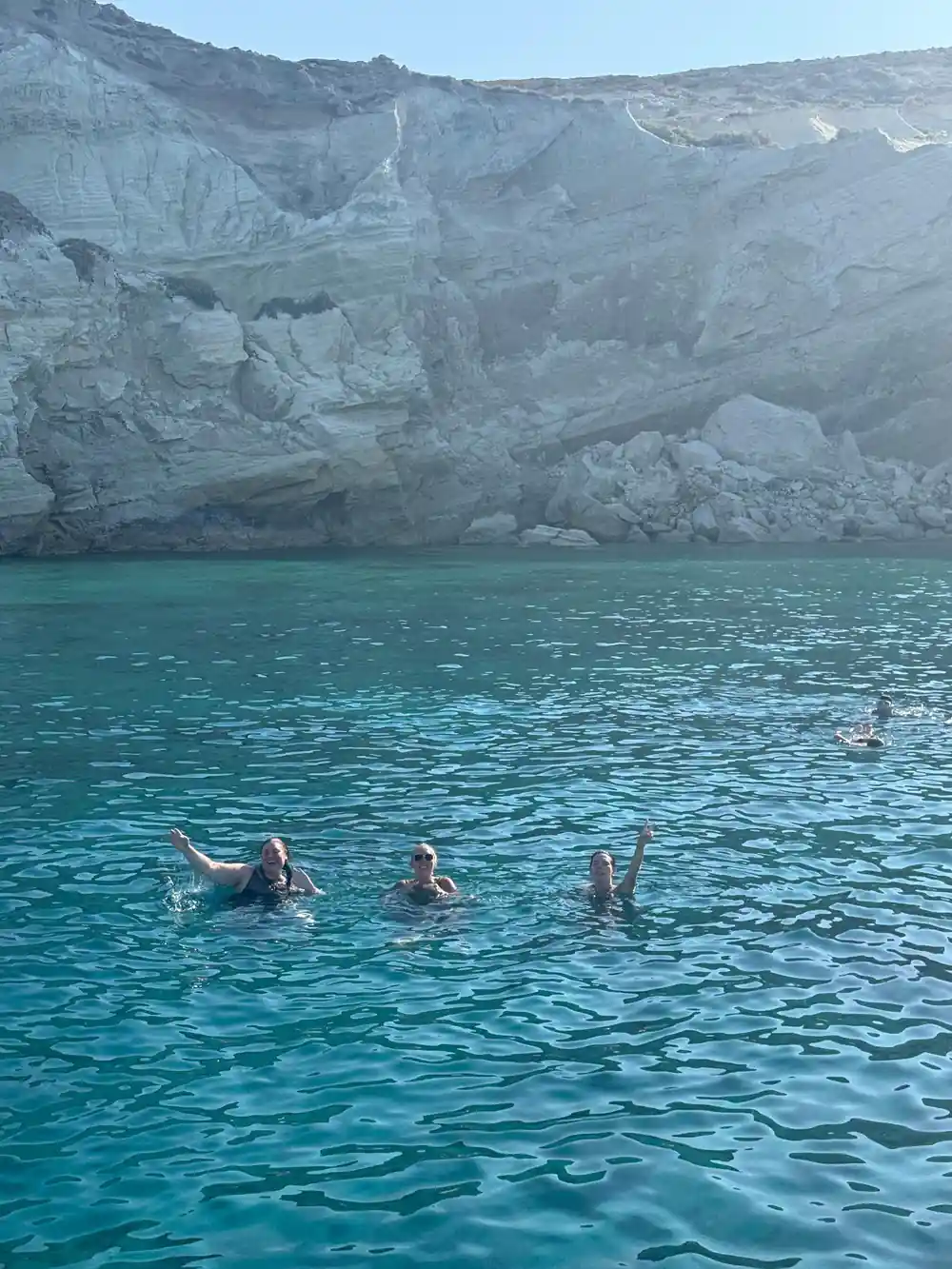
Swimming is the whole point of the stop. Boats anchor in the shelter of the bay, and you can move between the caves, the arches and the open water at your own pace while the crew keeps an eye out. Bring a mask if you have one, because the rock walls drop away quickly into deep water and there is plenty to look at along them.
When to go: wind, water and light
The wind to know is the Meltemi, a strong seasonal northerly that blows from late spring to early autumn and often peaks in July and August.[15] It decides what a day on the water feels like. Sheltered stretches give flat swimming water, exposed ones give a bumpier ride and spray over the bow, and a skipper will pick the side that works on the day. Forecasts shift quickly, so keeping a day or two flexible in your plan pays off.
Sea temperature is rarely the problem in high summer. Around Milos the Aegean sits at 23-26°C (73-79°F) from July to September, described as ideal temperatures for long swims and snorkelling.[6] When the wind gets up, a windproof layer takes the chill off the ride home, and a thin wetsuit top helps if you like to stay in the water a long time. Shoes that grip wet rock and a dry bag for your phone earn their place in your bag too.
From prices per person, Kleftiko boat tours
Compare from-prices for Kleftiko trips
All amounts are per-person from-prices in US dollars:[7][8][9][16]
When to sail to Kleftiko
Plan your Kleftiko day
Decide on a half or full day
Full-day trips run much longer than half-day ones, so pick the one that matches how much time you want on the water.
Book ahead in high summer
Peak weeks fill up, so reserve your date early and keep a spare day free in case the wind turns.
Pack light but pack right
Swimsuit on, towel, sun cream, hat, a windproof layer and shoes that grip wet rock cover almost everything.
Confirm the meeting point
Boats gather around the port area, so check the exact spot and the departure time the evening before you sail.
Keep the day flexible
Crews adjust the route for sea conditions, so treat the stop list as a plan rather than a promise.
See dates for the Kleftiko and Polyaigos boat tour
from US$185Reserve now & pay later