









What the Kleftiko Milos boat tour actually is
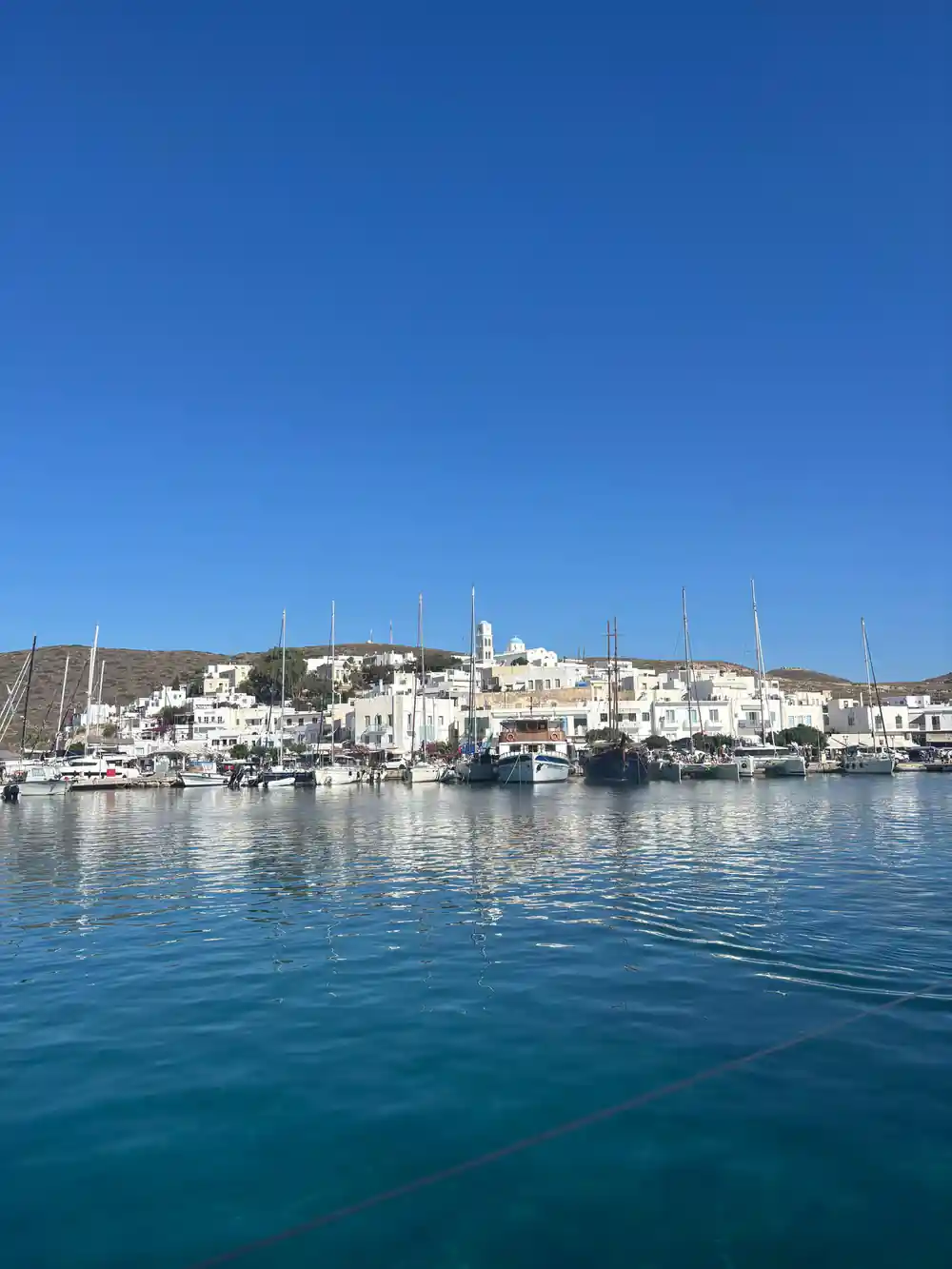
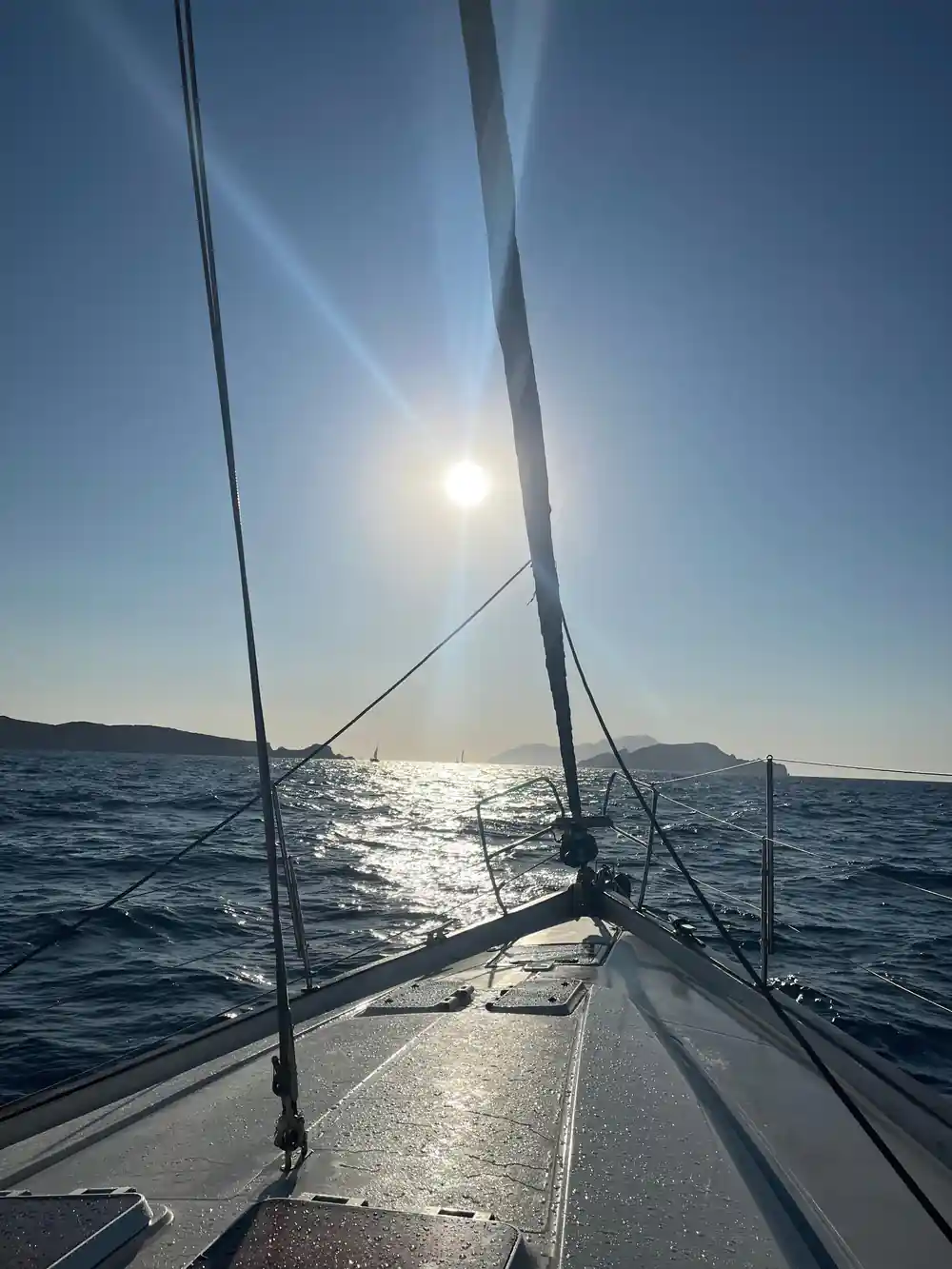
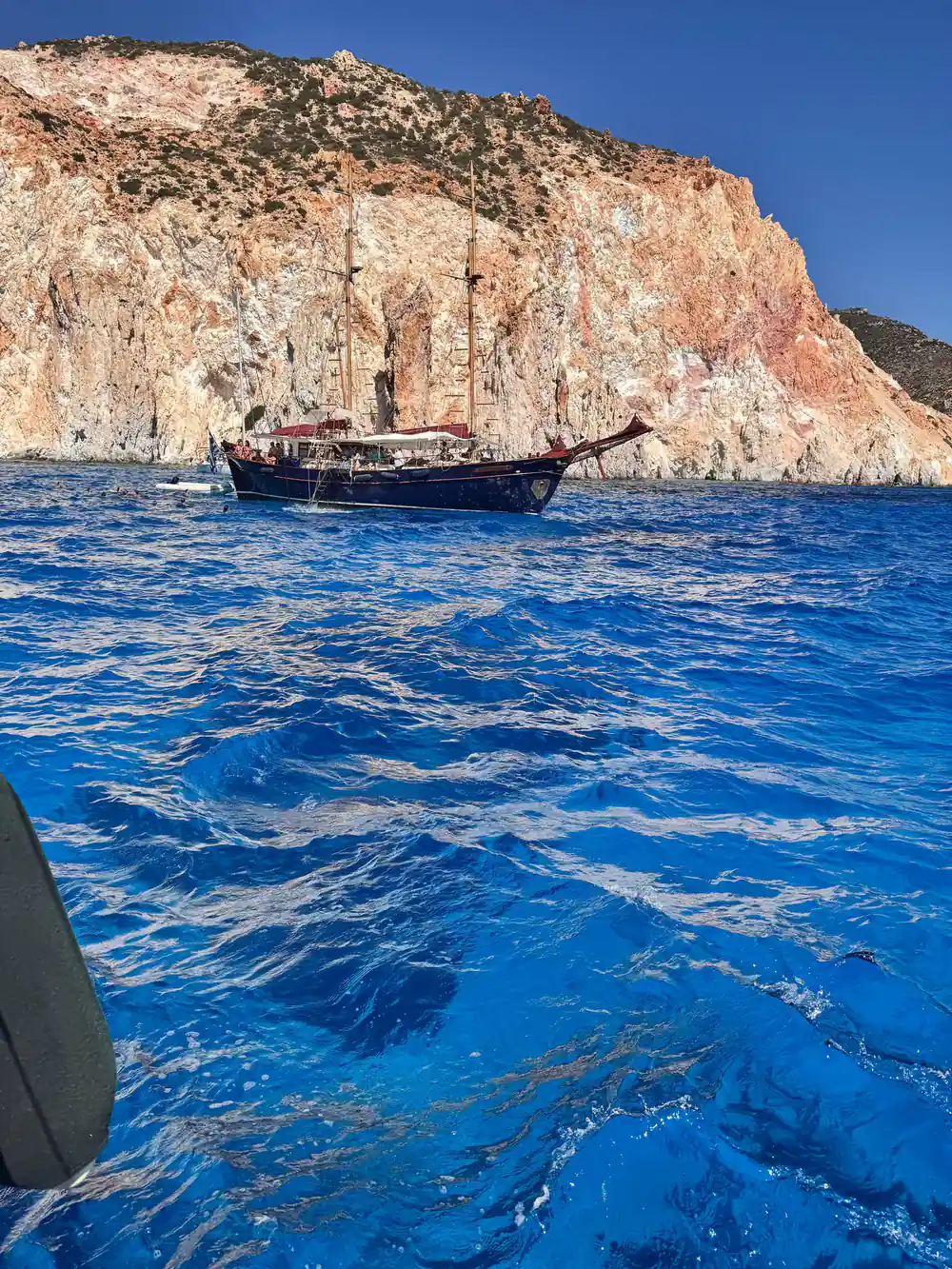
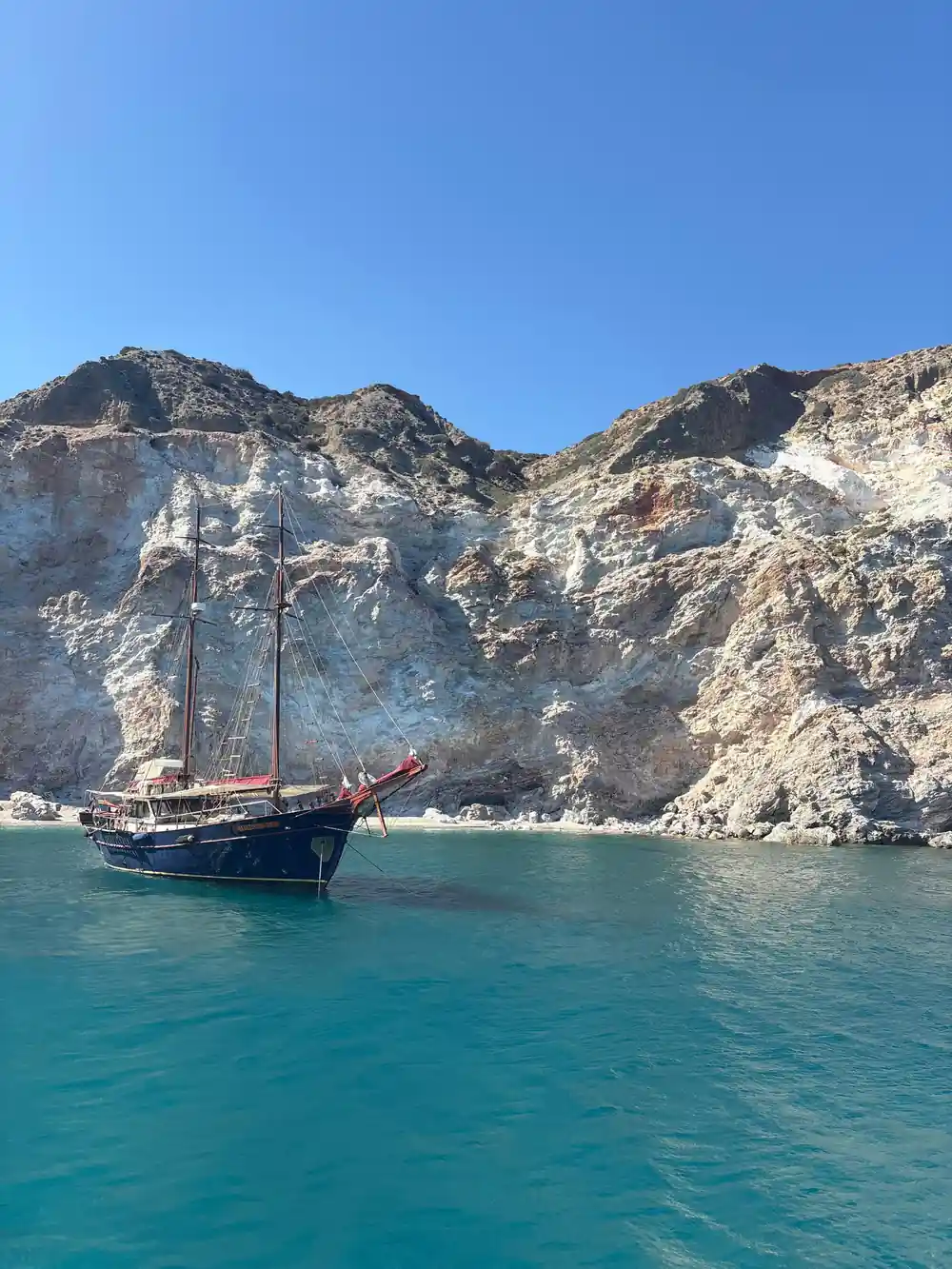
This is a full-day cruise that leaves the harbour at Adamantas in the morning and comes back in the evening, having gone right around Milos and out to a second island on the way. The boat carries a small group with a crew of two, and the day is built around a sequence of stops rather than a single destination. Some are swims, where the engine goes quiet and a ladder goes over the side. Others are slow passes close under a cliff while somebody explains what you are looking at.
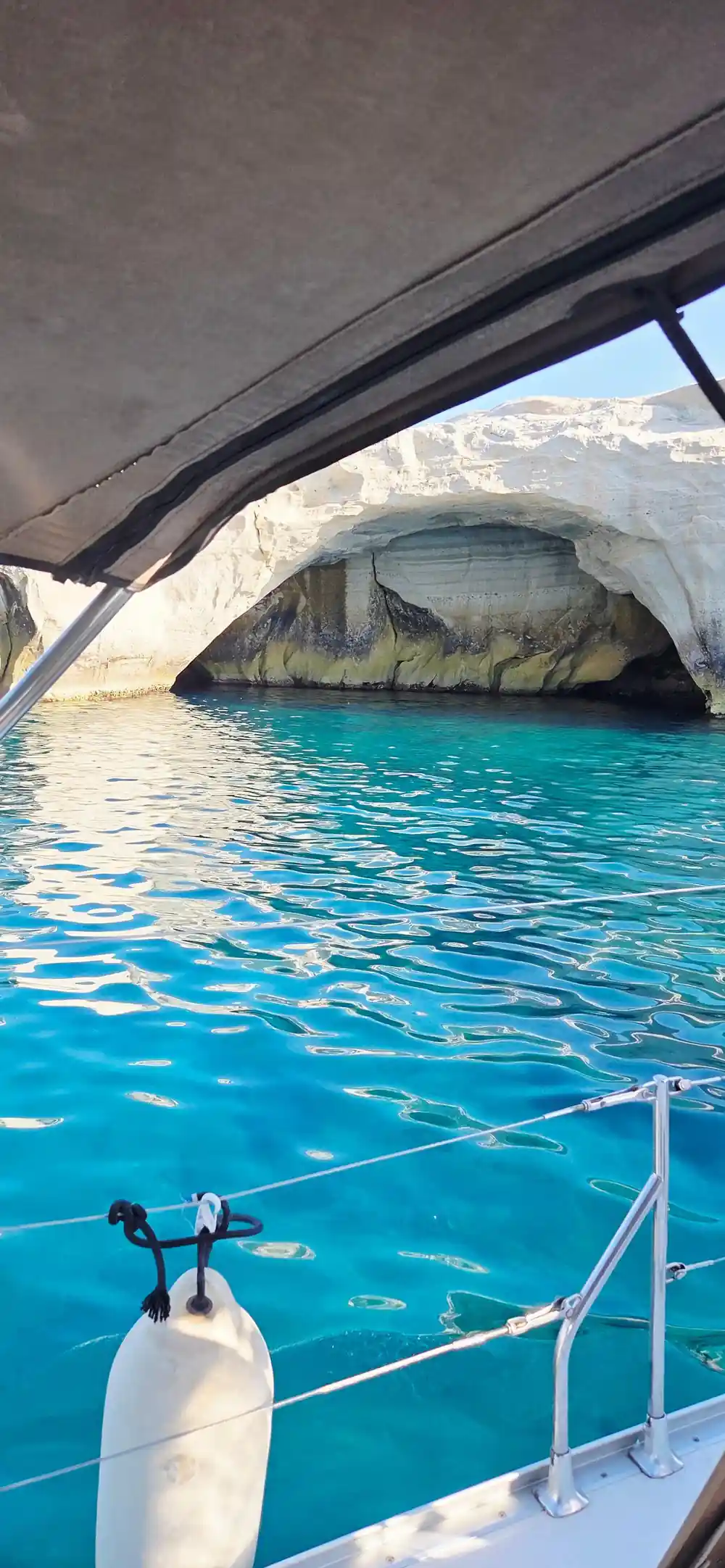
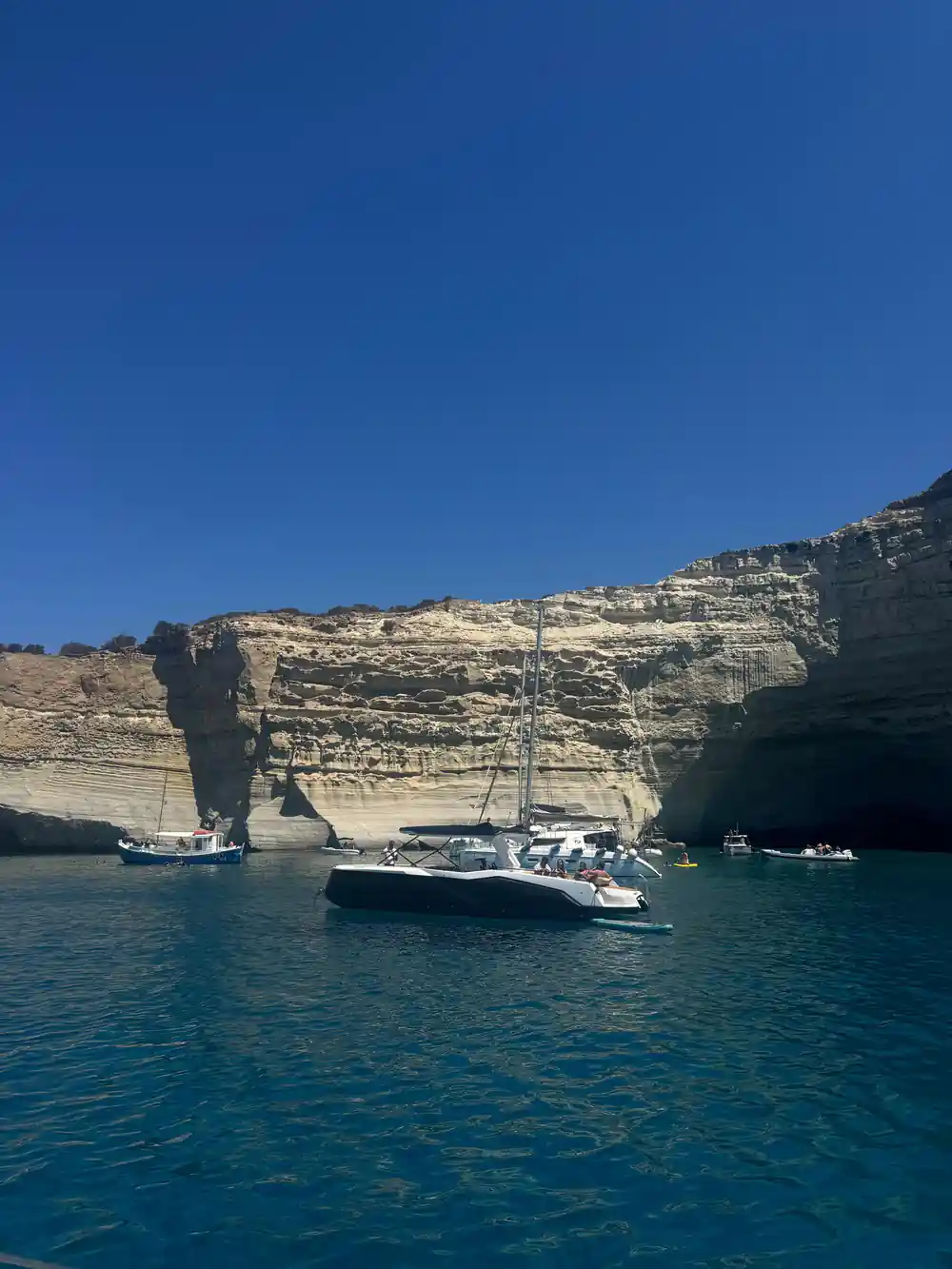
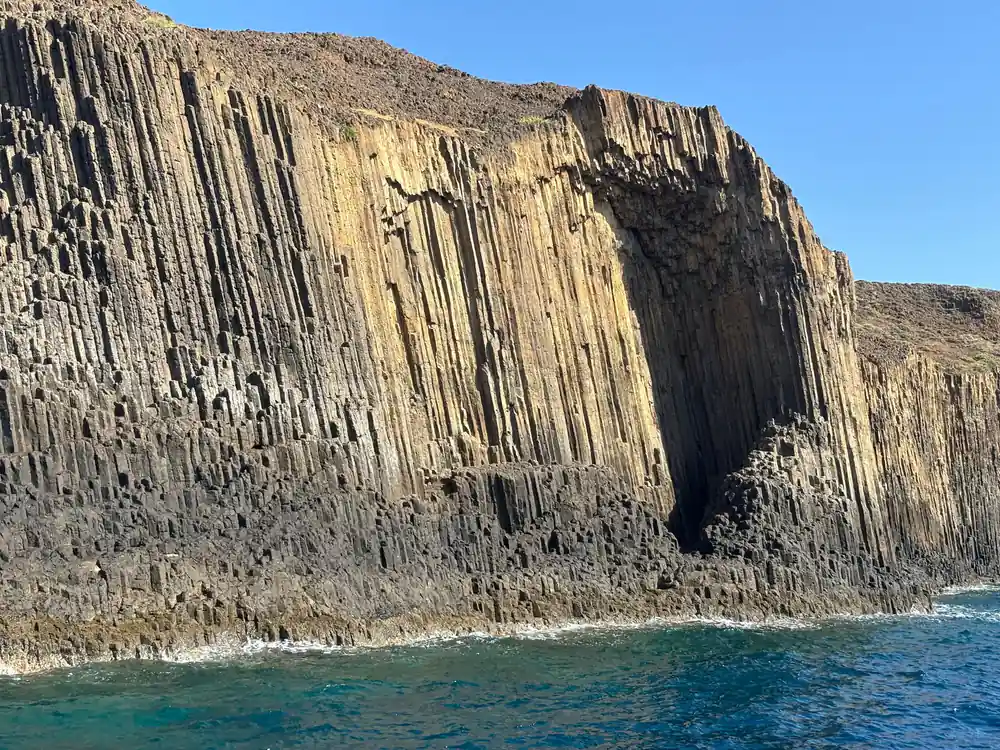
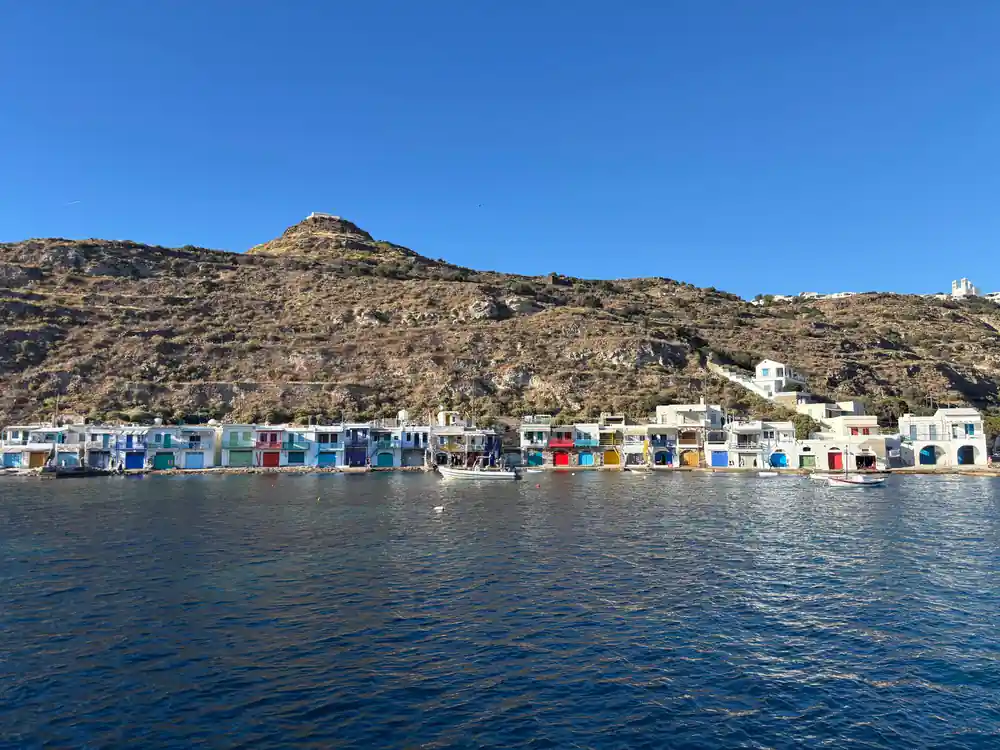
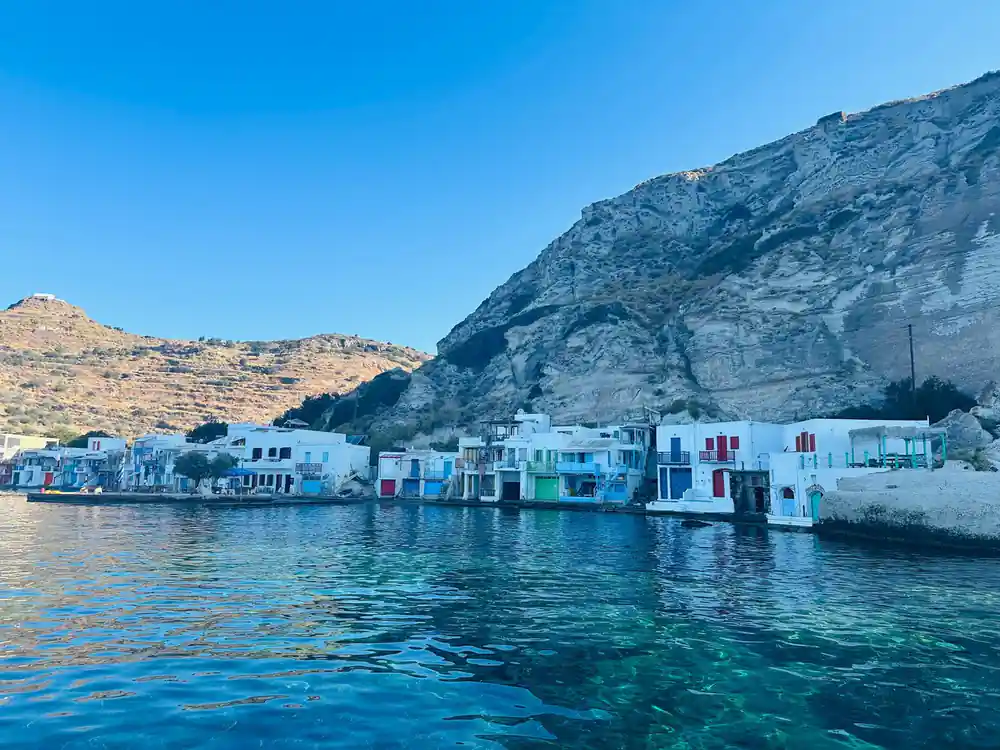
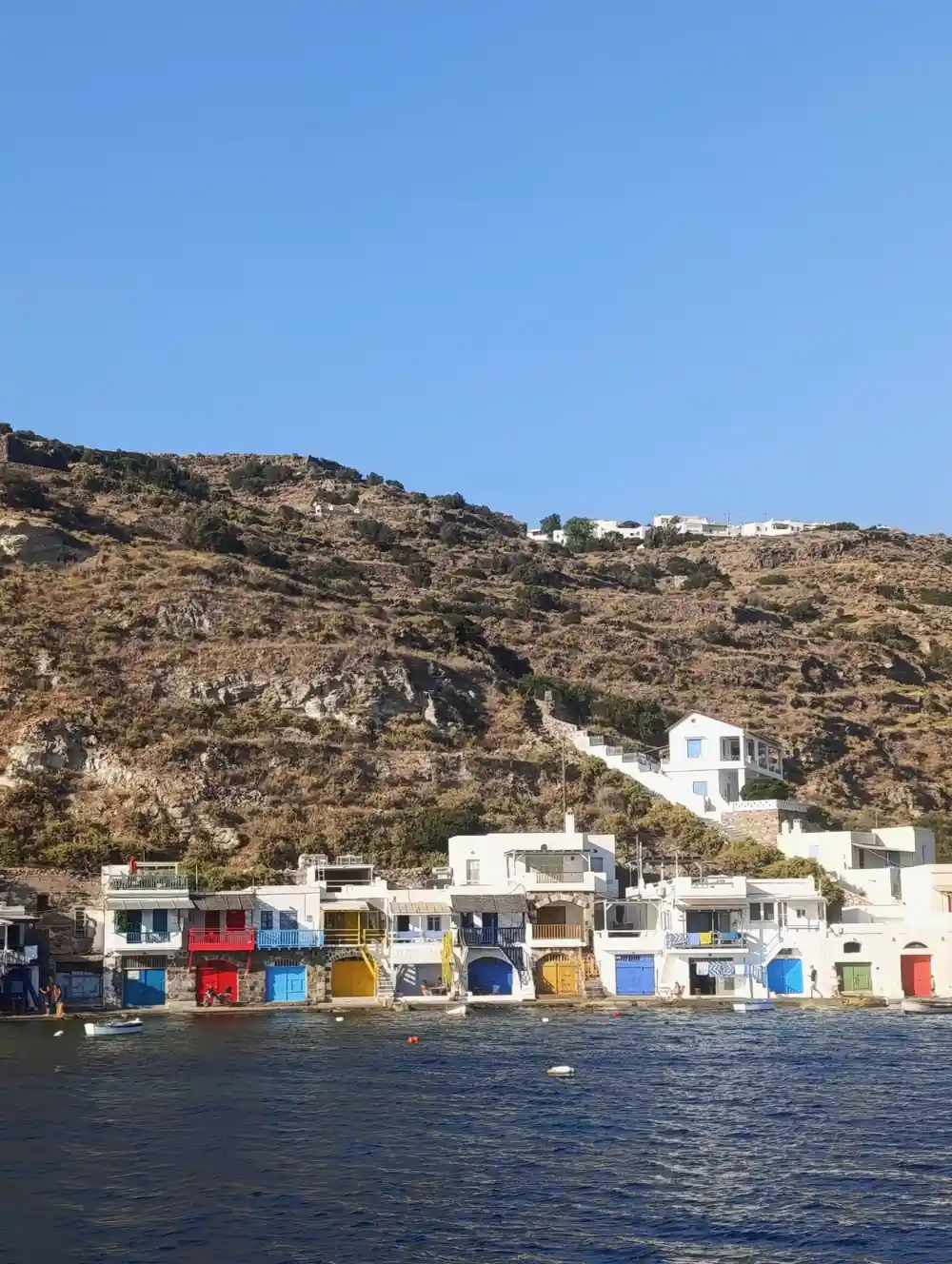
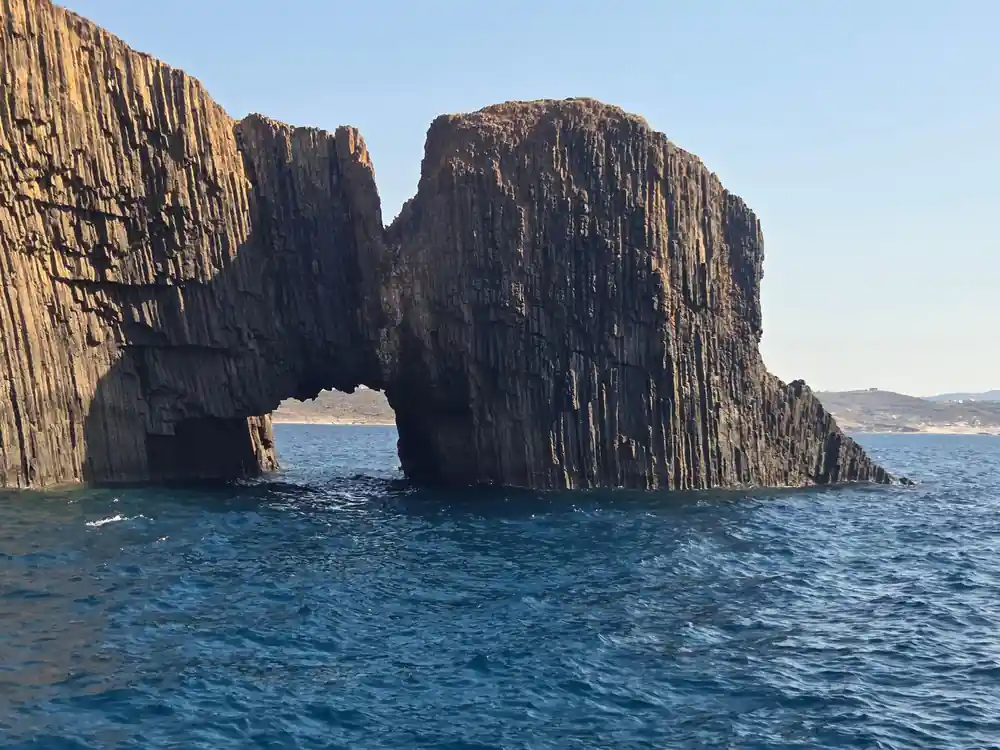
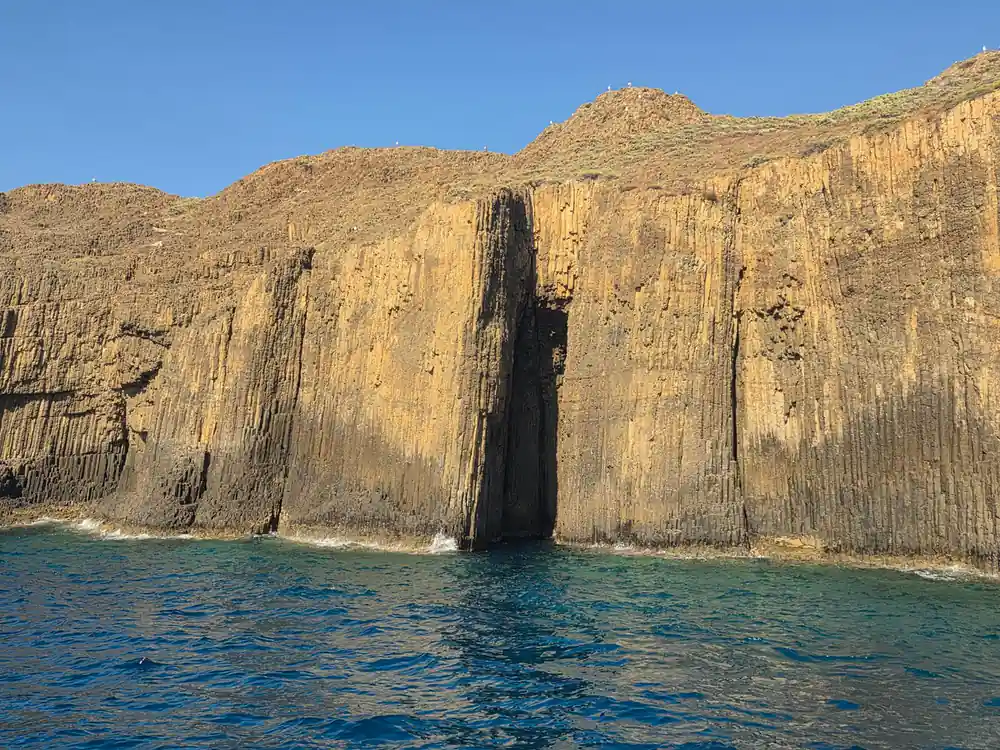
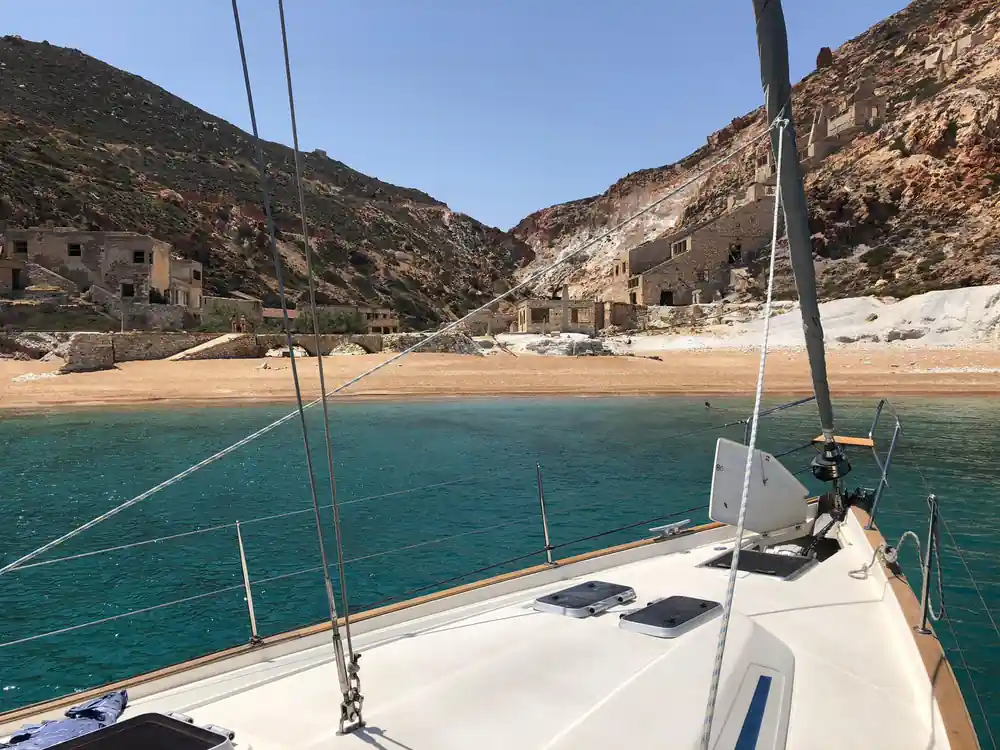
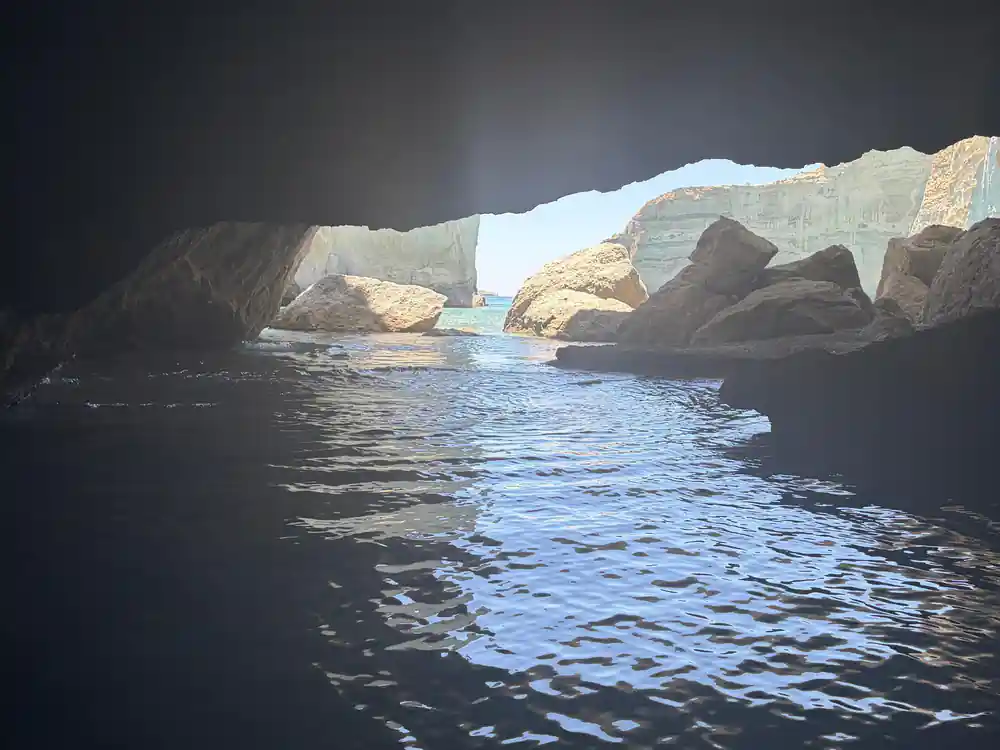
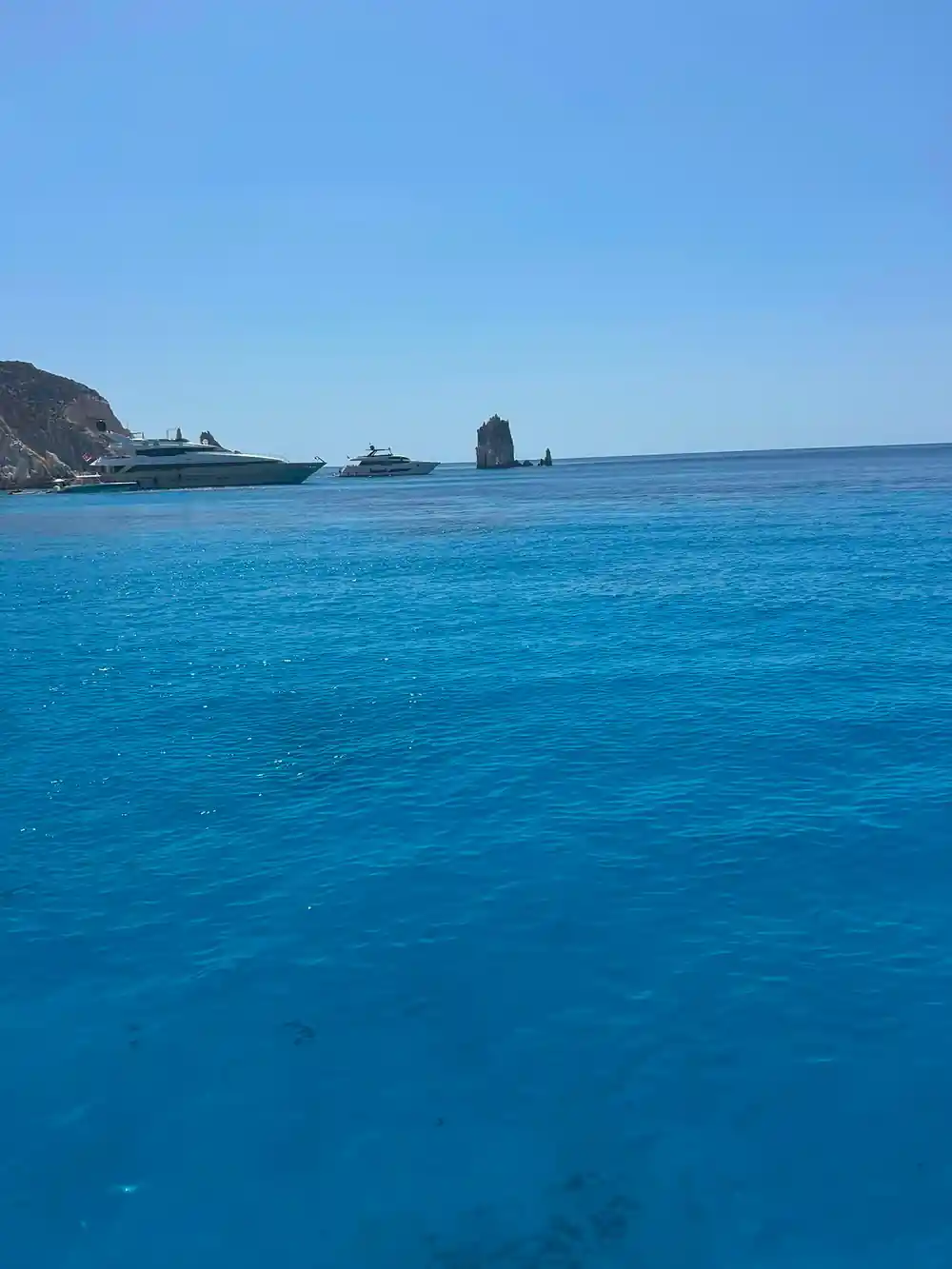
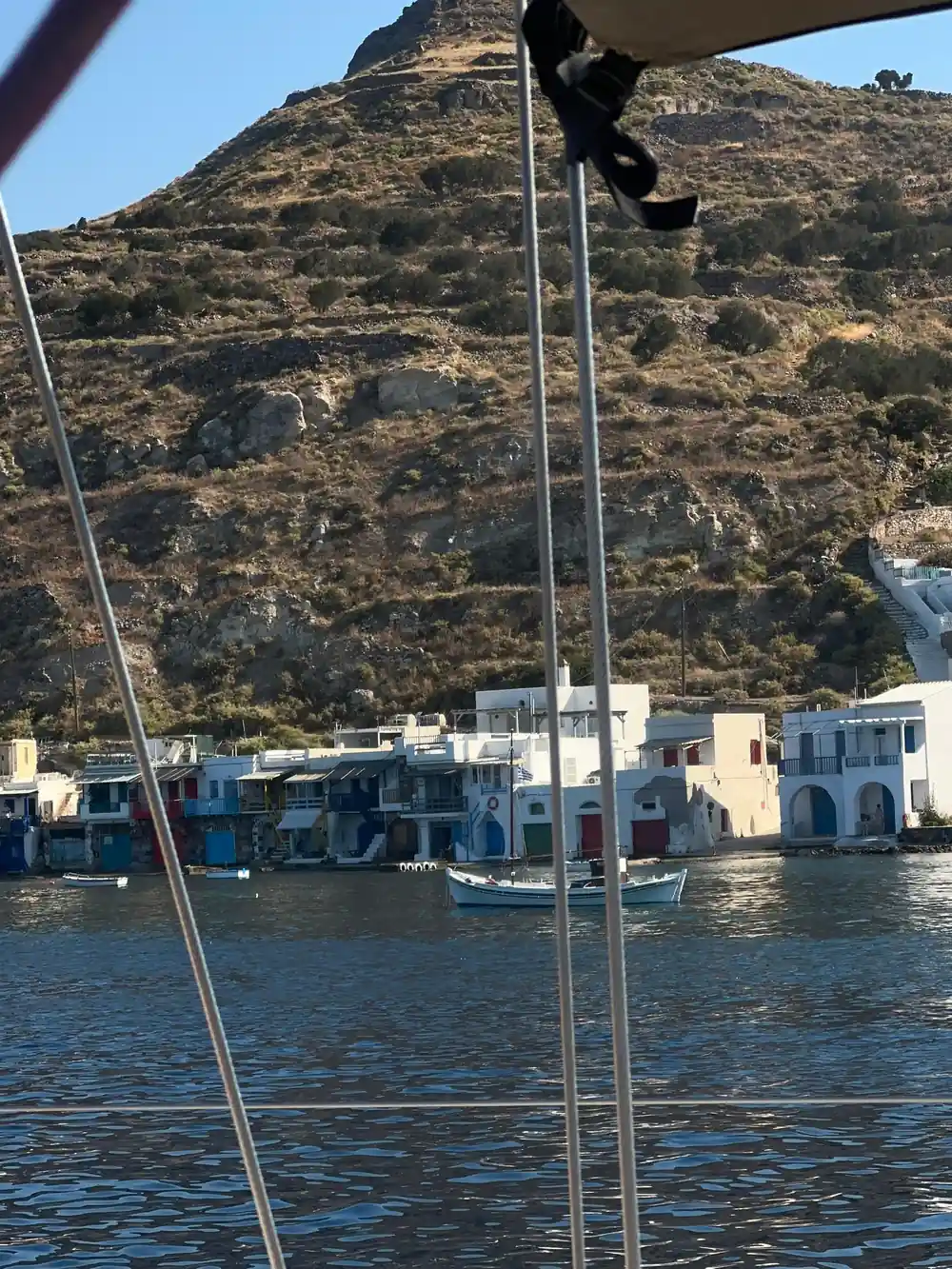
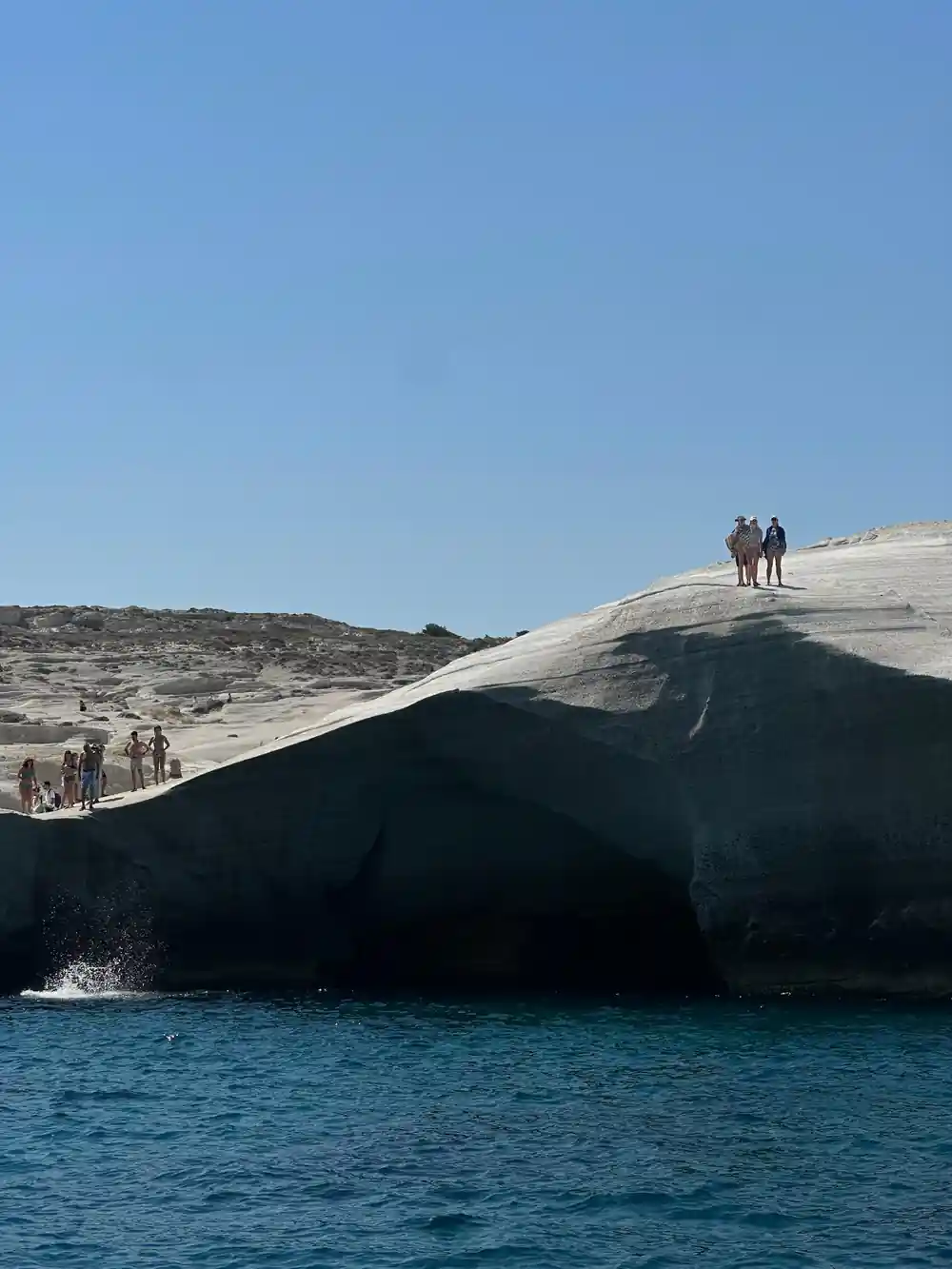
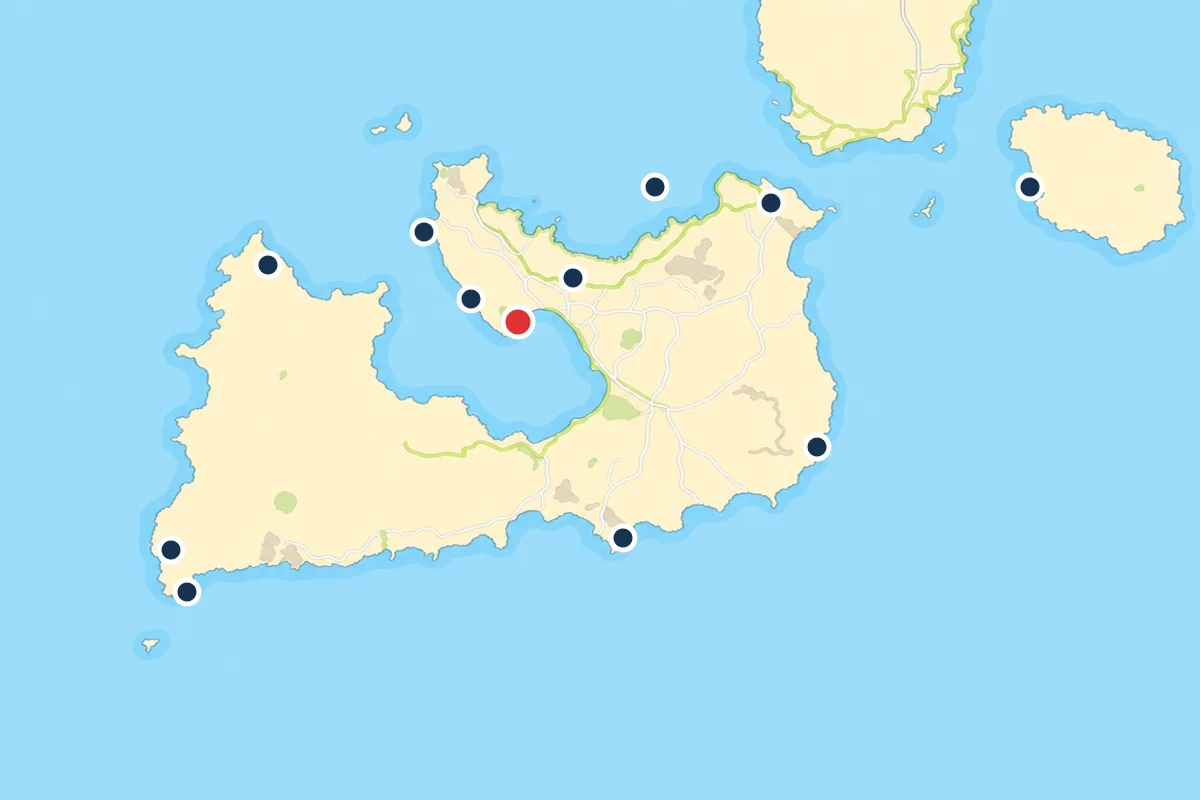
Eleven places are named on the itinerary, and they are not all beaches. There is a village of painted boathouses, a set of basalt columns standing out of the sea, an abandoned sulphur works, a collapsed cave you sail into, and the white arches at Kleftiko that most people came for. The route runs anticlockwise in normal conditions, which puts the caves in the middle of the day.
Ten hours sounds long until you look at what has to fit inside it. The circuit is most of the coastline of an island, plus an open crossing and back, with four halts long enough to actually swim rather than dip. The day is unhurried by design, and travellers who expect a quick loop and a photograph tend to be the ones most surprised by it.
The coast that has no road
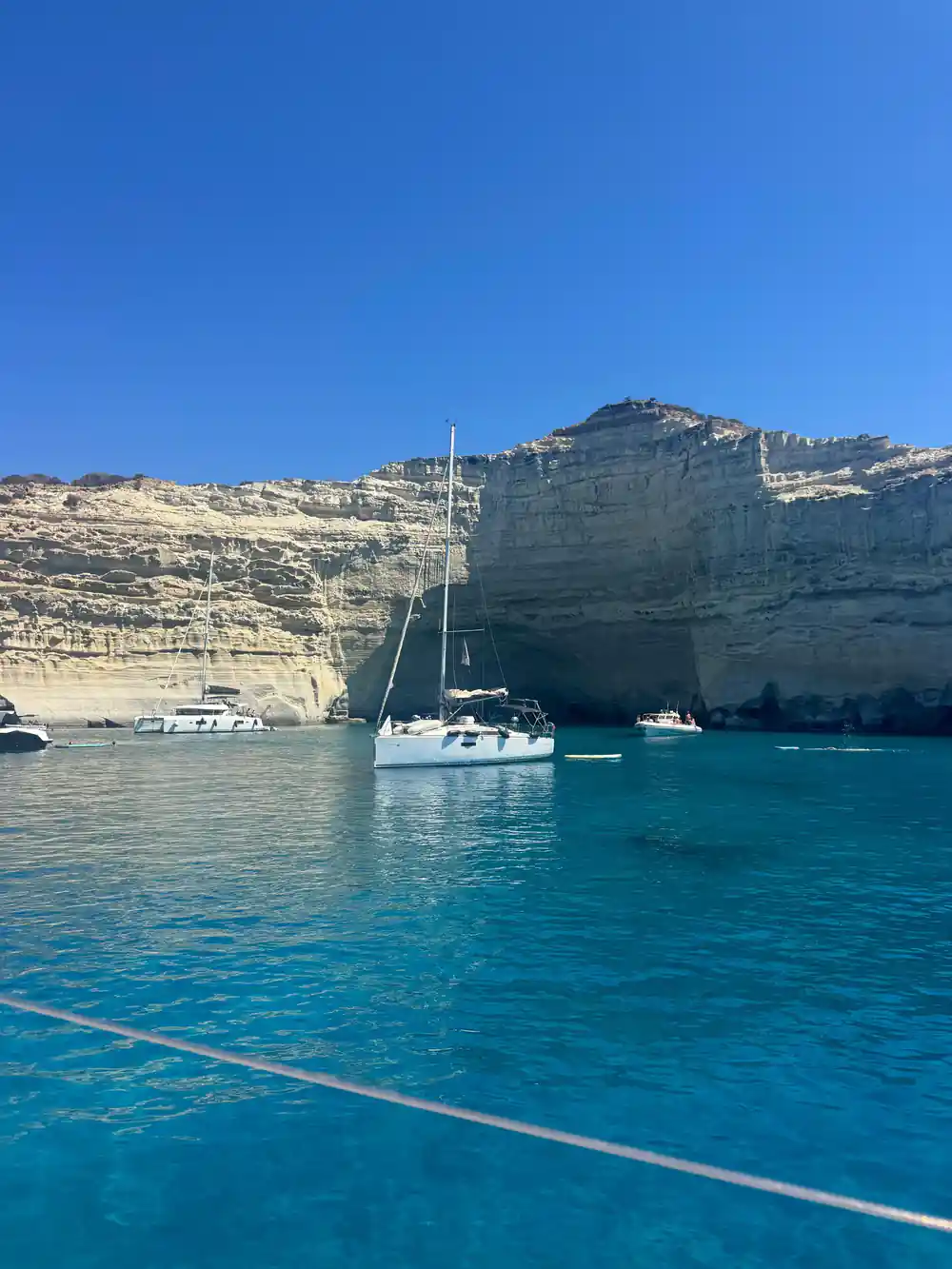
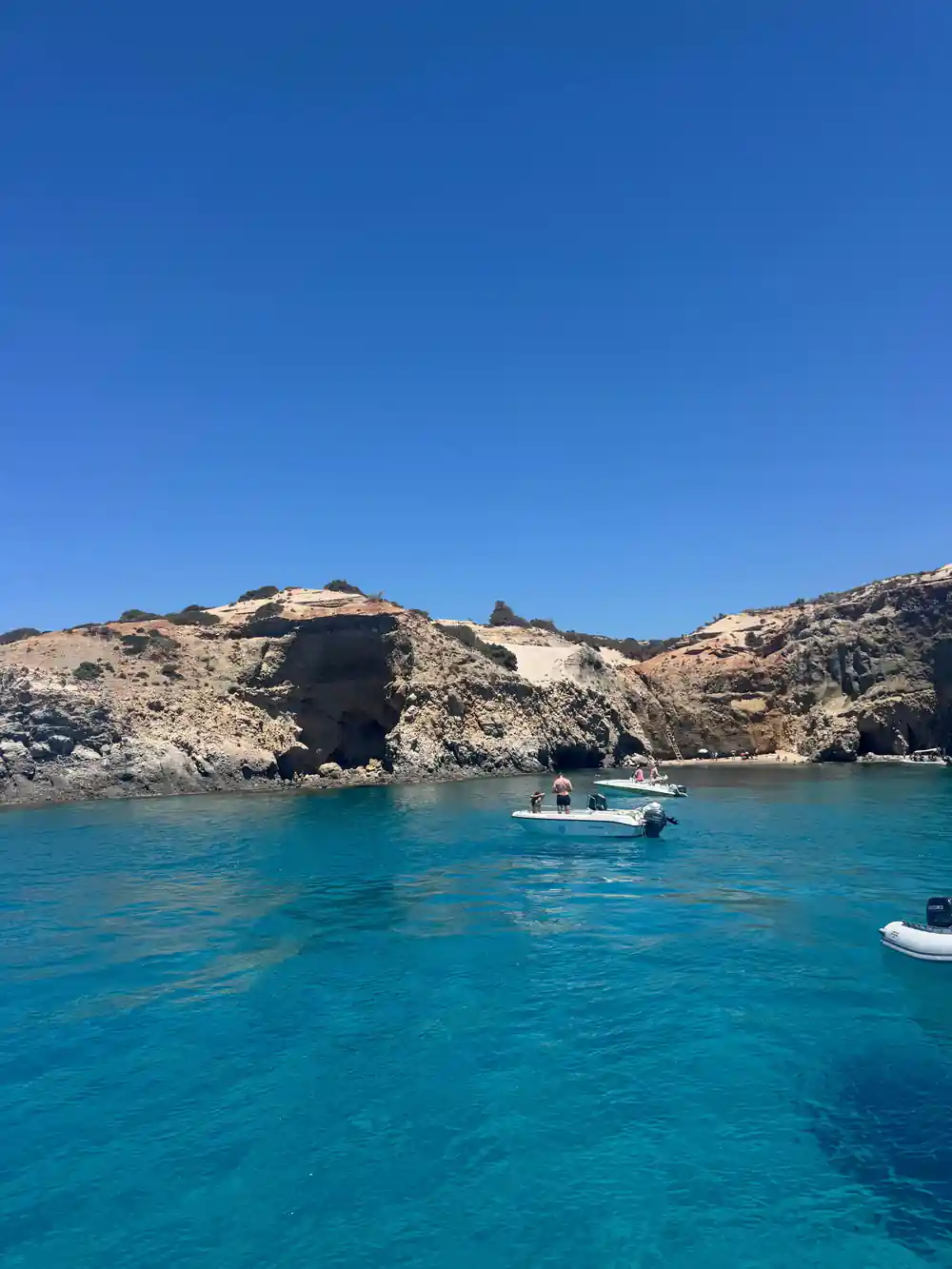
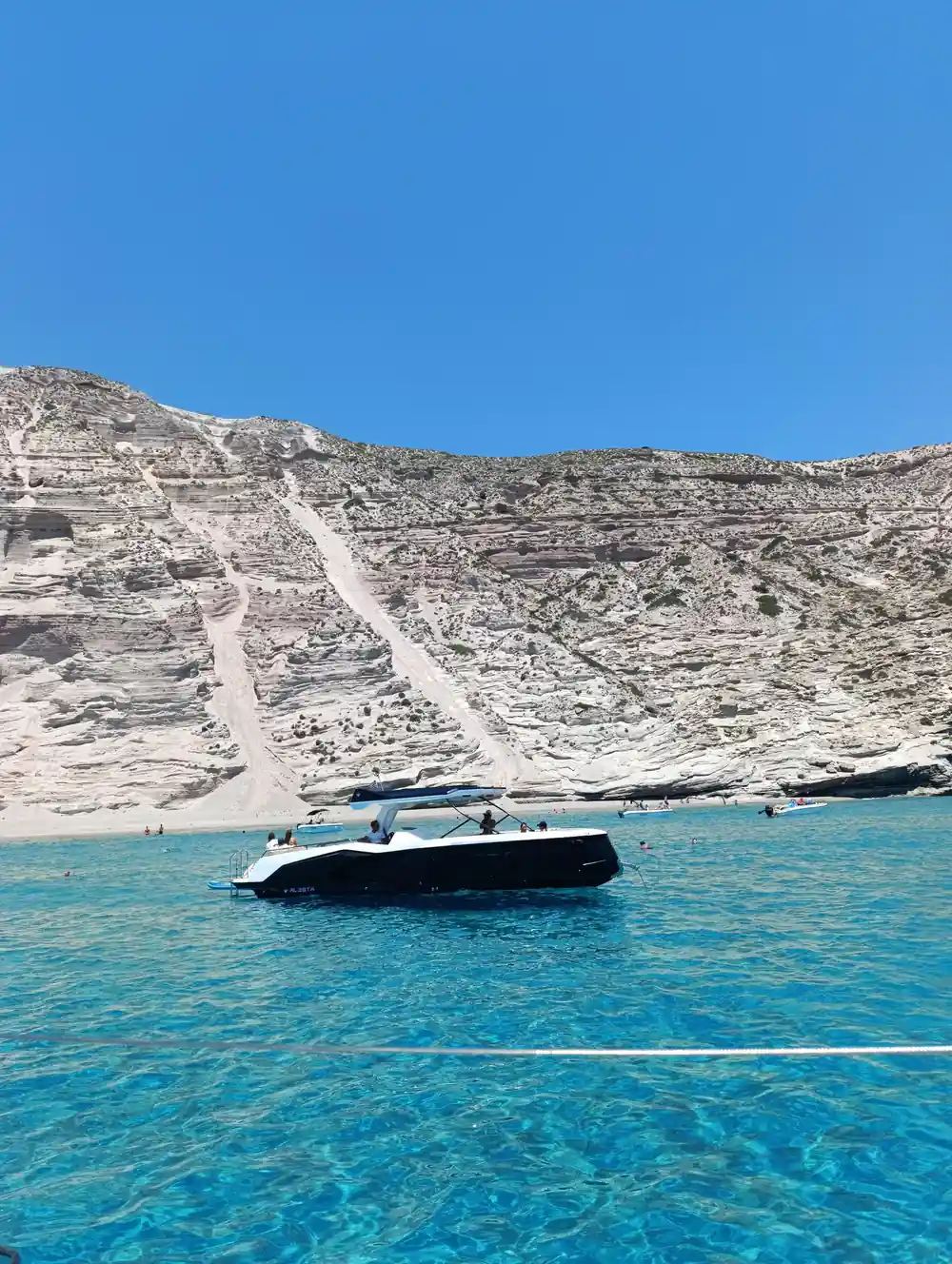
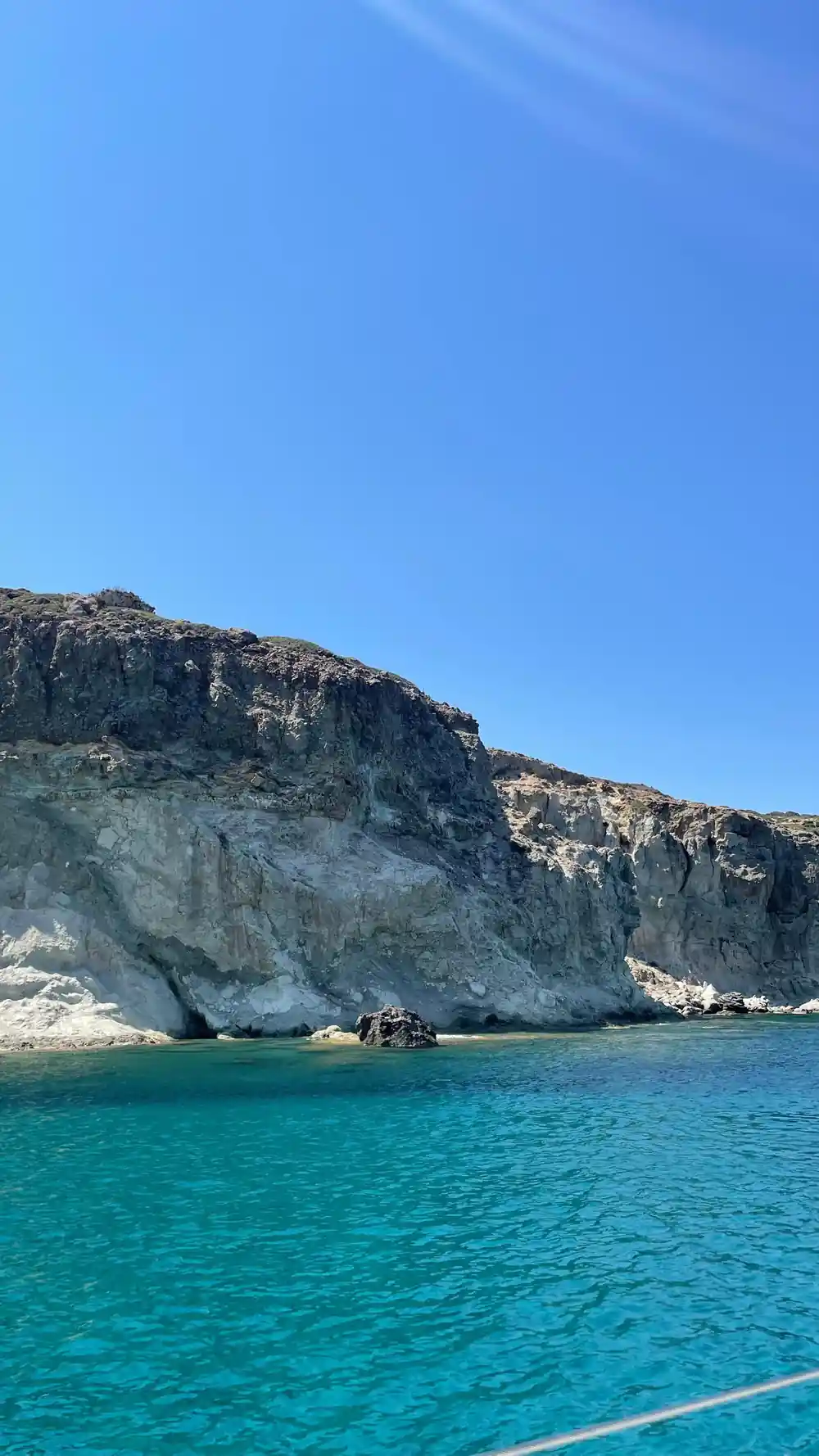
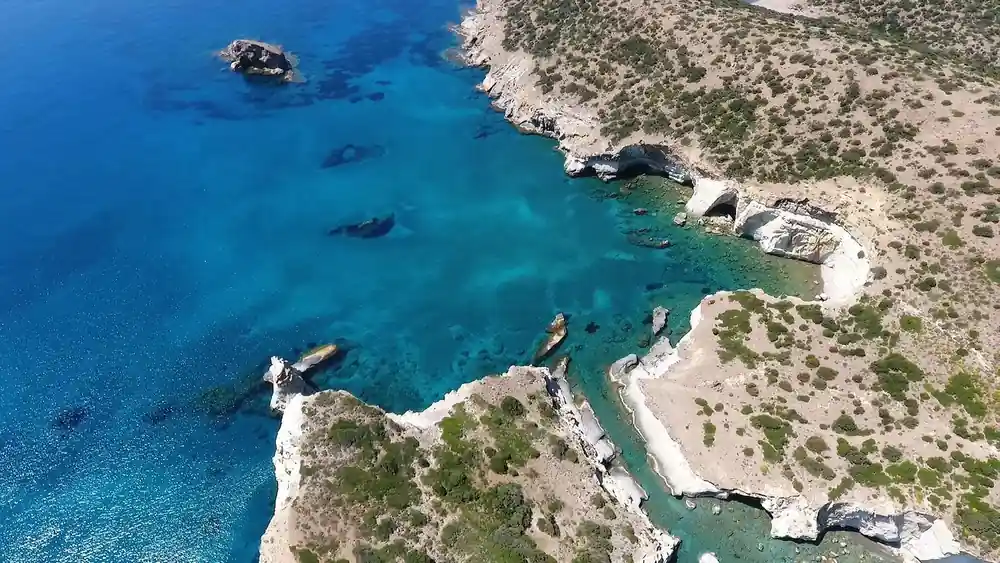
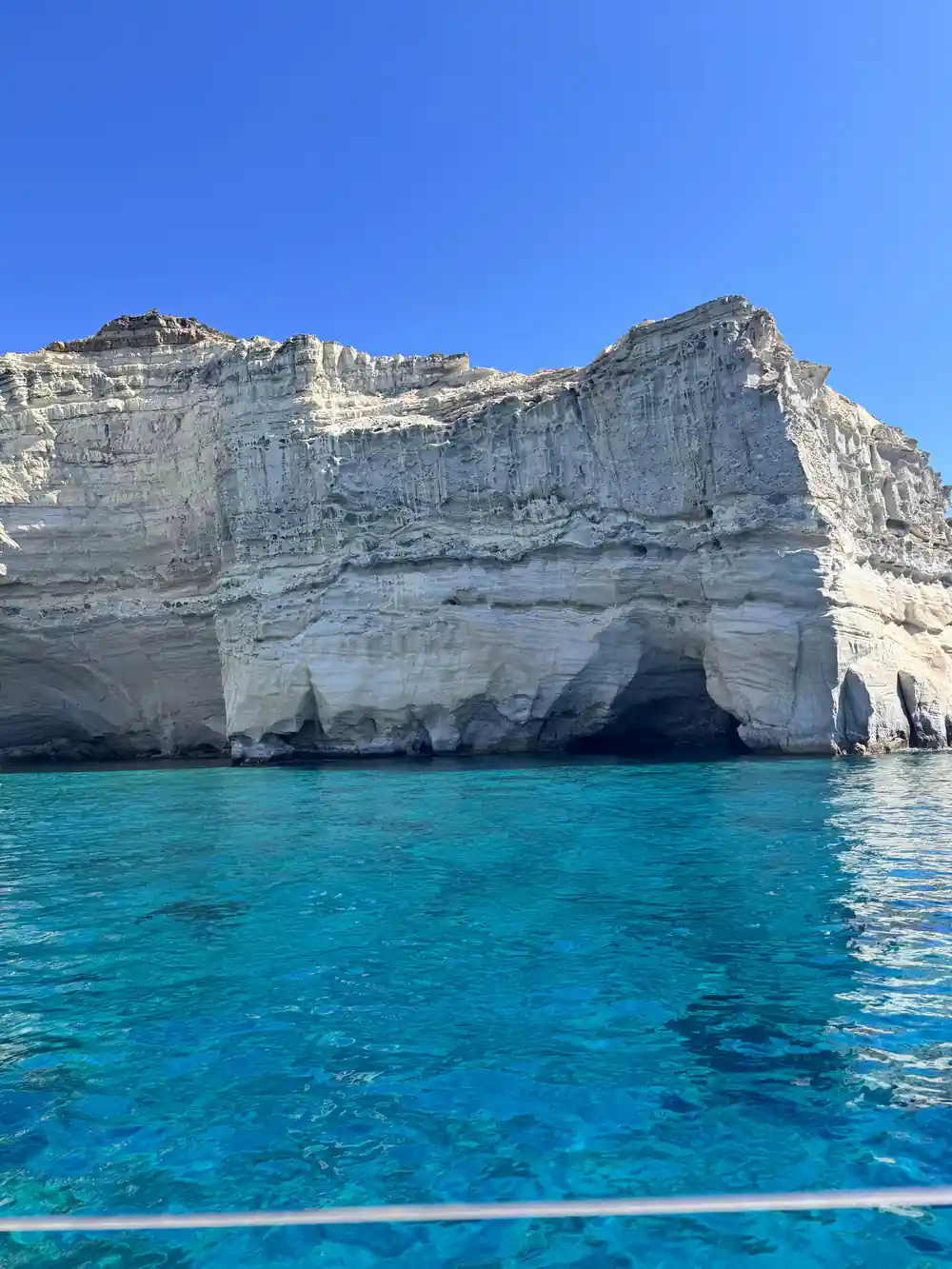
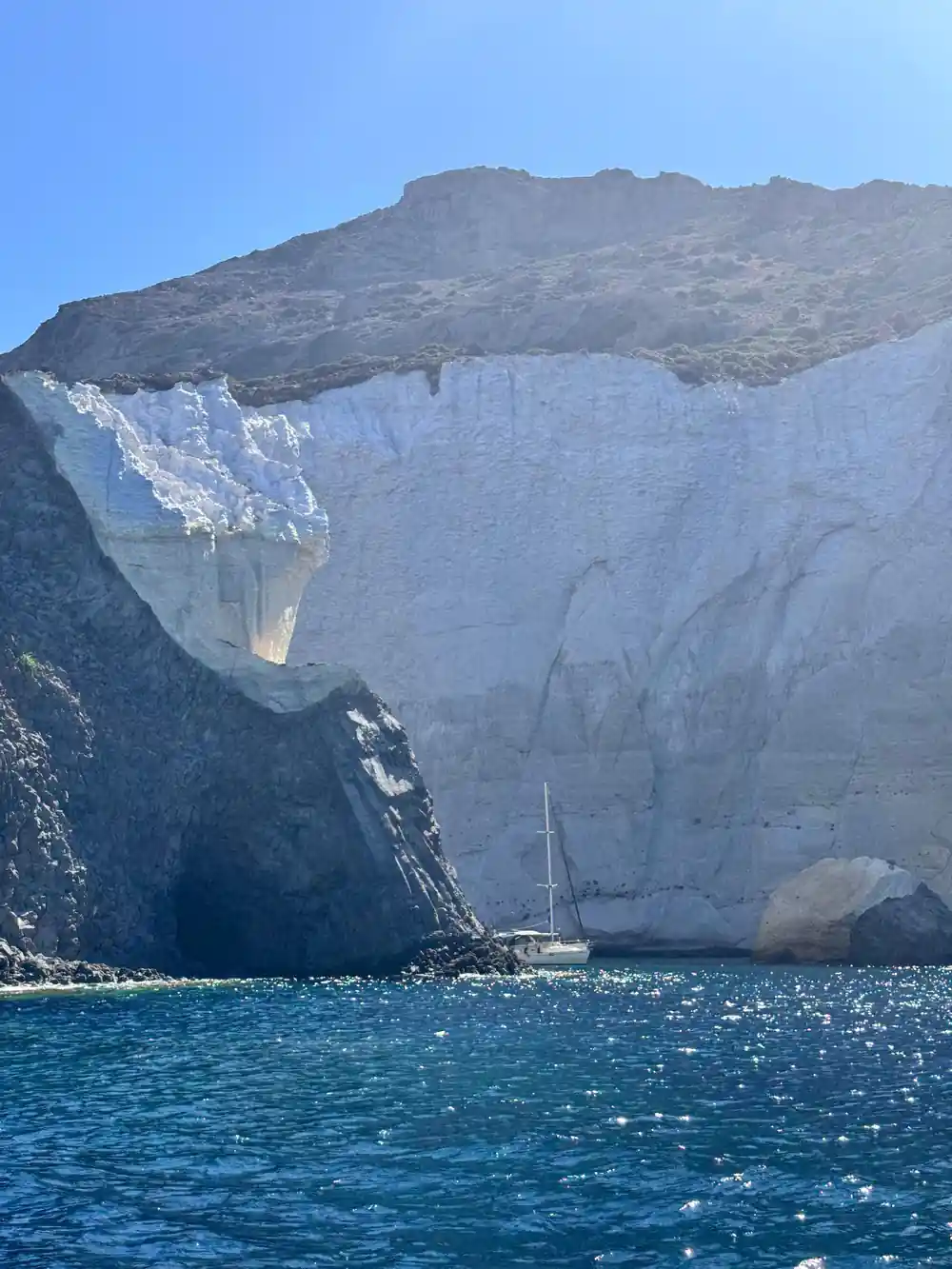
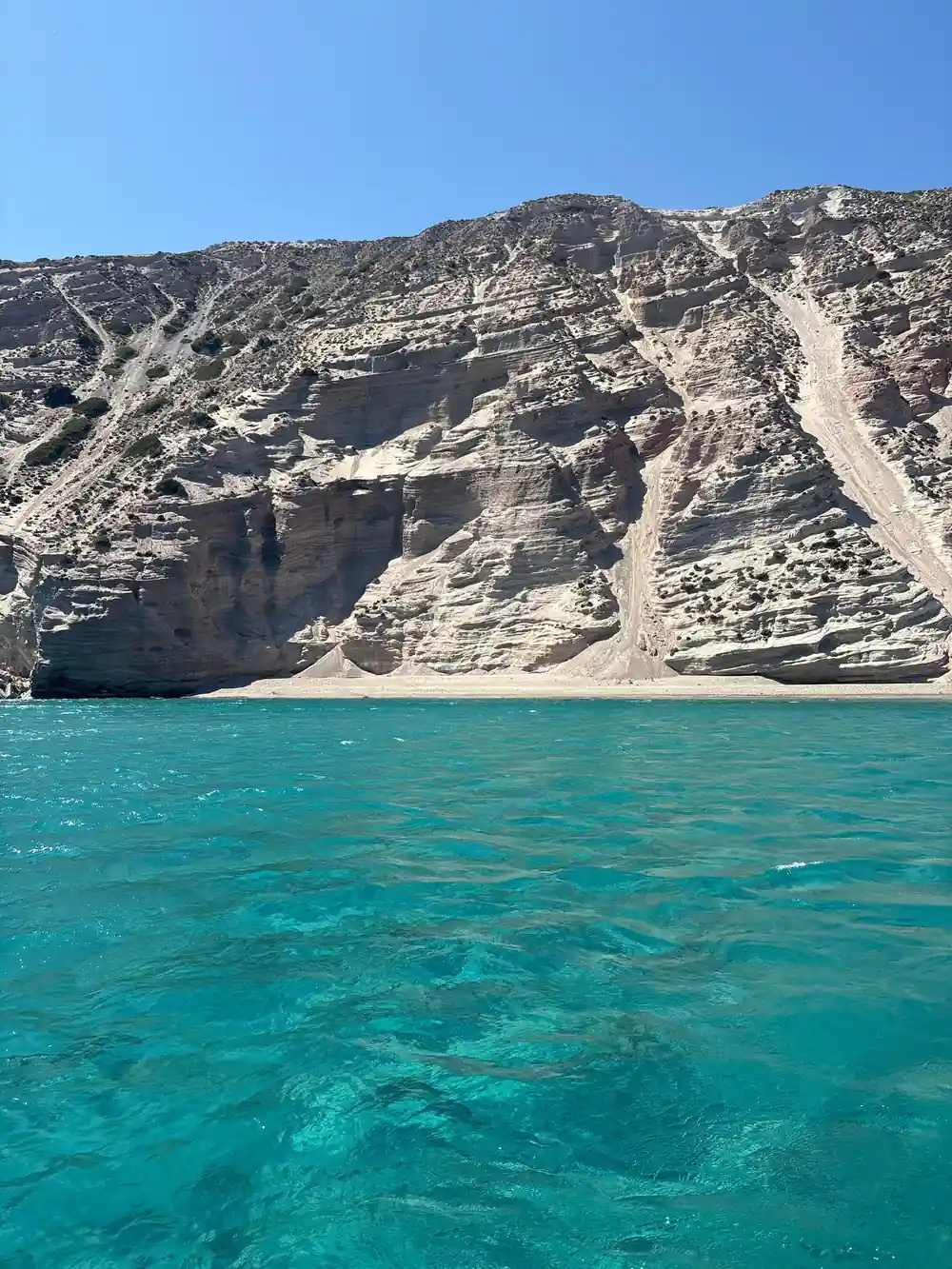
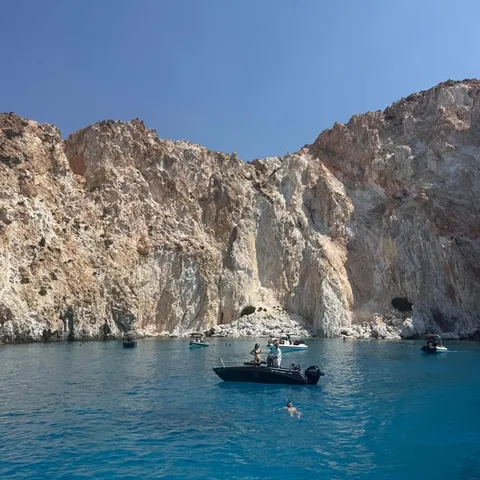
Milos is unusual even by Cycladic standards in how much of its shoreline is simply unreachable on land. The south west of the island falls away into cliffs with no track behind them, and the bays underneath are open only from the water. Kleftiko is the famous one, but Gerakas, Sykia and a string of smaller inlets are in the same position. You can drive to a viewpoint above some of them. You cannot drive to any of them.
This is the single thing that travellers say most often about the day, and it is worth taking seriously before booking. A hire car or a quad will show you Sarakiniko from the top, the villages, the beaches with a road, and a great deal of the island. It will not show you the half that faces the open sea, and that half contains most of what the island is known for.
It also explains why the day is long. Going around by sea is not a shortcut to the famous bay; it is the only route to a series of places that happen to lie in order around a coastline, and the coastline is the length it is.
Kleftiko, and why the water looks like that
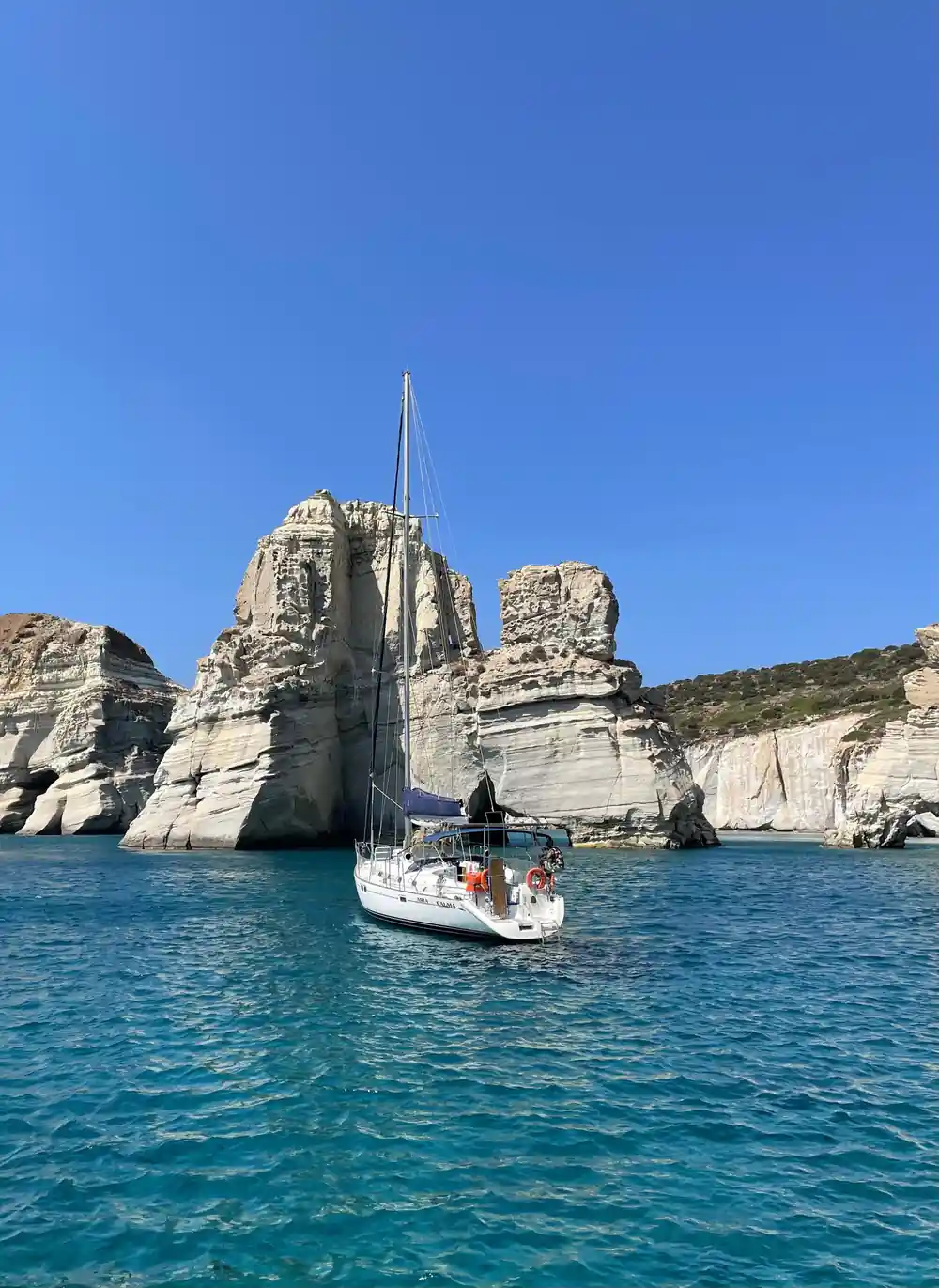
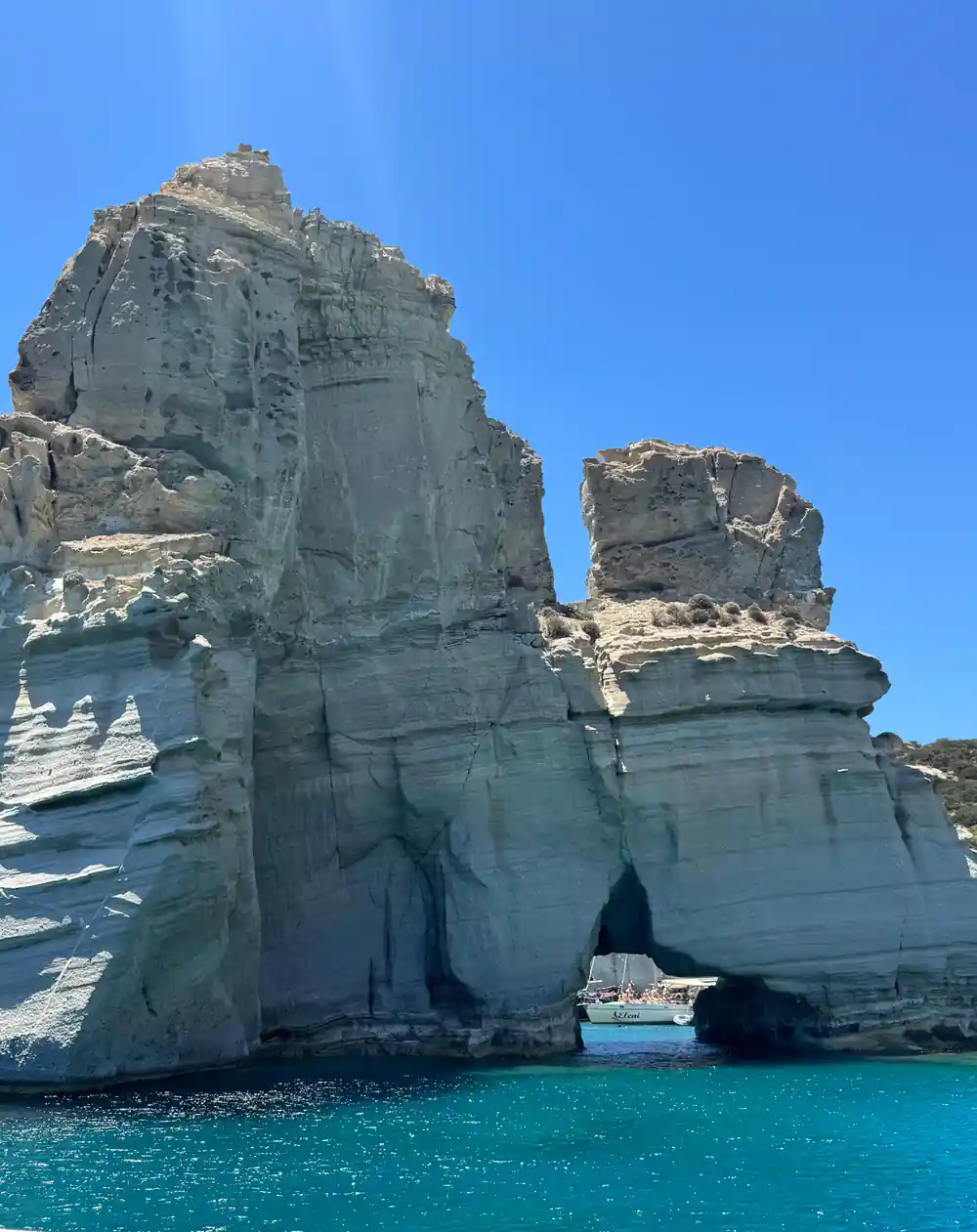
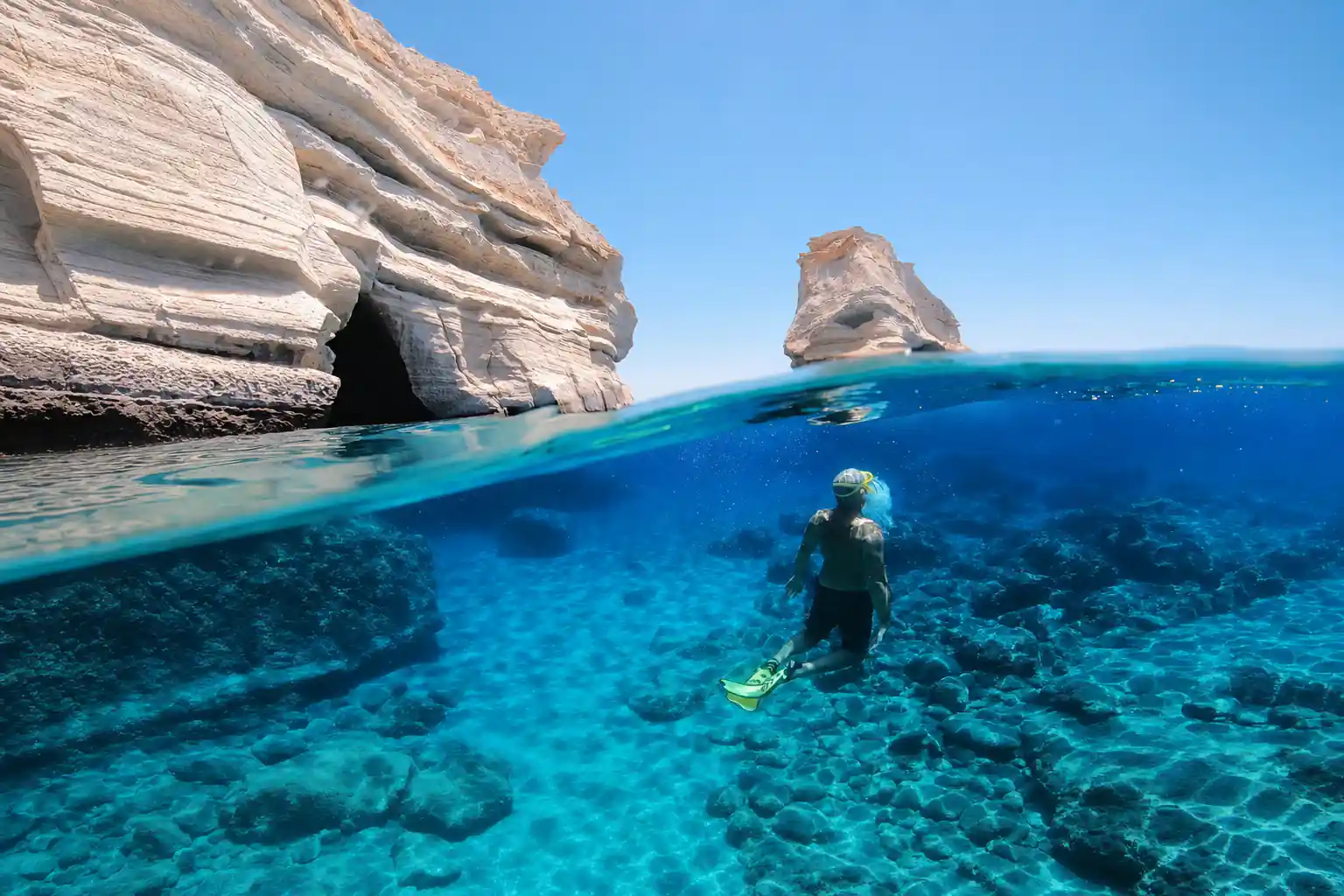
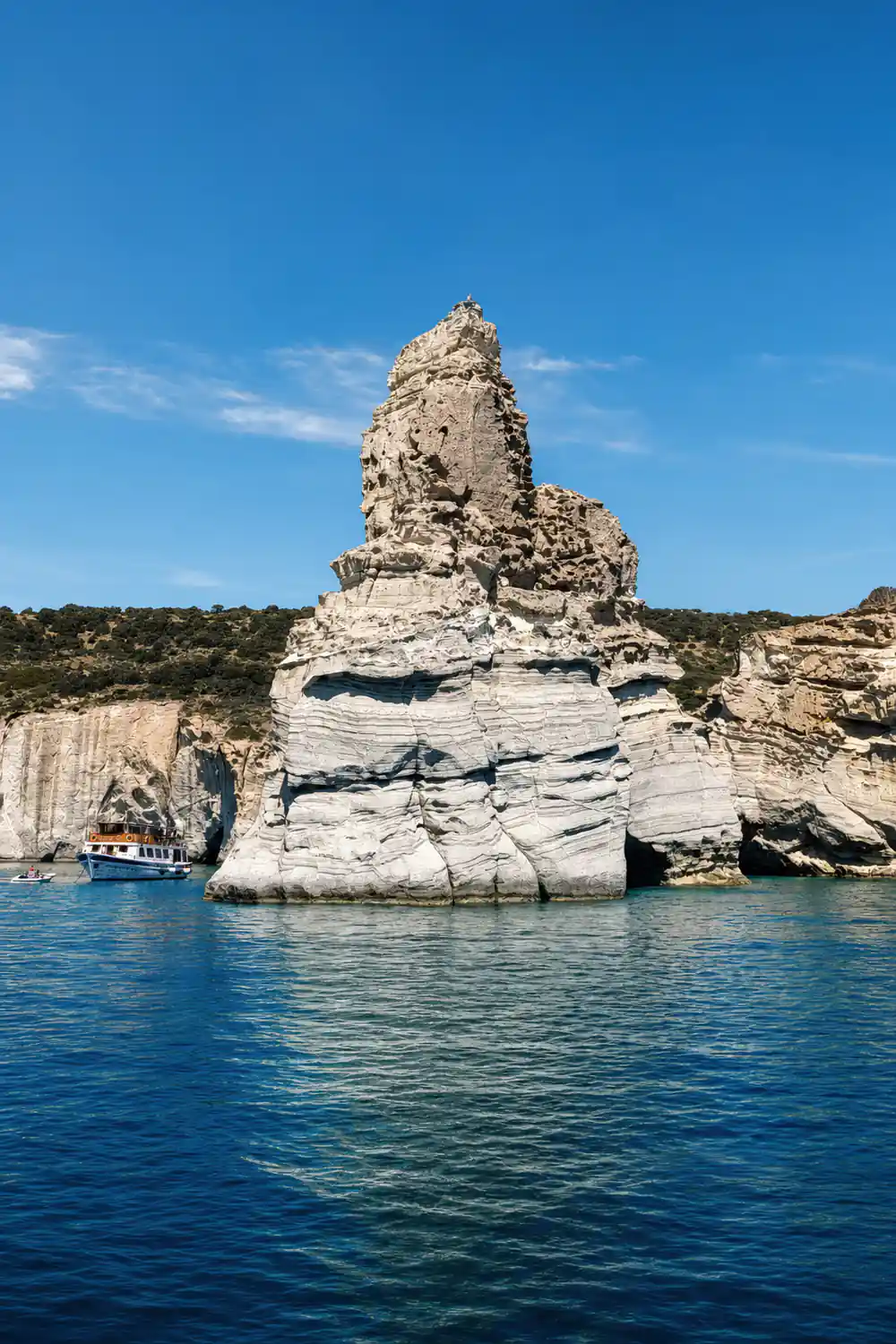
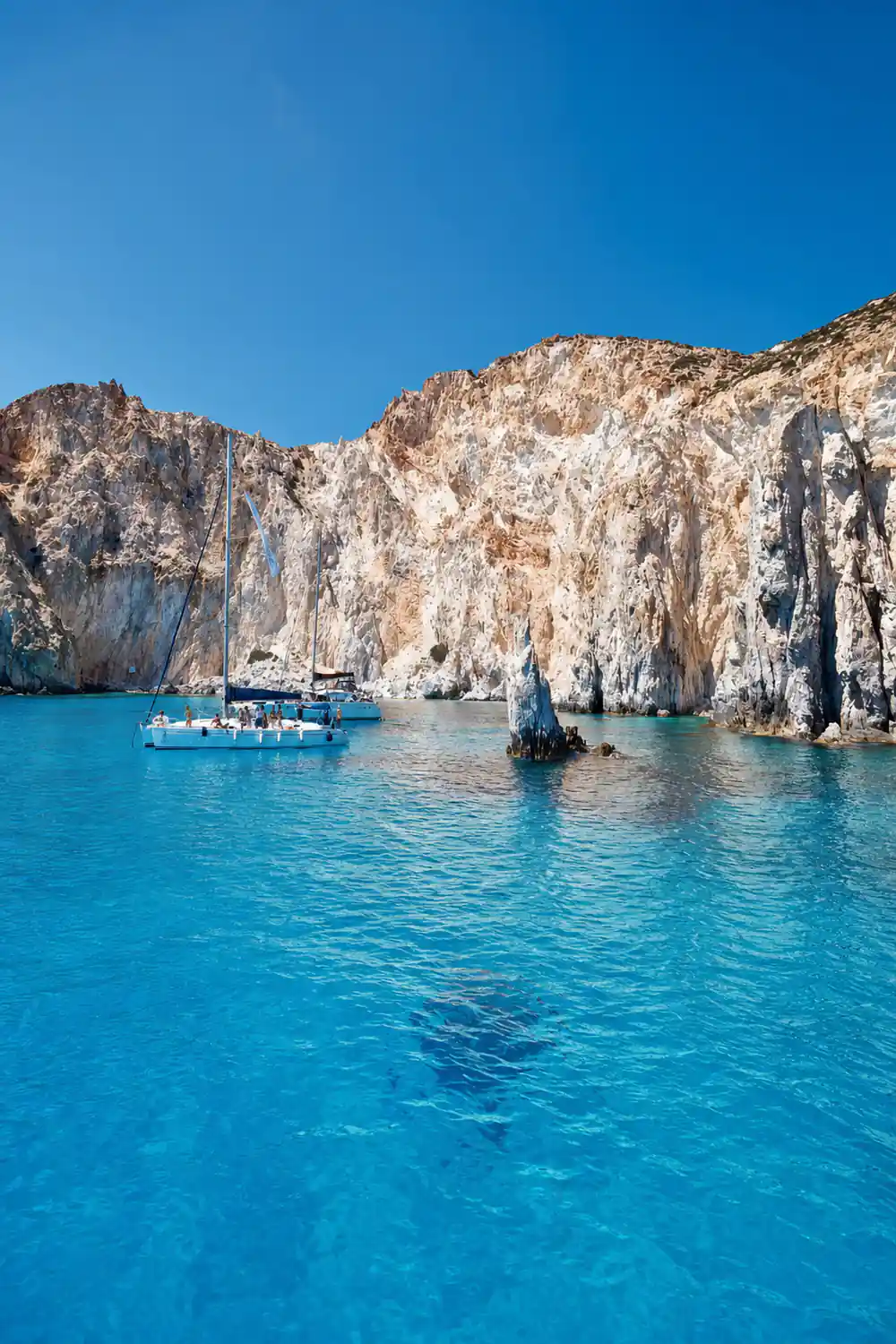
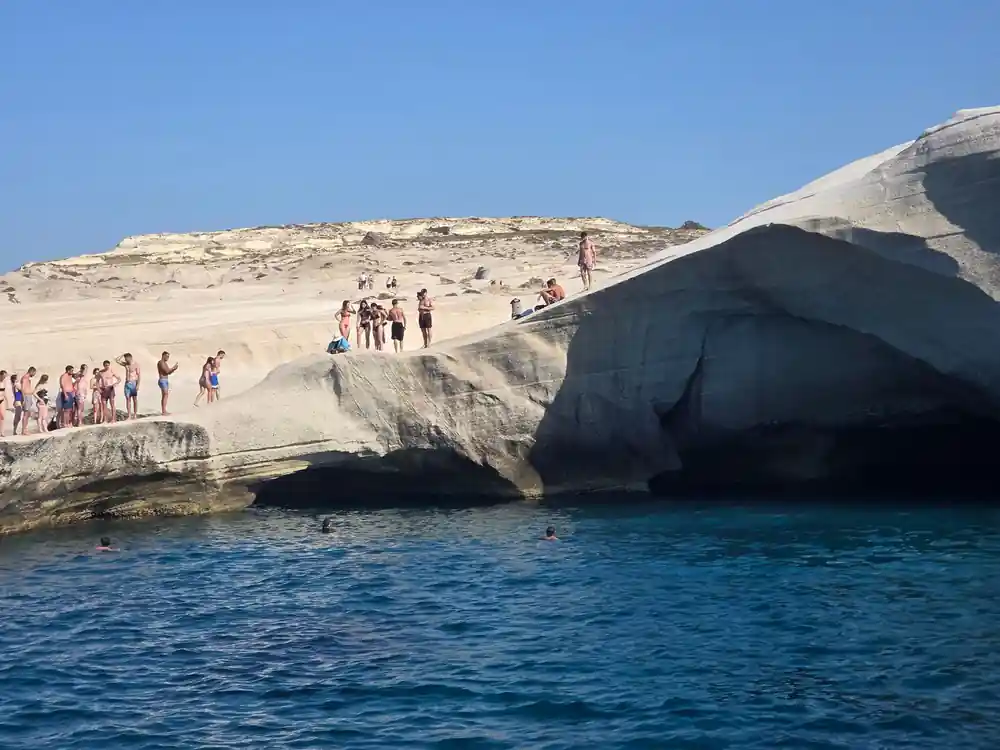
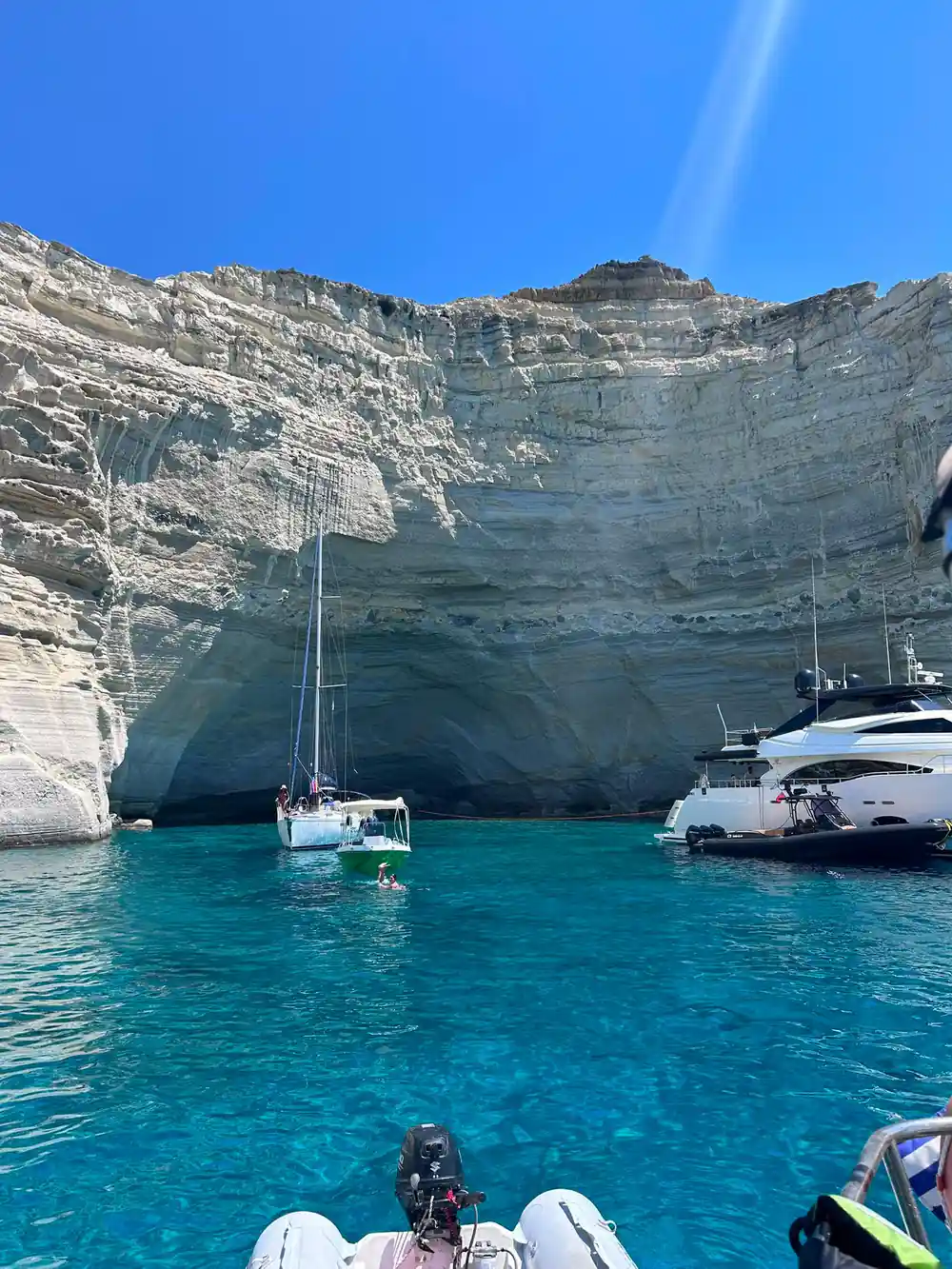
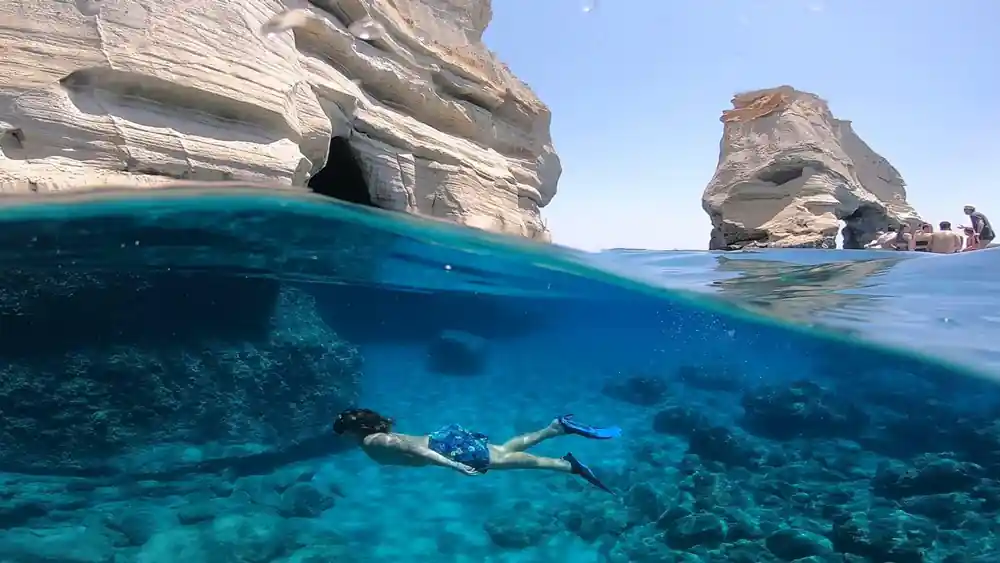
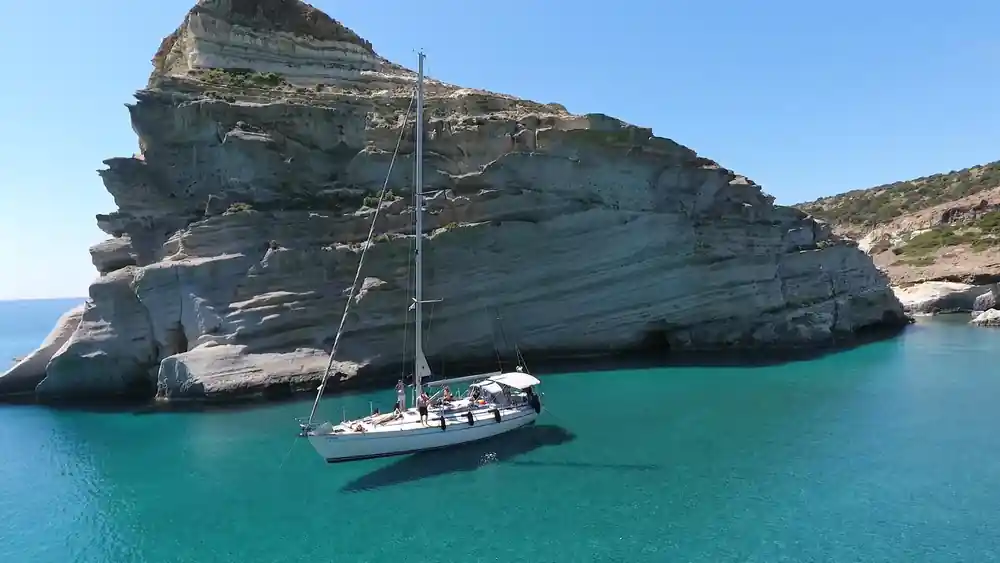
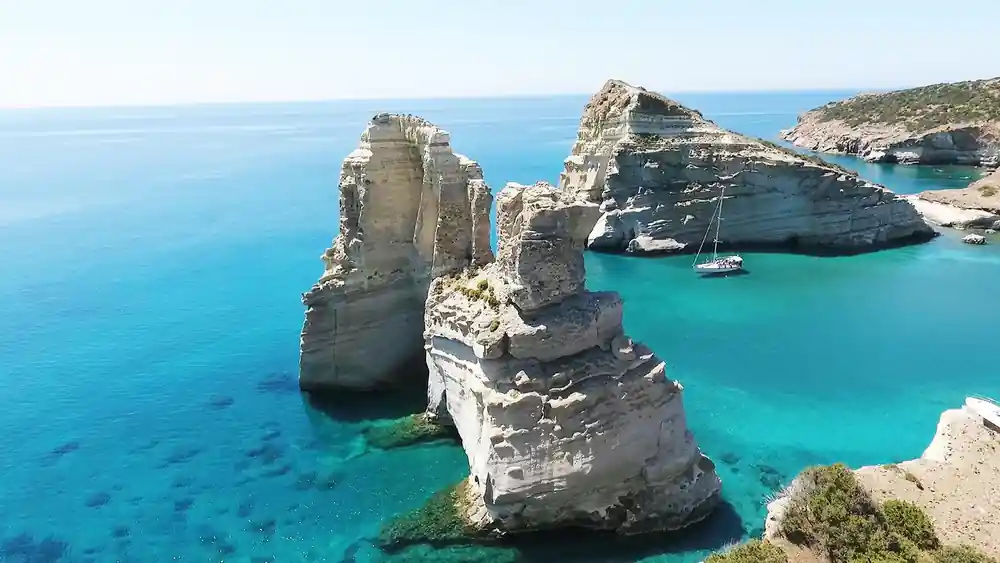
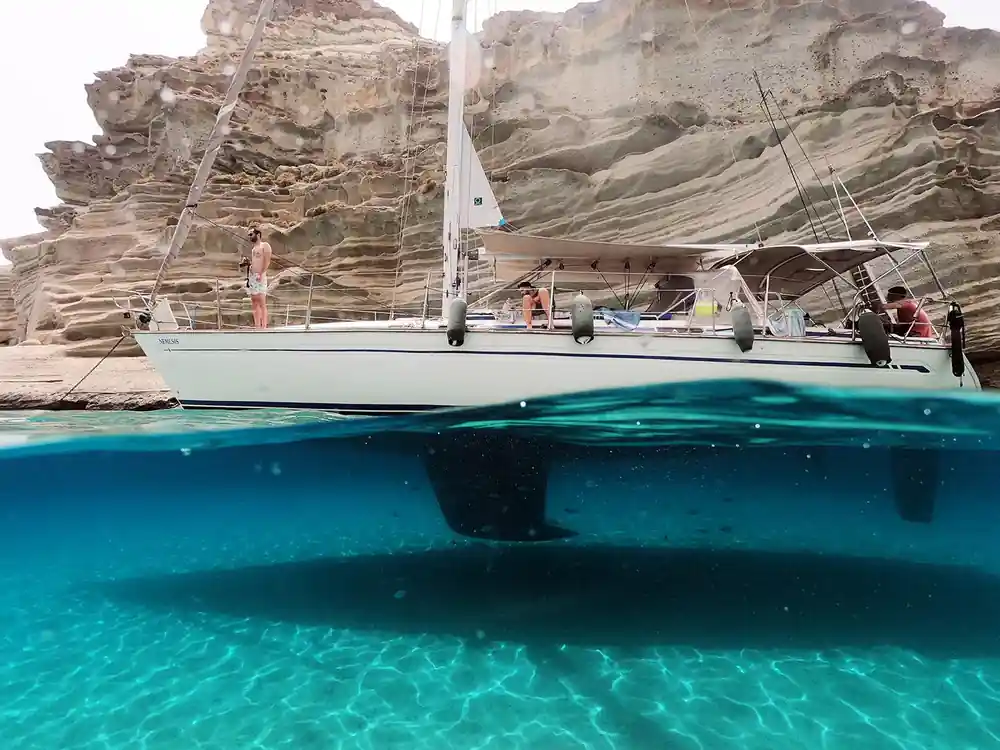
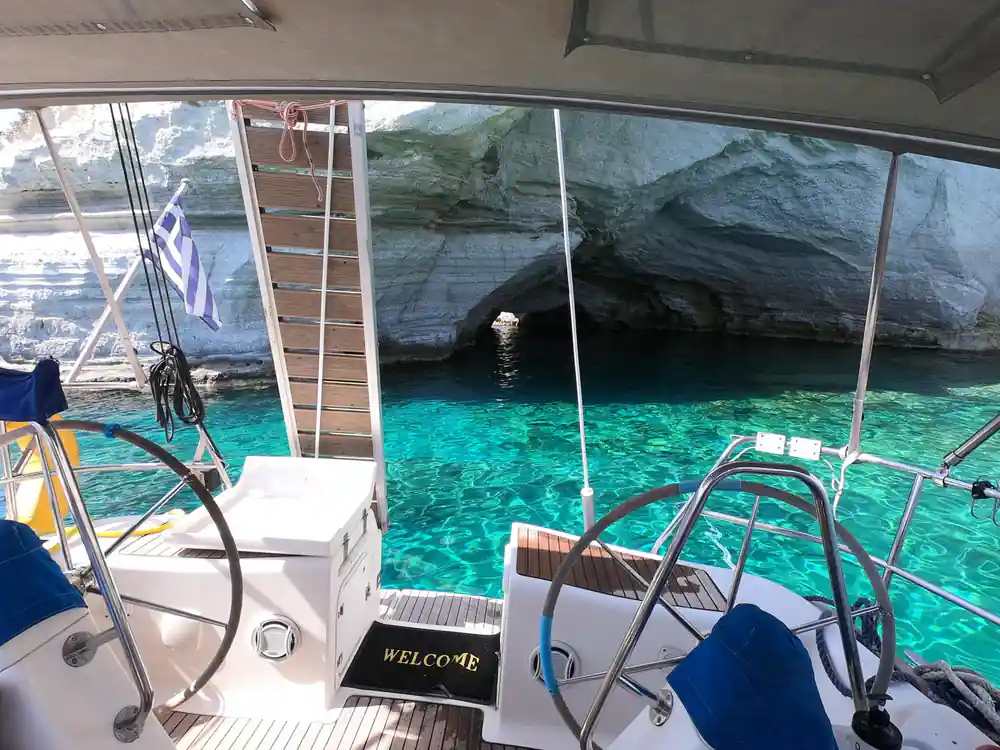
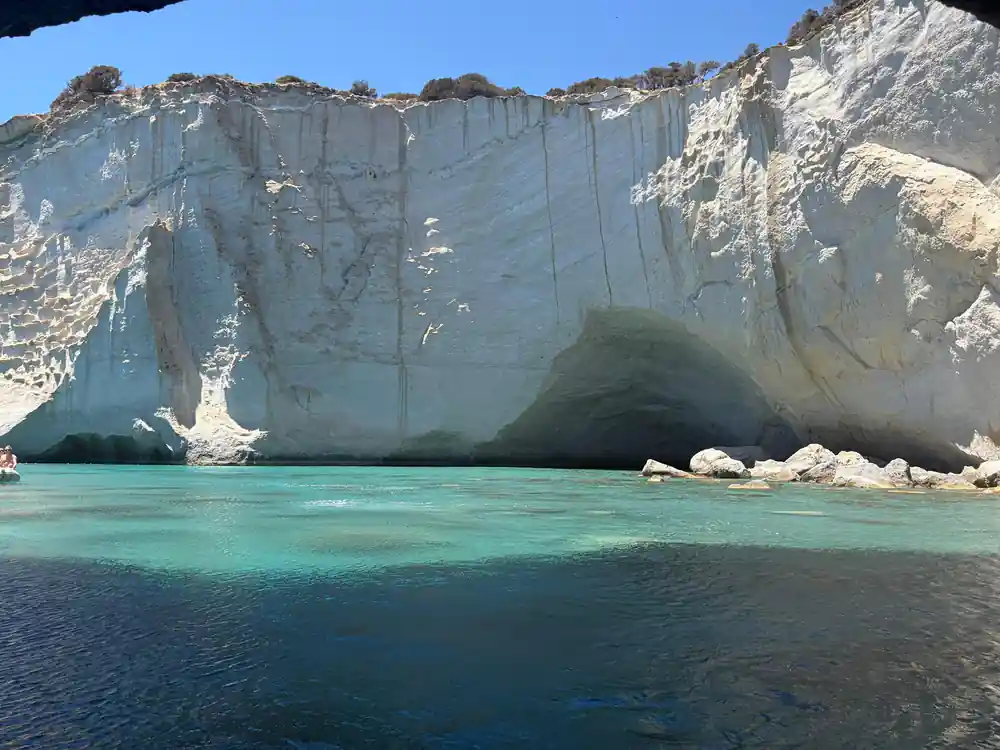
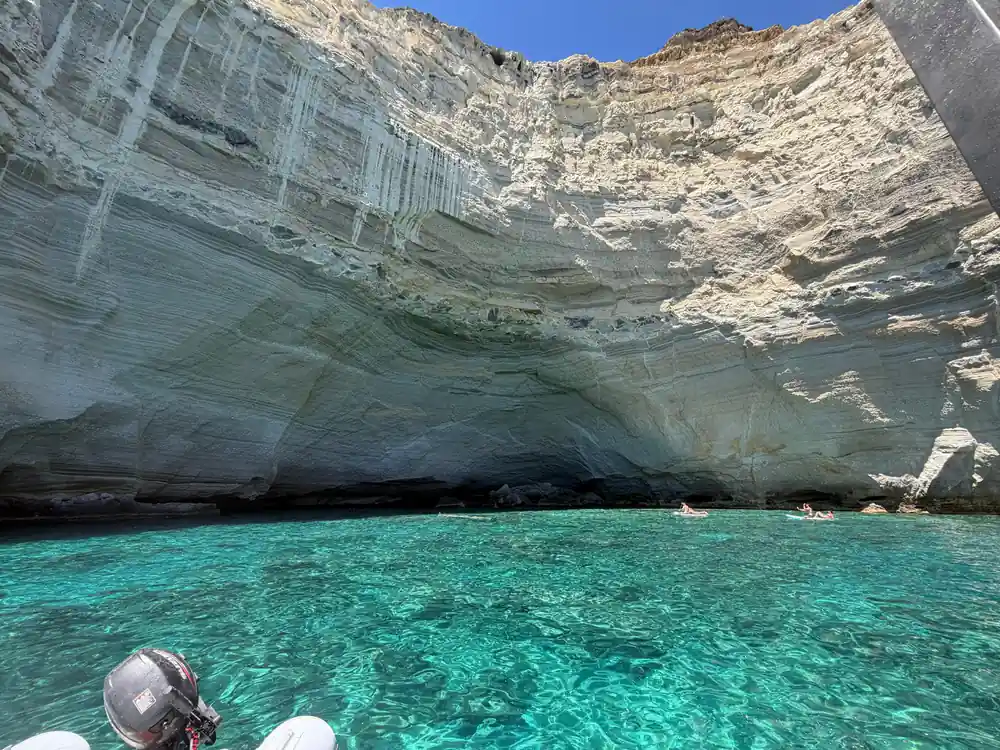
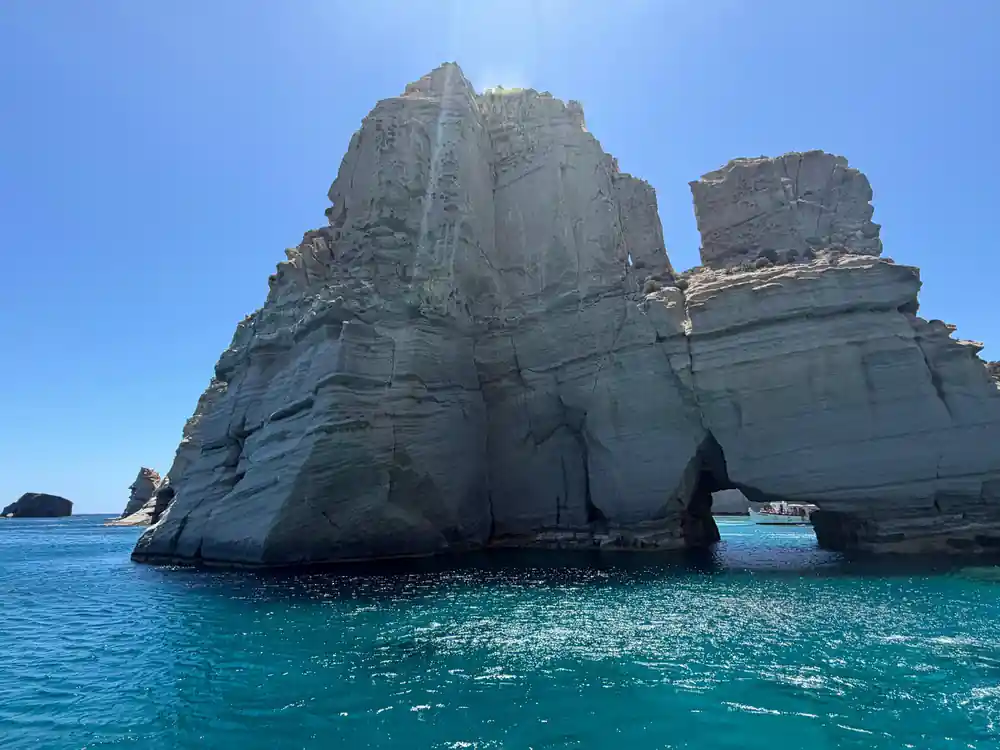
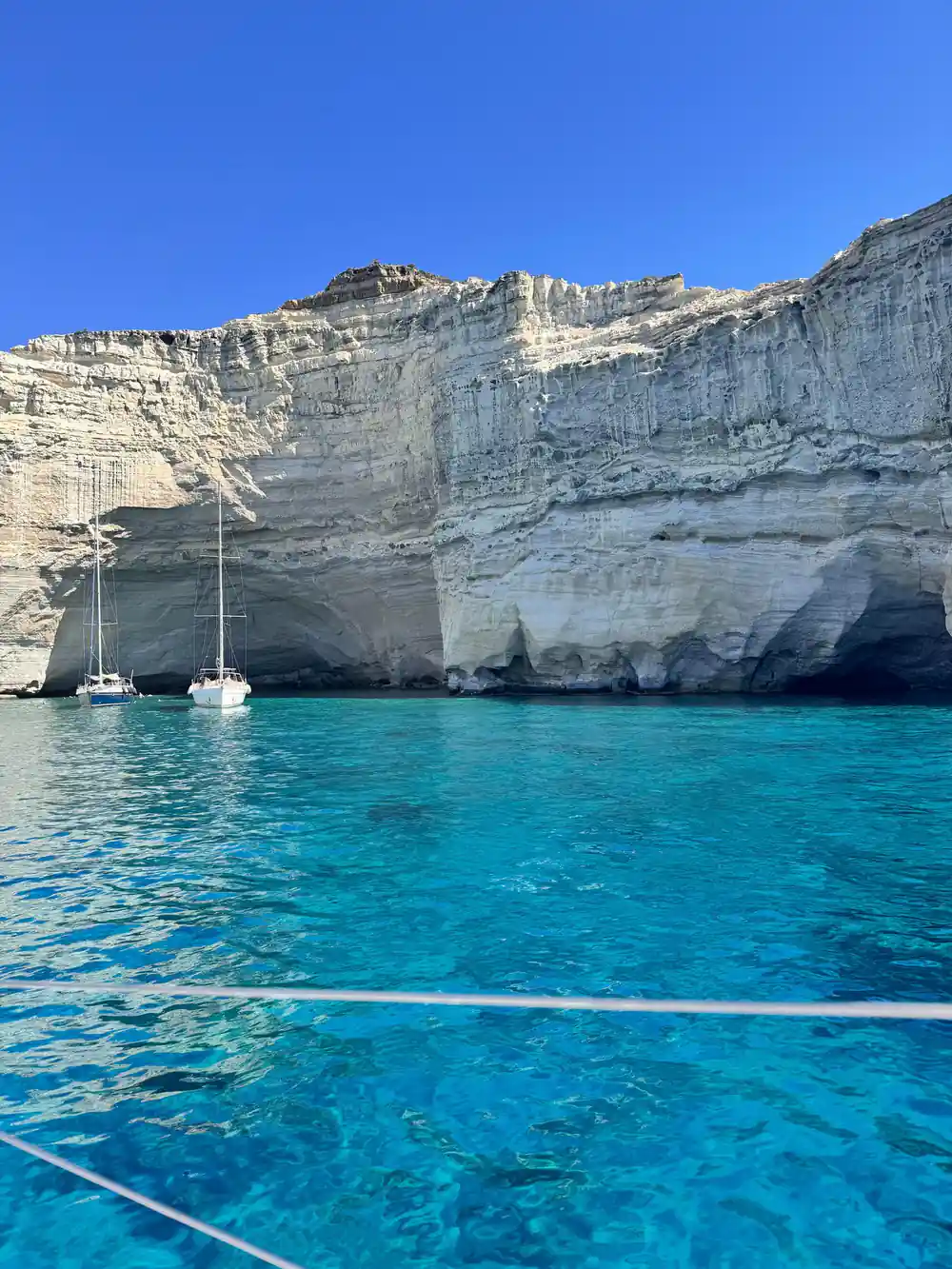
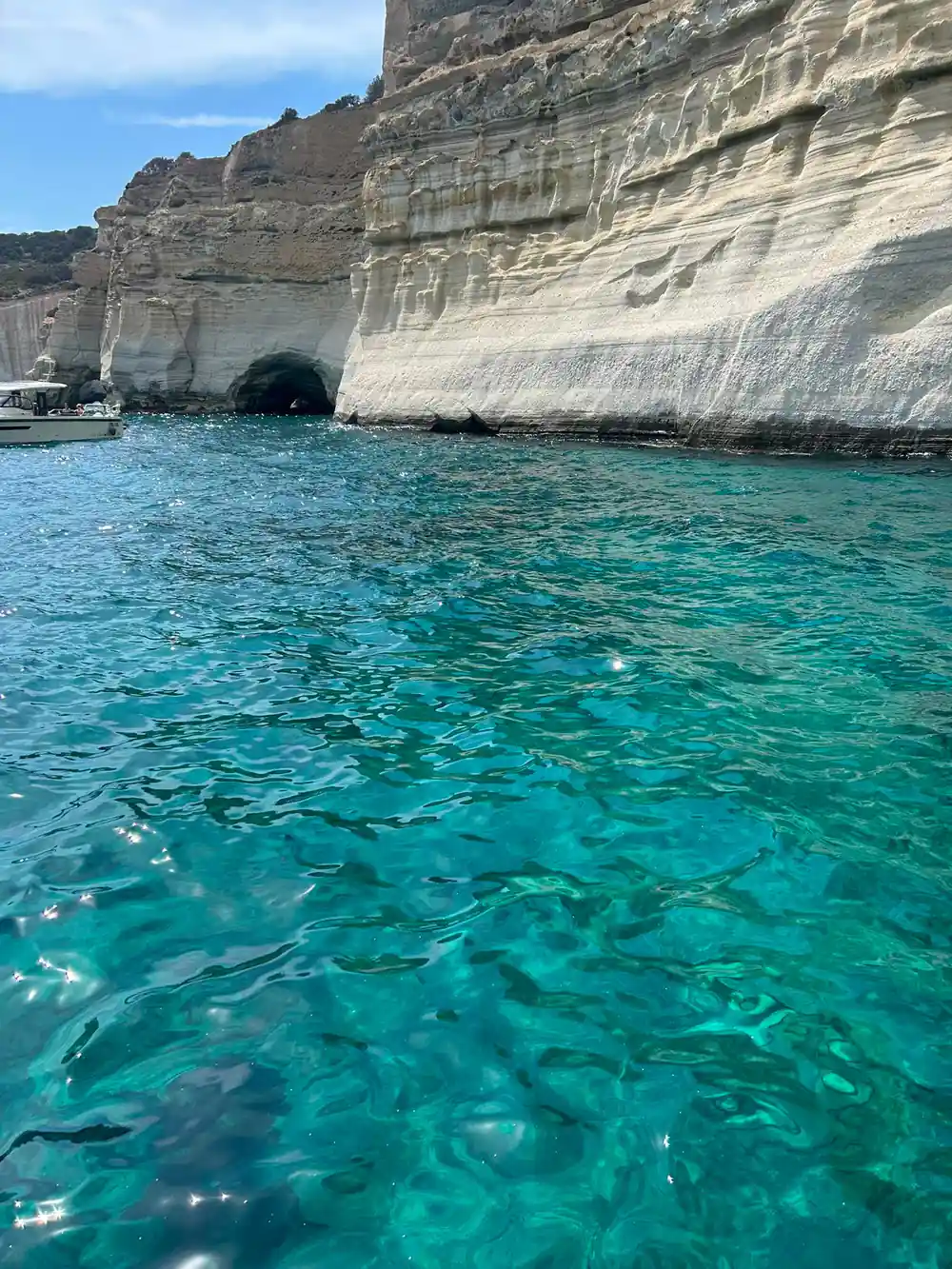
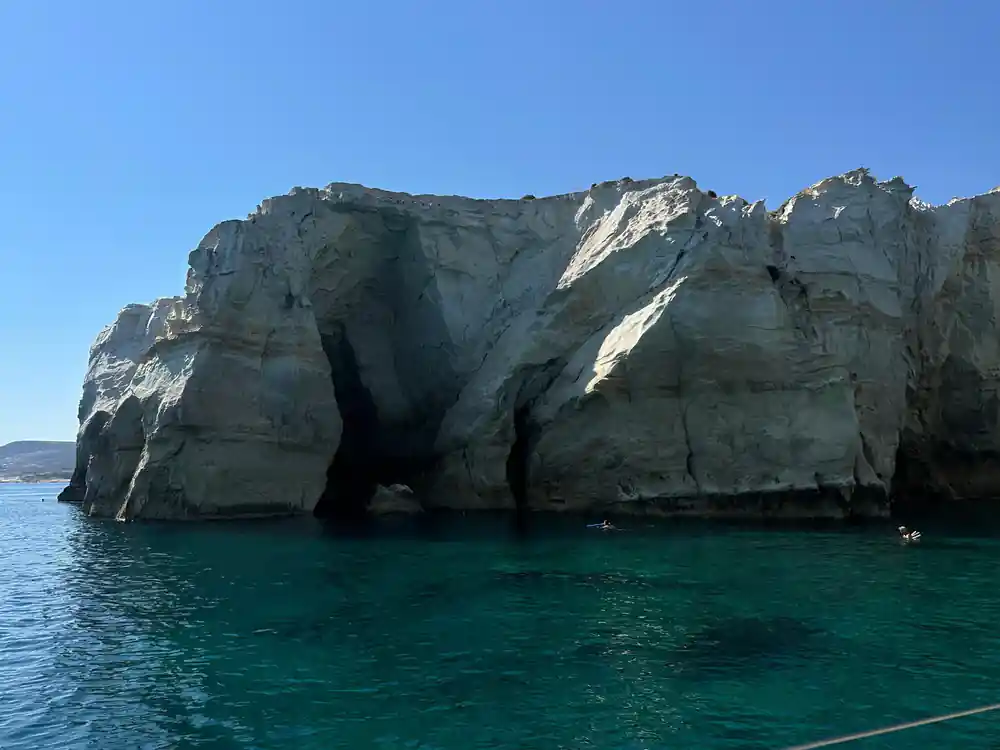
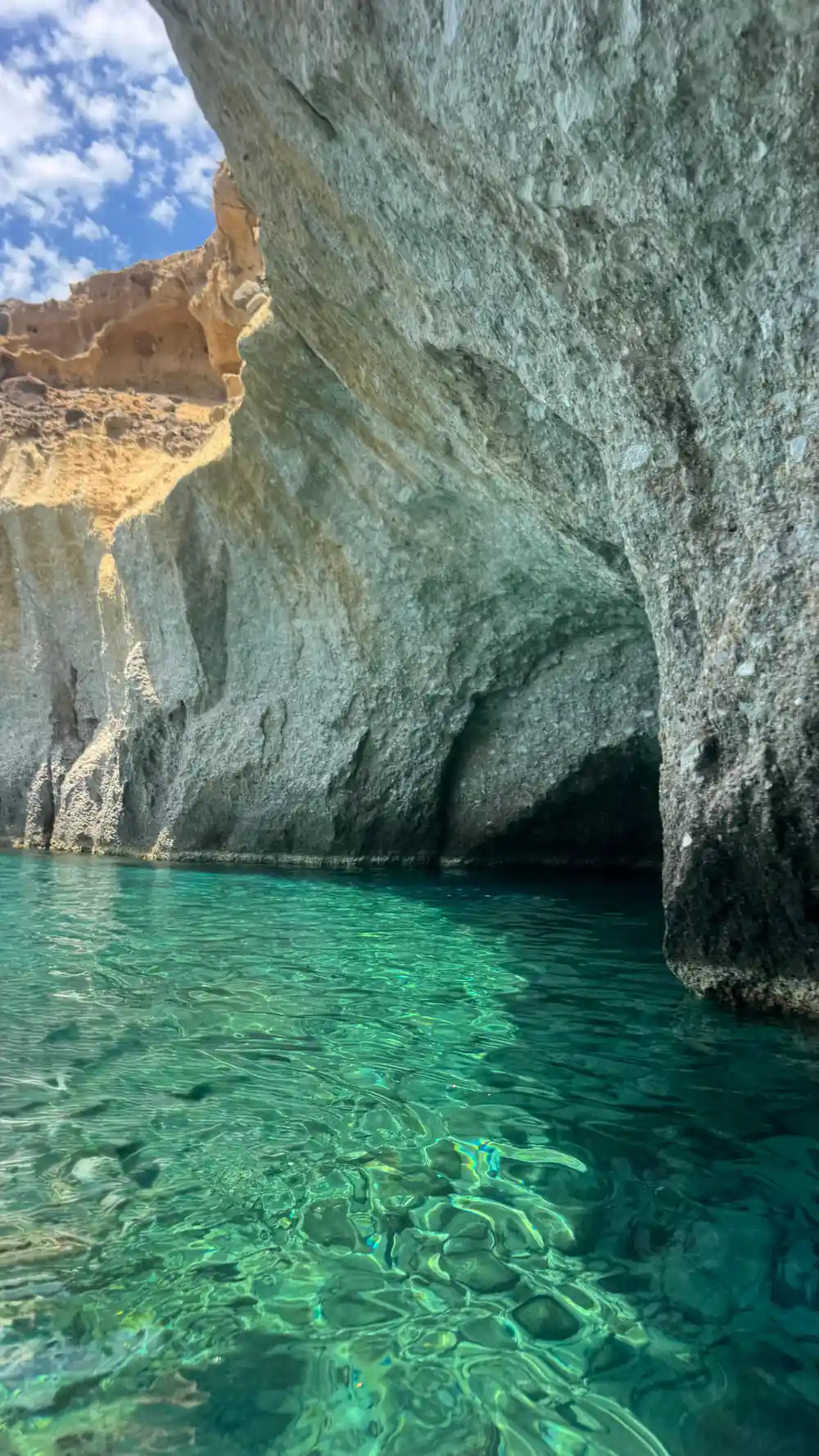
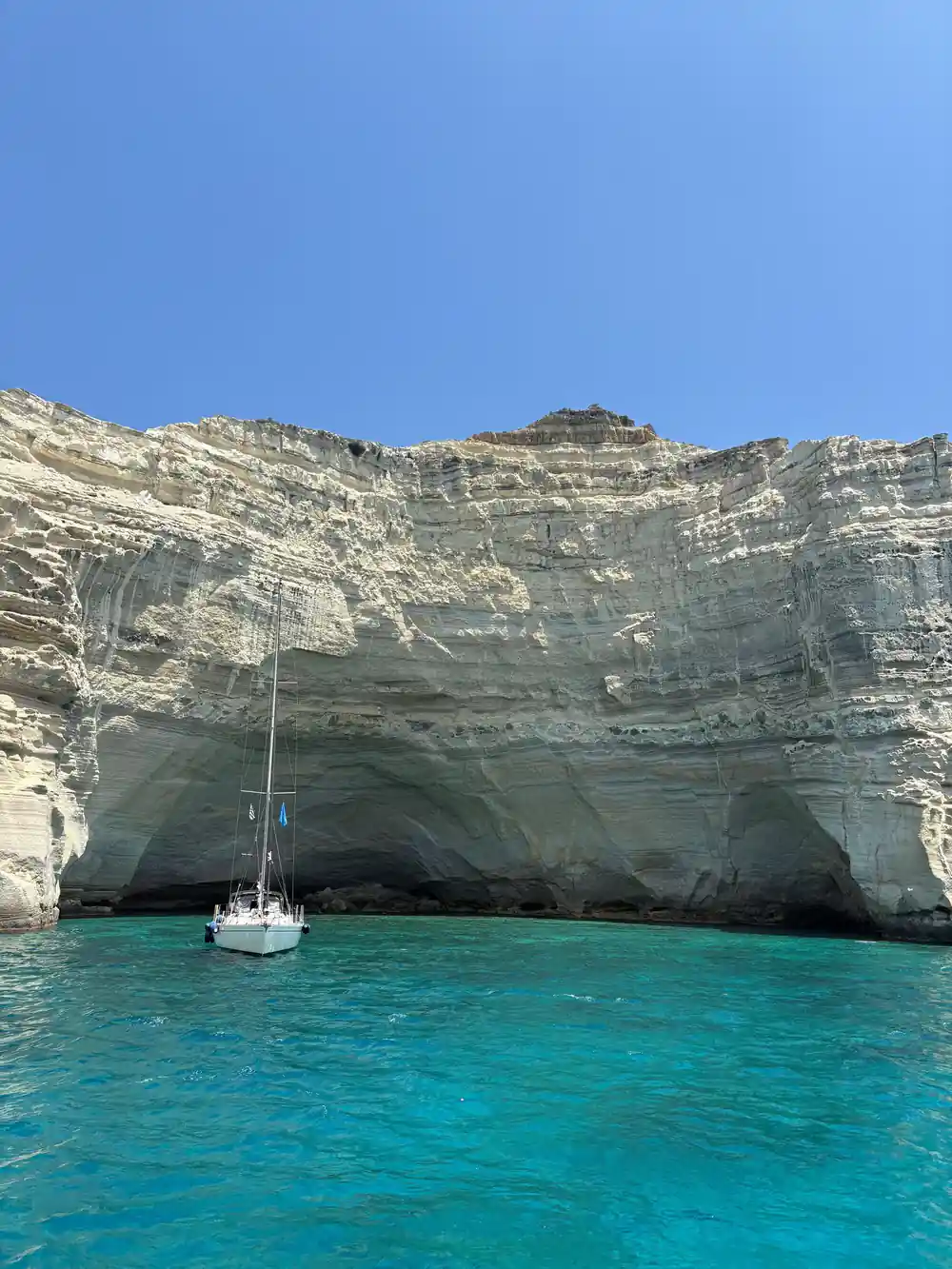
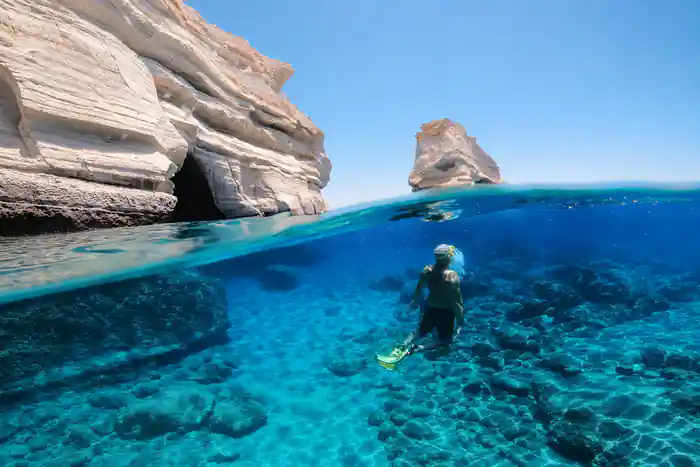
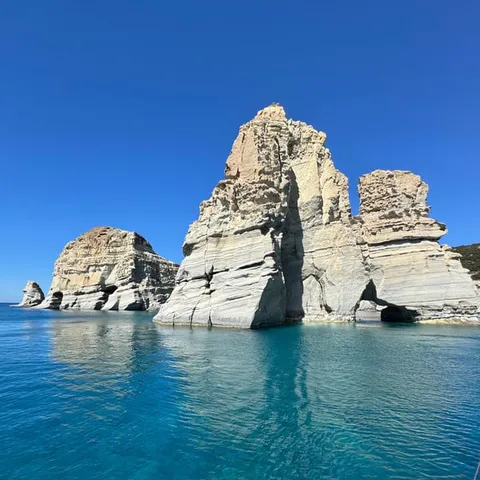
Kleftiko takes its name from the Greek word for a thief. The bay is invisible from inland, sheltered from most weather, and deep enough to hold a boat out of sight, which made it useful to people who did not want to be found. What is left is a cluster of white rock stacks and arches standing in water, with caves cut through them at sea level and passages a small boat can move between.
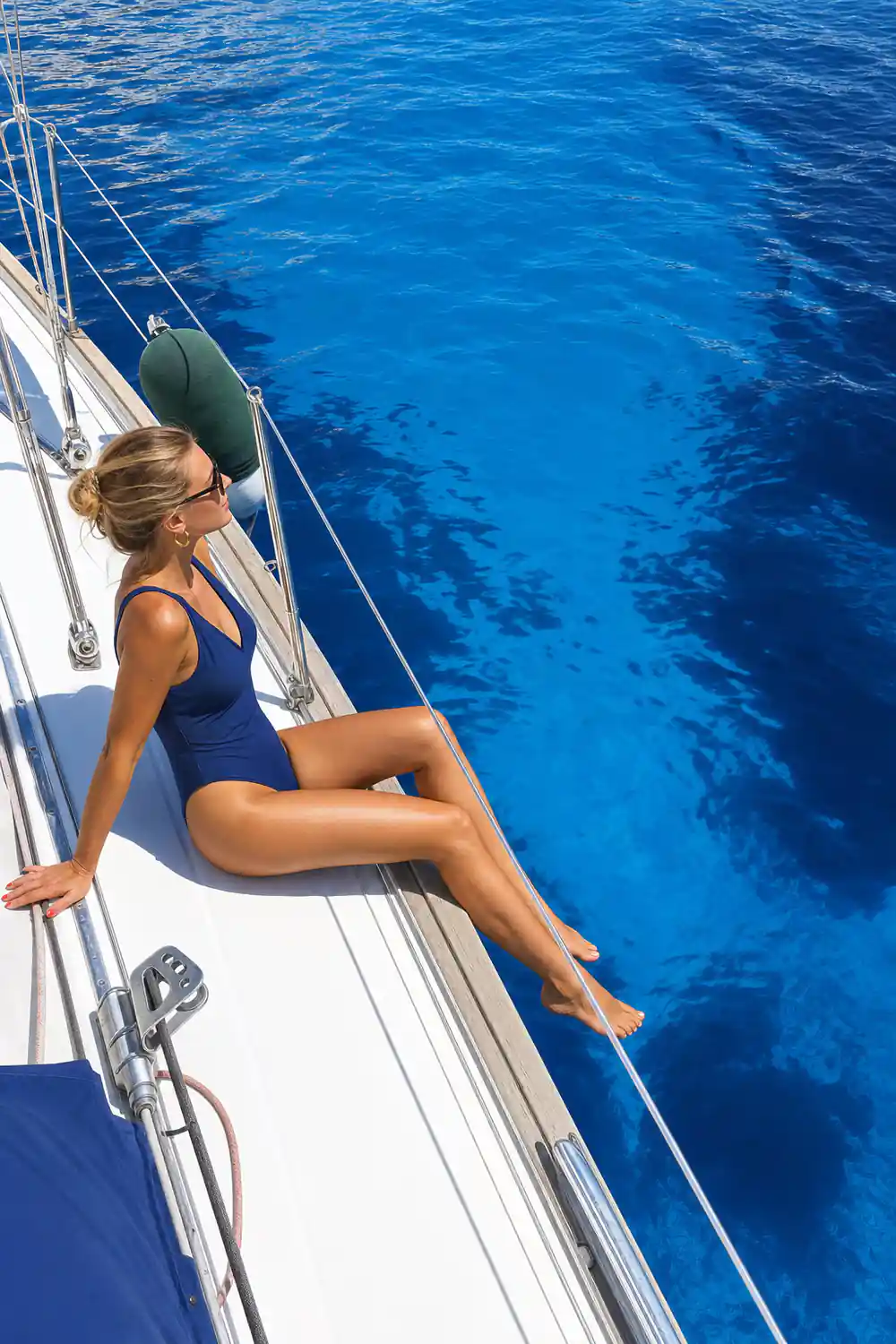
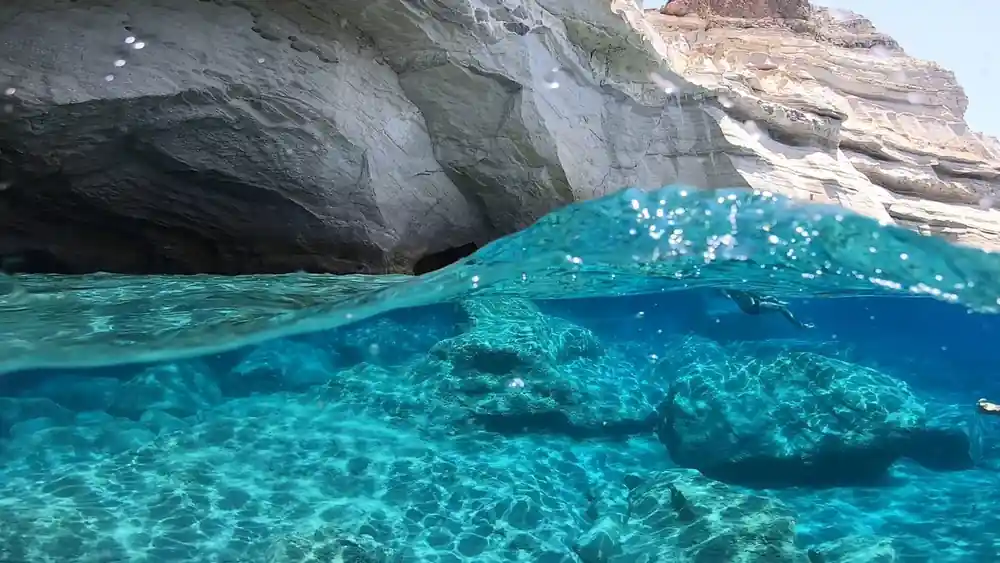
The rock is volcanic ash that settled, compacted and hardened, then was cut back by the sea. It is pale to the point of being hard to photograph in the middle of the day, and it continues under the surface. That is the reason for the colour everyone remarks on: the light goes down through clear water, hits a white seabed and comes back up. On a calm morning the boat throws a shadow onto the bottom.
The stop here is the longest of the day. You can swim among the stacks, look into the caves from the water, and get far enough out to see the whole formation at once, which is not possible from a deck.
Crossing to Polyaigos
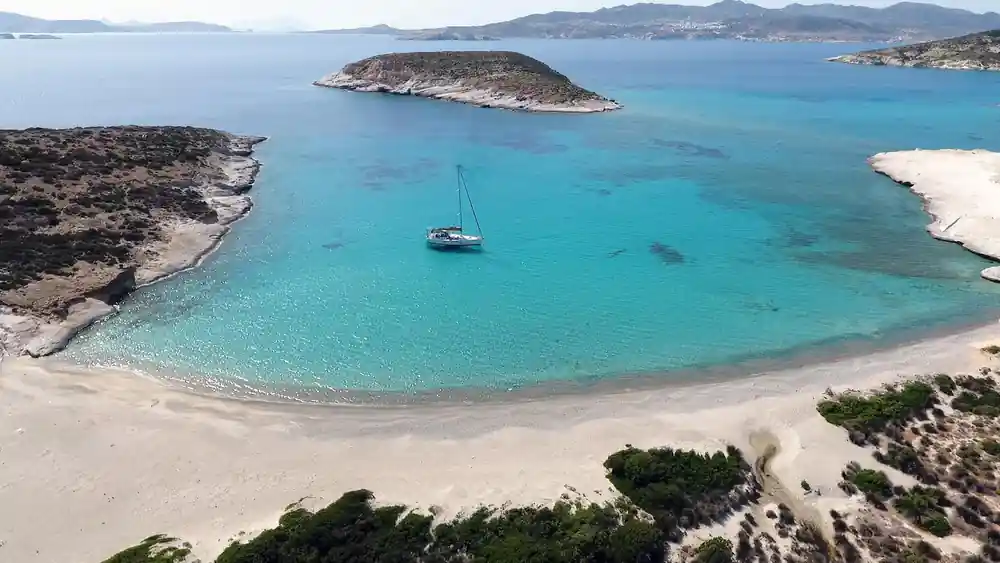
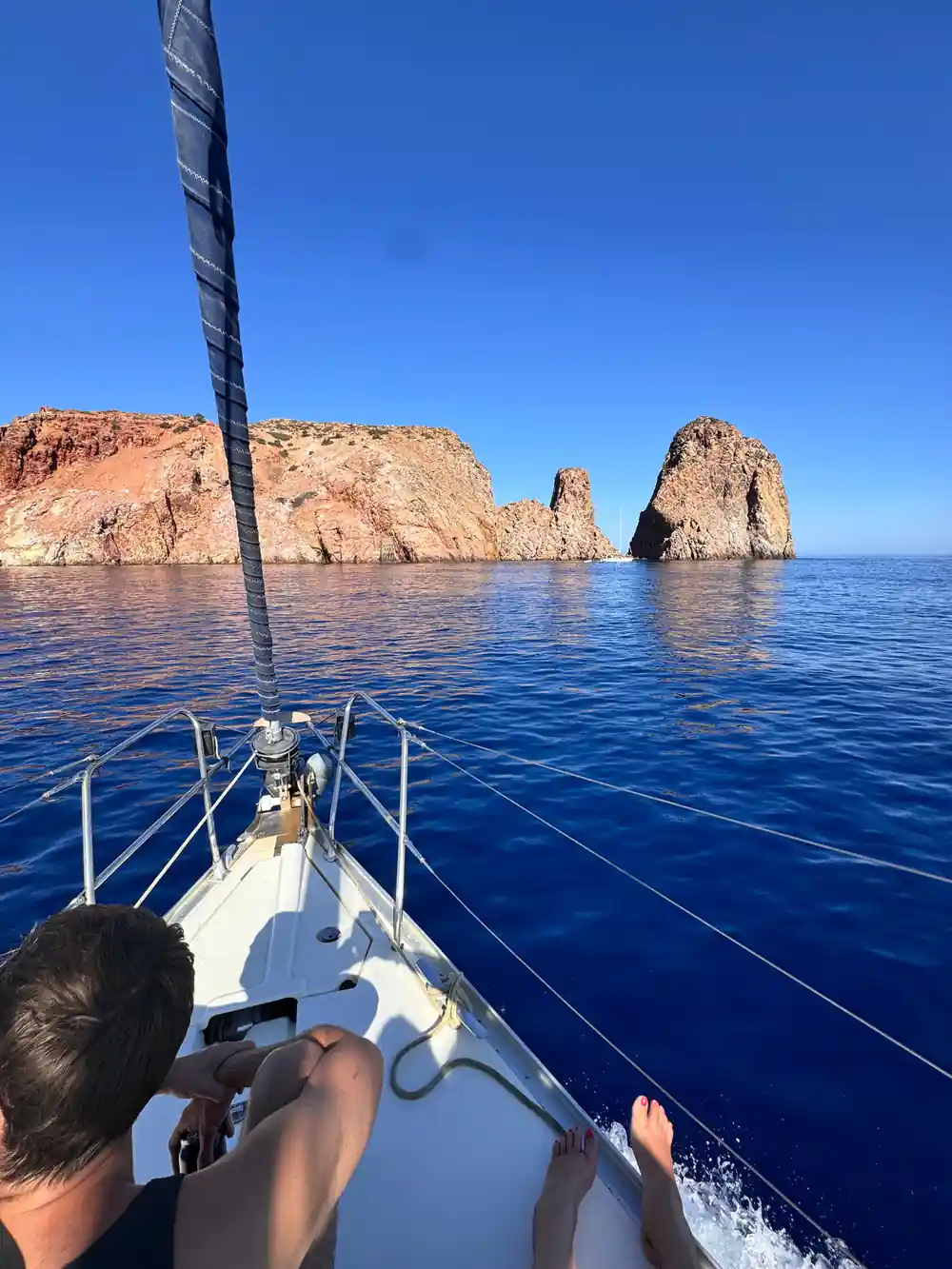
East of Milos, past the channel at Kimolos, lies Polyaigos. It is the largest uninhabited island in the Aegean, it has no road, no harbour and no residents, and it is protected, which is why it has stayed that way. The name means something close to many goats, and goats are more or less what is there, along with seabirds and a stretch of coast that has never been built on.
Getting there means a stretch of open water, and it is the one leg of the day where the sea is properly felt. It is also the reason the full circuit takes as long as it does. The reward is a swim stop off a shore with nothing on it: no bar, no umbrellas, no other way of arriving.
Very few people have heard of Polyaigos before they book, and almost nobody arrives with an opinion about it. It tends to be the part of the day they describe first afterwards, ahead of the caves everyone came for.
Eating and drinking aboard
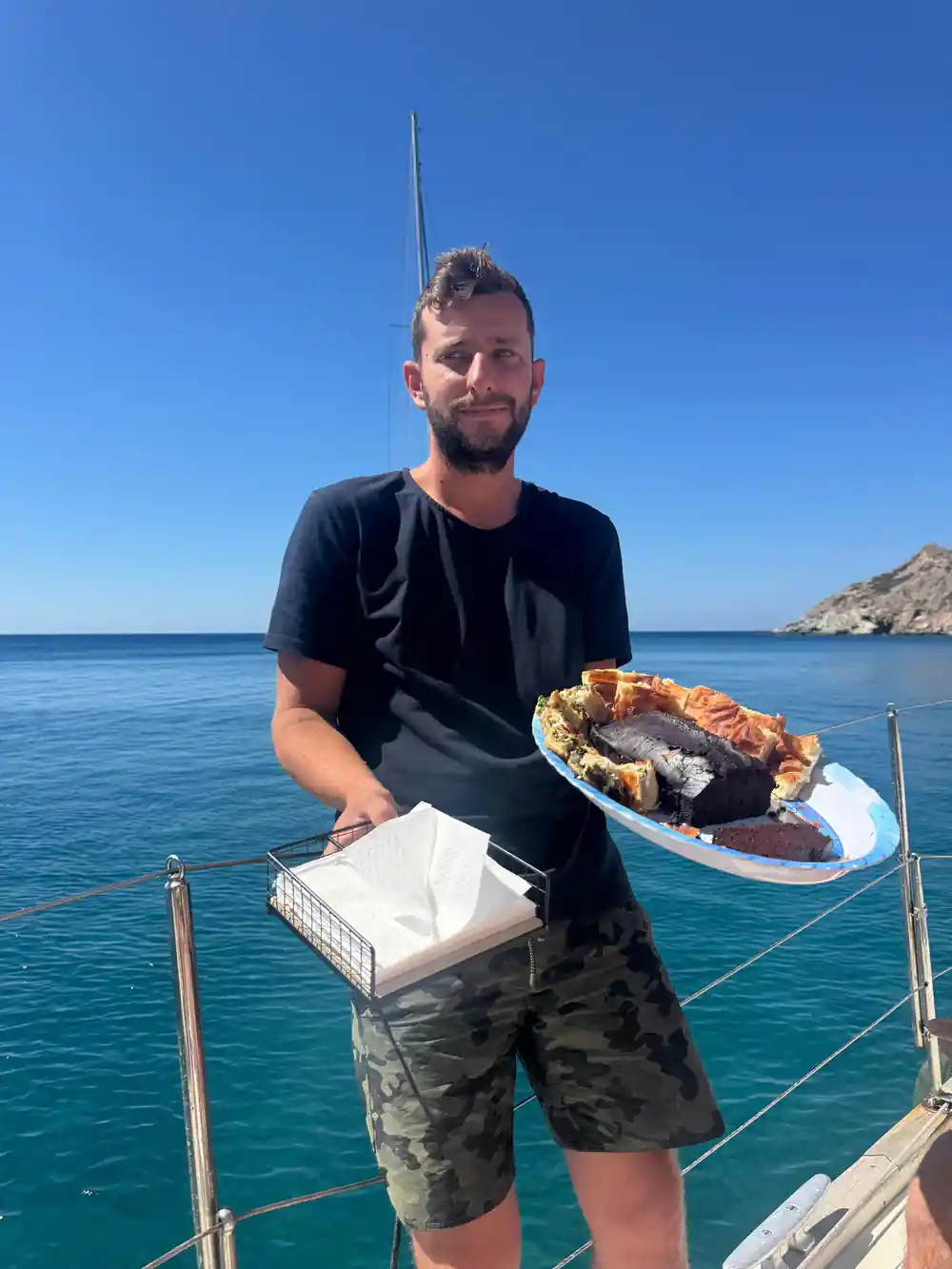
Breakfast is served on the way out, a hot lunch with dessert in the middle of the day, and snacks in between, all made aboard by the same two people running the boat. The bar stays open through the day and pours beer and wine. None of it is a buffet stop ashore; it happens on the deck, between swims.
This is the practical reason a ten-hour day works. Nobody is rationing a packed lunch or waiting to get back for a meal, and the halts are long enough to eat properly. Vegetarian and other dietary needs are handled if the operator is told in advance, and travellers who mentioned theirs at booking report being fed well rather than being given the leftovers.
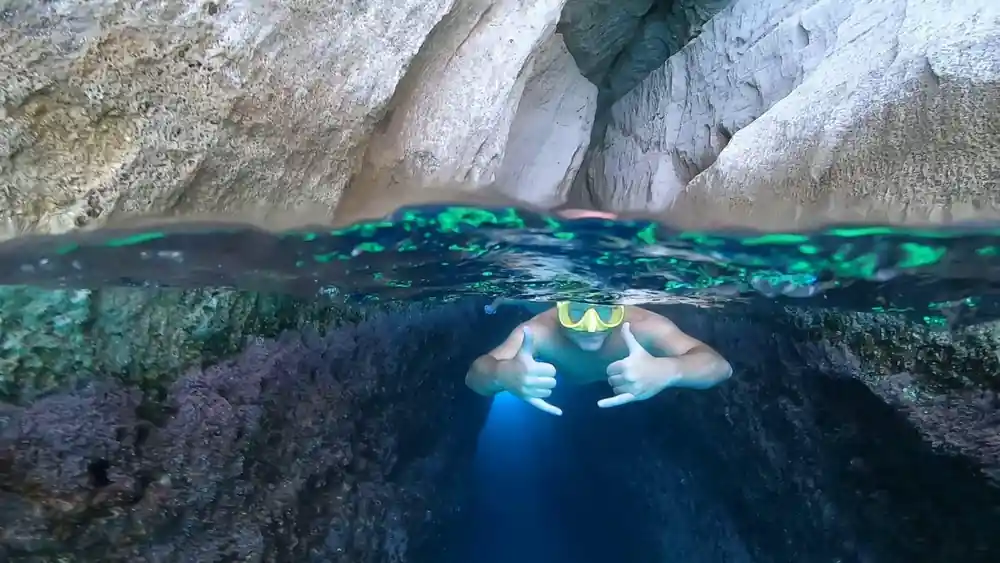
Snorkelling gear is the one thing not provided, and it is worth reading that line on the booking page rather than discovering it at the first swim stop. A mask and snorkel take no room in a bag, and the water at these anchorages is clear enough to be worth having one.
The boat, the crew and the shape of the day
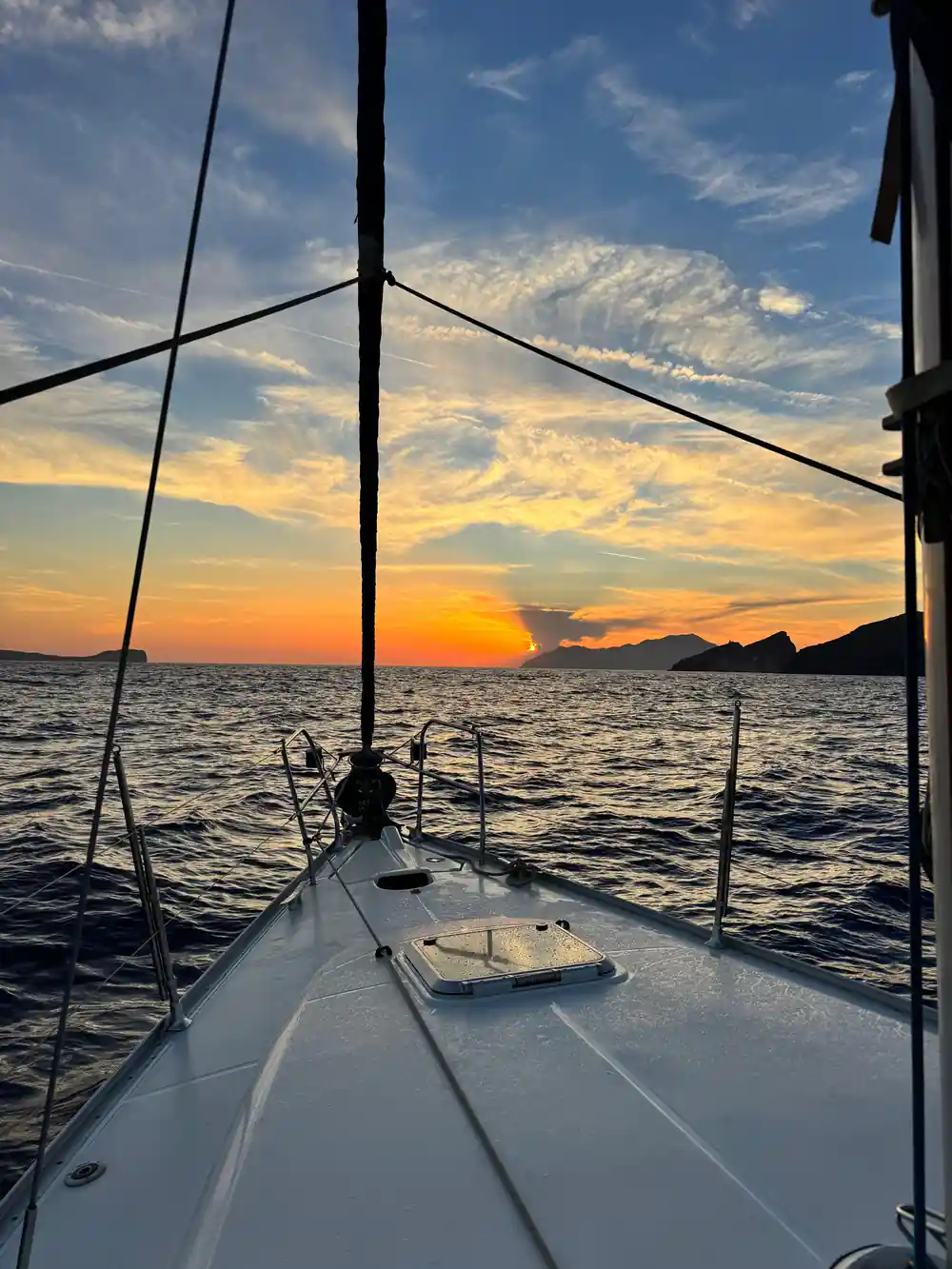
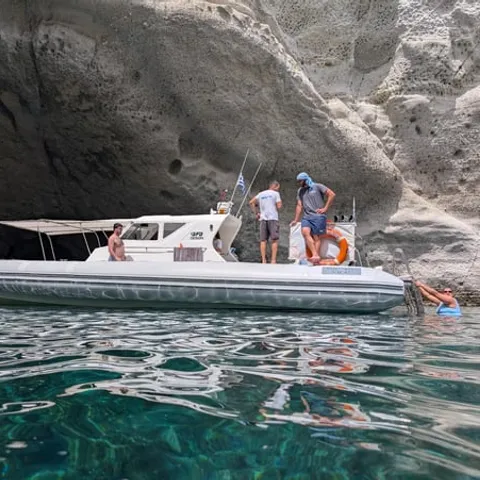
The crew is two people, and they do everything: run the boat, cook, pour, and talk about what you are passing. The commentary is in English and it is closer to conversation than to a script, which is what makes the villages and the mines register rather than sliding past as scenery.
The group is small, around eighteen at capacity, and that number is worth knowing before you book. It is companionable rather than spacious, and on a busy sailing the deck is full. Travellers who describe the day as perfect and travellers who wish there had been a few fewer people are describing the same boat.
Departure and return are both at Adamantas, from a meeting point a few minutes on foot from the ferry quay, so no transfer is needed at either end if you are staying anywhere near the port.
Who the day suits
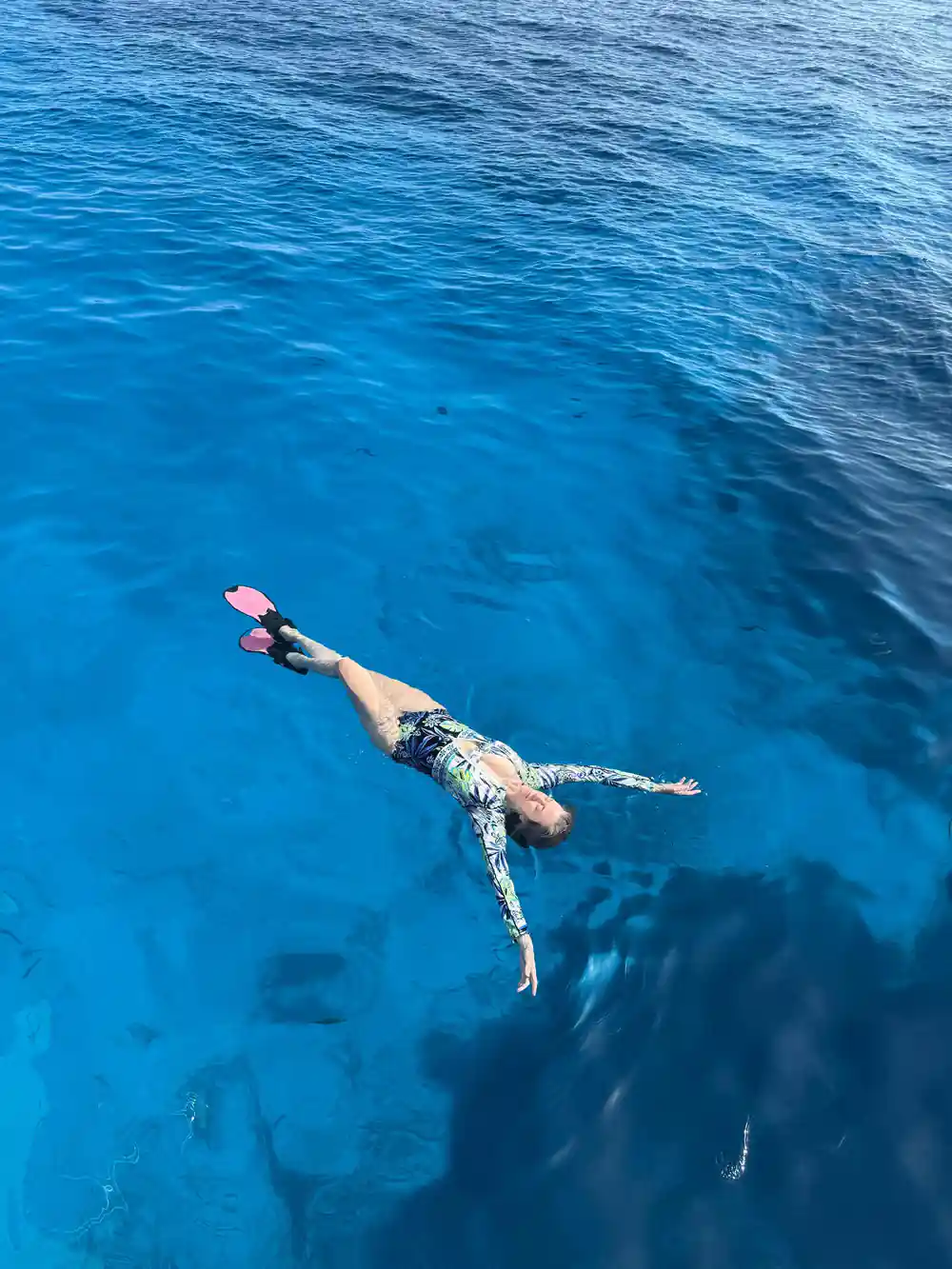
It suits people who want to swim. Four halts in deep, clear water off a ladder is the spine of the day, and a confident swimmer gets the most out of it. Nobody is required to get in, and staying aboard is a perfectly good way to spend the stops, but a full day on a boat whose stops are all swims is a strange choice if the water is not the appeal.
It suits people with one or two days on Milos who want to see the parts of it that no road reaches. It suits families with children old enough to be comfortable in deep water off a boat, and reviews from parents of teenagers are consistently good. It suits anyone who would rather have a long, slow day than a fast one.
It suits people less well if a fixed itinerary matters to them. The wind on this coast can and does change the route at short notice, the operator decides in advance and says so, and the day is still a good one when it happens. If that would spoil it, this is worth knowing first.