The main points
- Sarakiniko Beach is the most well-known shore on Milos, five kilometers from Plaka, and it looks completely different from the water.[1]
- Boat tours around Milos start from Adamantas in the centre of the island, so the white rock can be an early stop on a full-day loop.[2][3]
- Milos Boat Tour: Kleftiko & Polyaigos Swimming With Meals runs 10 hours from US$185 with a live English-speaking guide.[3]
- Around Milos the Aegean in July to September is 23-26°C (73-79°F), described as ideal temperatures for long swims and snorkeling.[4]
- Full-day boat trips range from 6-8 hours long and can even go up to 12 depending on the sea conditions.[5]
- Top choice Kleftiko and Polyaigos day from US$185 Duration10 hours[3]Rating4.82 from 282 reviews[3]Guide languageEnglish[3]Sarakiniko stopYes[3] Check availability
- Milos and Polyaigos sail from US$144 Duration10 hours[6]Rating4.92 from 1,913 reviews[6]Guide languageGreek, English[6]Sarakiniko stopYes[6] See this tour
- Guided cruise to Kleftiko from US$152 Duration9.5 hours[7]Rating4.96 from 781 reviews[7]Guide languageEnglish, French, Greek[7]Sarakiniko stopNot on the stop list[7] See this tour
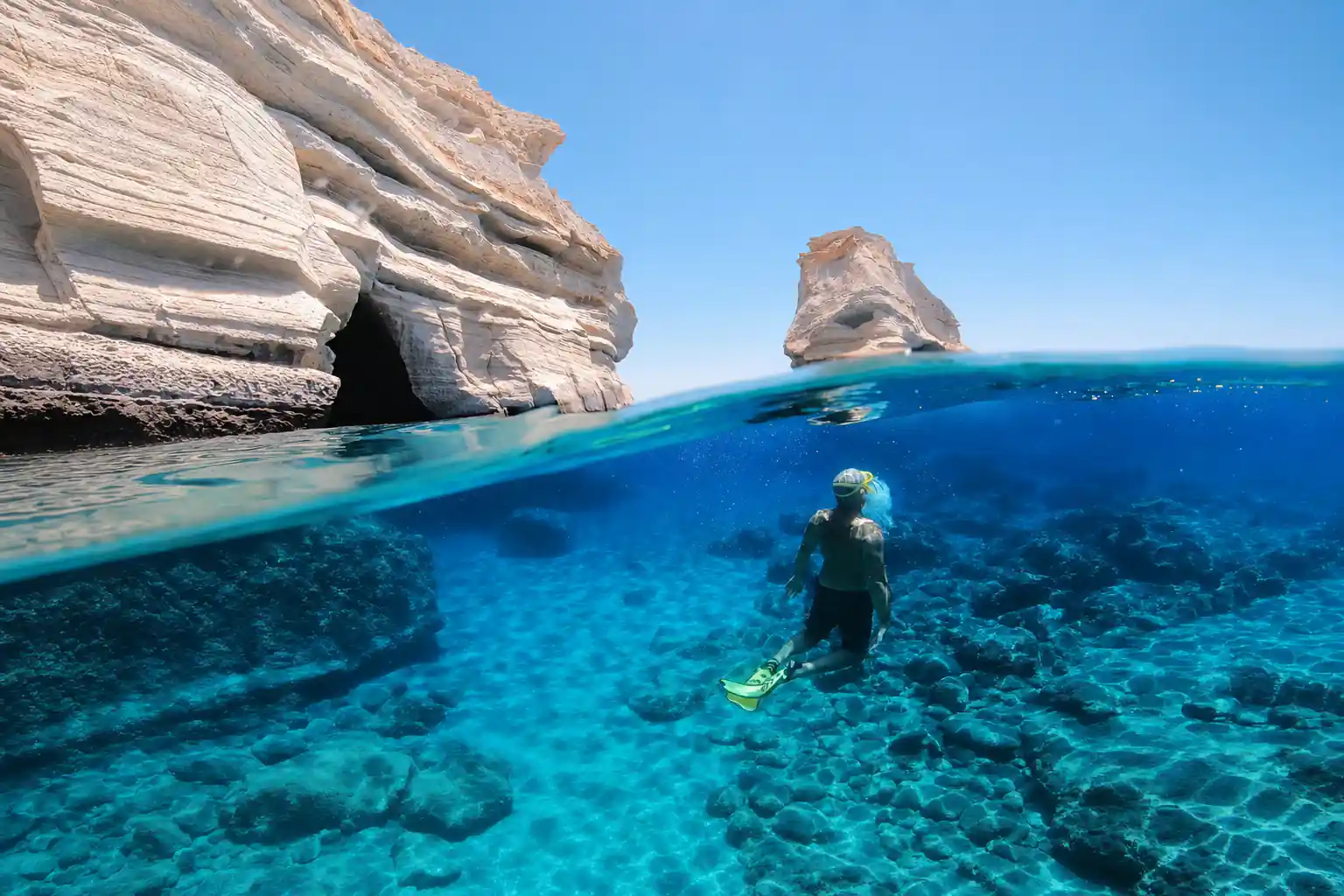
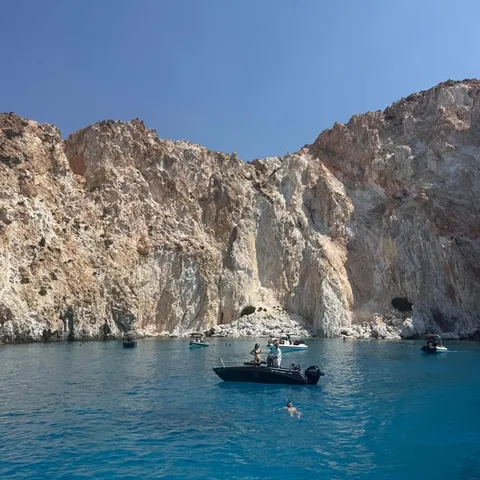
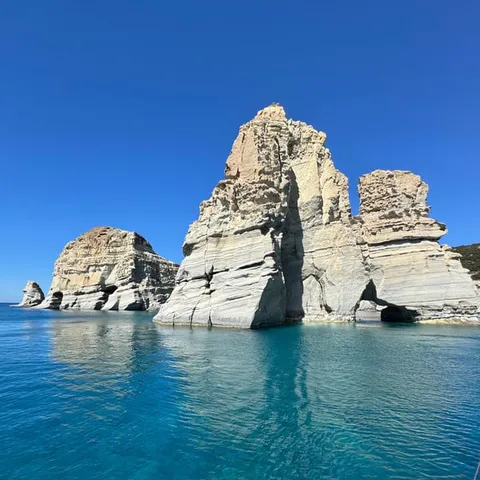
Located just five kilometers away from the scenic town of Plaka , Sarakiniko Beach in Milos is the most well-known shore on the island, boasting a rarely-sighted geological profile that strikes a chord in every visitor!
Sarakiniko from the water: the verdict
Book and board
Two shores, one beach of white rock
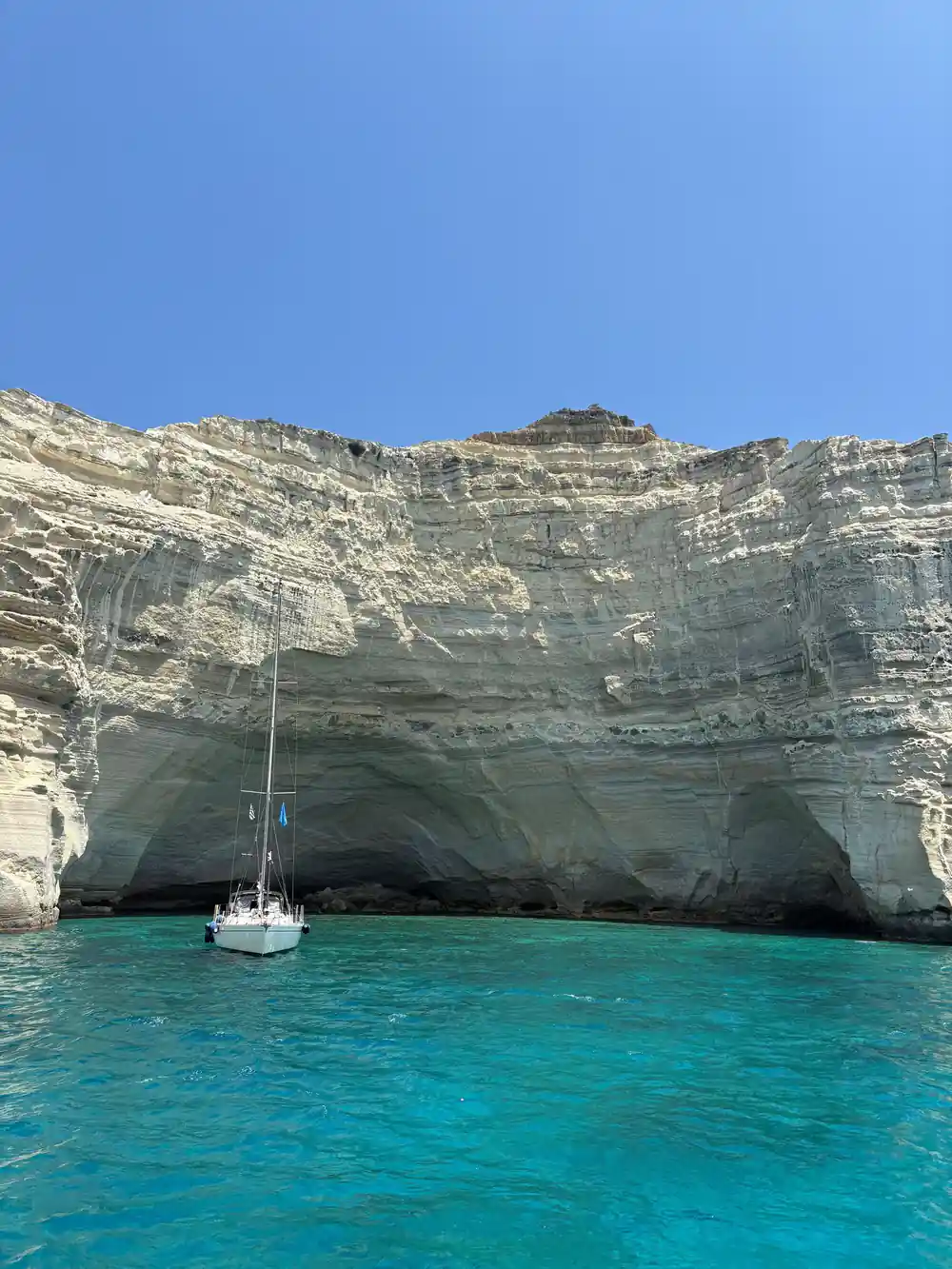
Sarakiniko Beach is the kind of place people recognise before they ever set foot on it. Photographs of smooth white folds sliding into blue water travel further than the island itself does, and that image is usually what brings people to Milos in the first place. It is the most well-known shore on the island and sits just five kilometers from Plaka.[1] Two experiences wait here, and they feel nothing like each other: the land side, where scooters and hire cars park along the ridge, and the sea side, where the same white rock appears as a cliff wall, a narrow inlet and a line of shallow caves.
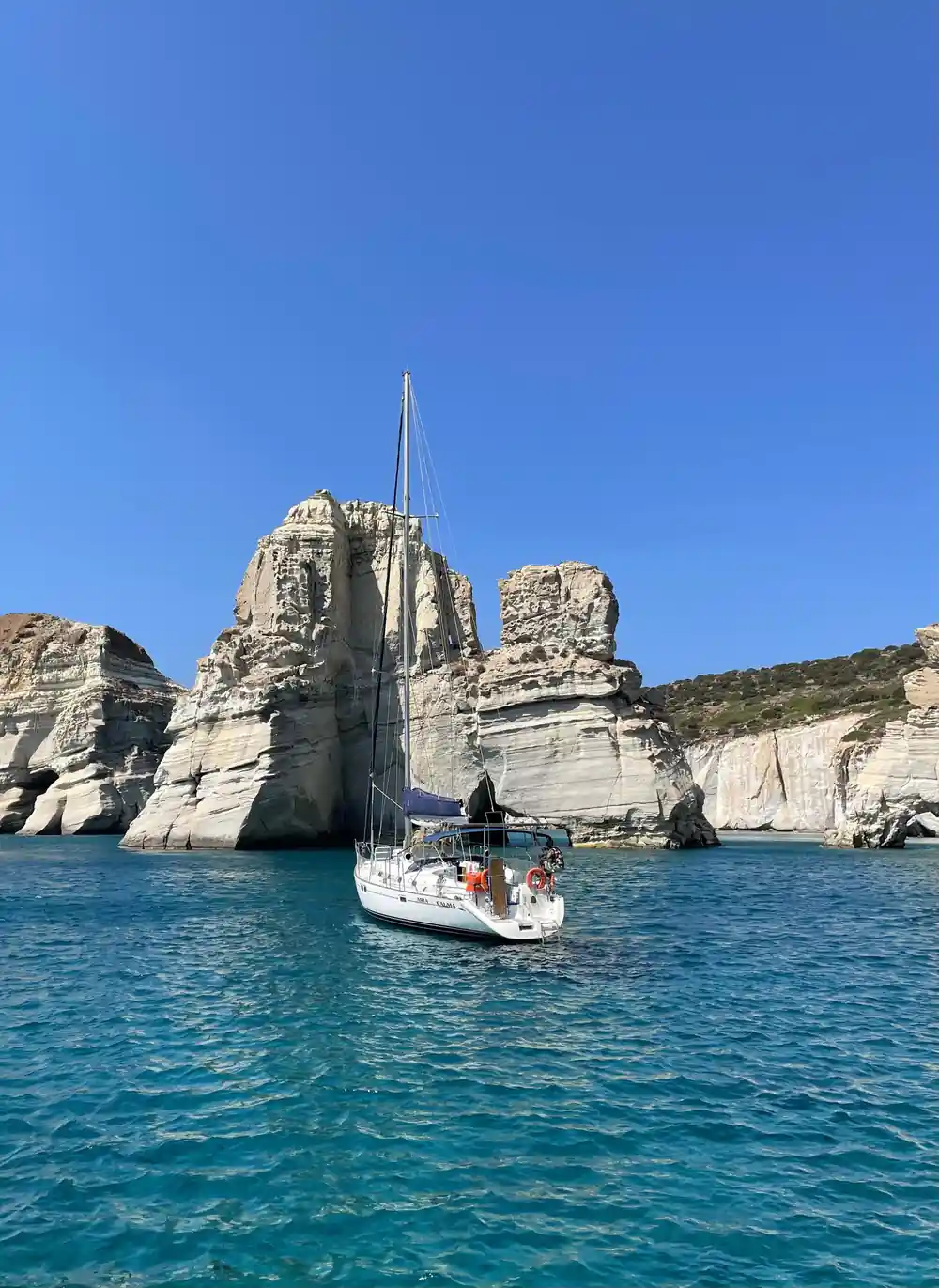
From the water the scale changes. What looks from the car park like a small, tidy cove turns into a long sweep of eroded stone, with a low arch at one end and a bright bowl of rock at the other. Boats hold off a little and let swimmers look back at the whole amphitheatre at once. If you have only seen Sarakiniko in photographs, the view from the deck is the one that makes sense of it: white stone, hard blue water, and a horizon with nothing on it at all.
What the white rock actually is
Milos is a volcanic island, and Sarakiniko is one of its purest expressions: pale, soft, layered stone that has been smoothed into rounded shelves and shallow bowls. Up close it is neither sand nor marble. It is a fine, chalky rock that throws the sun back so strongly that photographs taken at midday lose all their detail. Mineral activity on Milos began around 8000 BC with the mining and trading of obsidian, a hard black stone of volcanic origin used to make tools and weapons.[8]
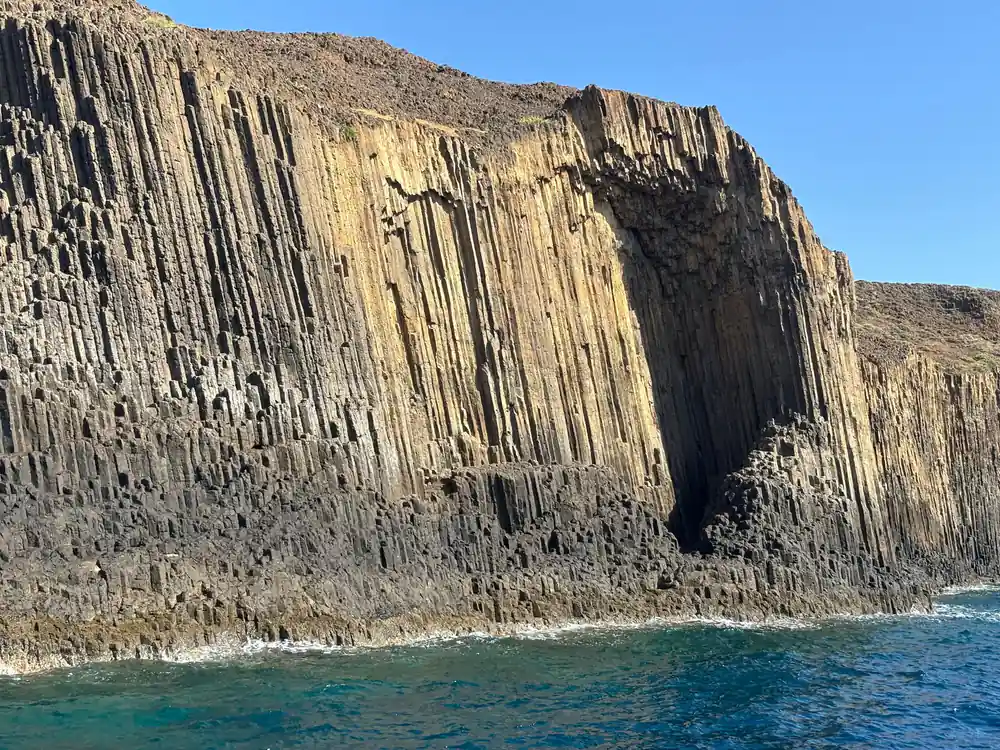
The same restlessness shows all along the north coast. Glaronisia is a group of three small uninhabited volcanic islets whose name means Seagull Islands, and they are famous for hexagonal basalt columns that rise straight from the sea.[9] Seeing both in one day is one of the quiet arguments for going by boat: dark, straight columns and pale, folded shelves sit a short hop apart. A geology that took a very long time to settle is remarkably easy to read from a deck.
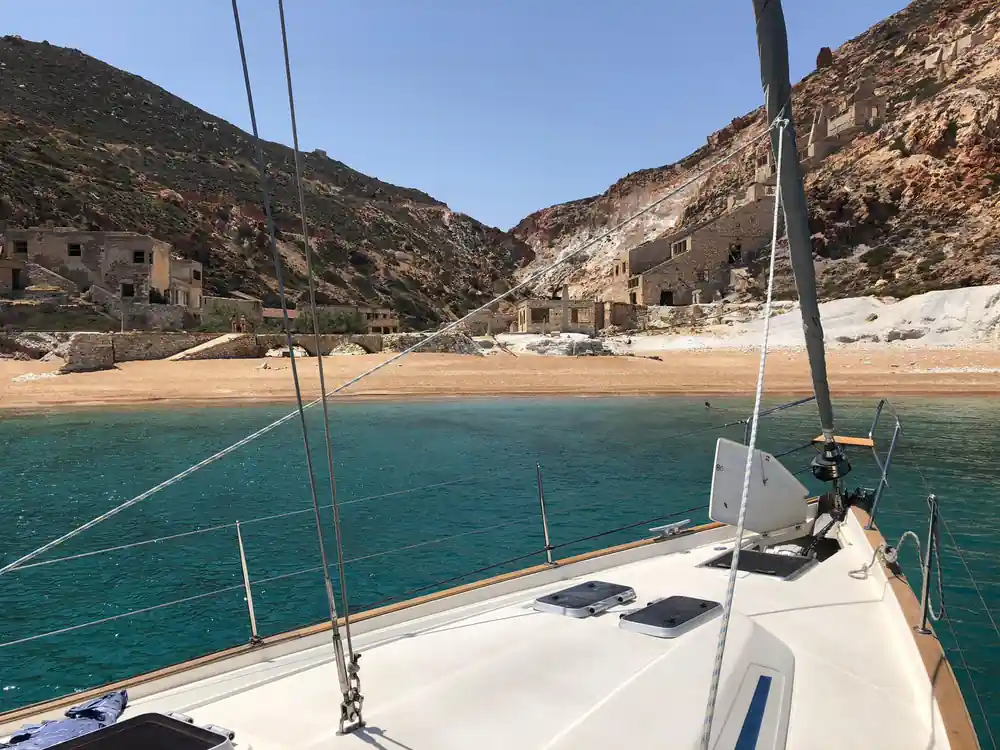
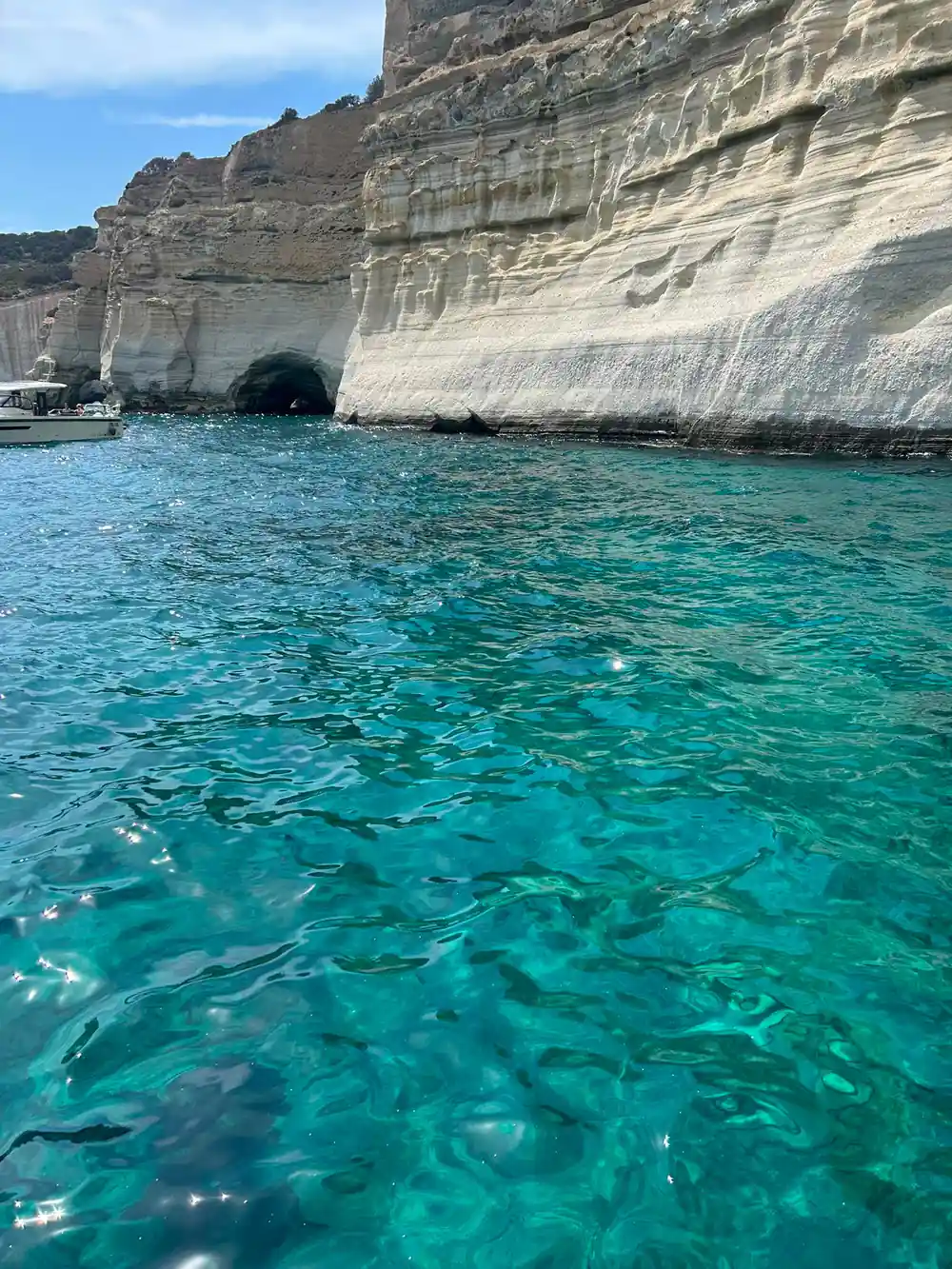
White stone shelves and hard blue water at Sarakiniko, seen from the deck
How the sea cut the inlet
The shallow bay started as soft volcanic rock and was then worked on by weather for a very long time. Wind and salt spray open hairline cracks, winter swell widens them, and the softest bands of stone go first, leaving the harder ones standing as ribs and low ridges. That is why the inlet looks carved rather than broken, with rounded edges and a floor of flat stone that dries in the sun between swims. Nothing here is sharp. Every edge has been rounded off, and the pale stone stays warm long after the sun has gone.
The wind that shapes this coast is the Meltemi, a strong seasonal northerly that blows from late spring to early autumn and often peaks in July and August; in the right conditions it gives experienced crews an ideal sailing breeze.[10] On a boat the difference between a sheltered bay and an exposed point is easy to feel, and the north coast offers both within a short distance of each other. An afternoon on deck here is brisk, bright and full of salt.
The wreck in the bay
One dark shape interrupts all that white. A rusting cargo ship lies half in the water near the mouth of the inlet, its hull streaked orange and brown, and it has become almost as photographed as the rock around it. It is not presented as a dive site with a plaque and a story; it is simply there, a hard silhouette that anchors the view and suggests that this coastline has seen hard weather.
From the deck of a boat the wreck is a useful landmark. Once it slides past your shoulder, the inlet is behind you and the long run west toward the next stop has begun. Swimmers tend to make for the shallows near the entrance or the flat shelves further in, where the stone is easy to sit on and there is no scramble over loose rock. Either way, the water is clear enough to see your own feet.
from US$185
The Milos Boat Tour runs 10 hours with a live English-speaking guide and stops at Sarakiniko Beach on the way to Poliegos.[3]
What the name remembers
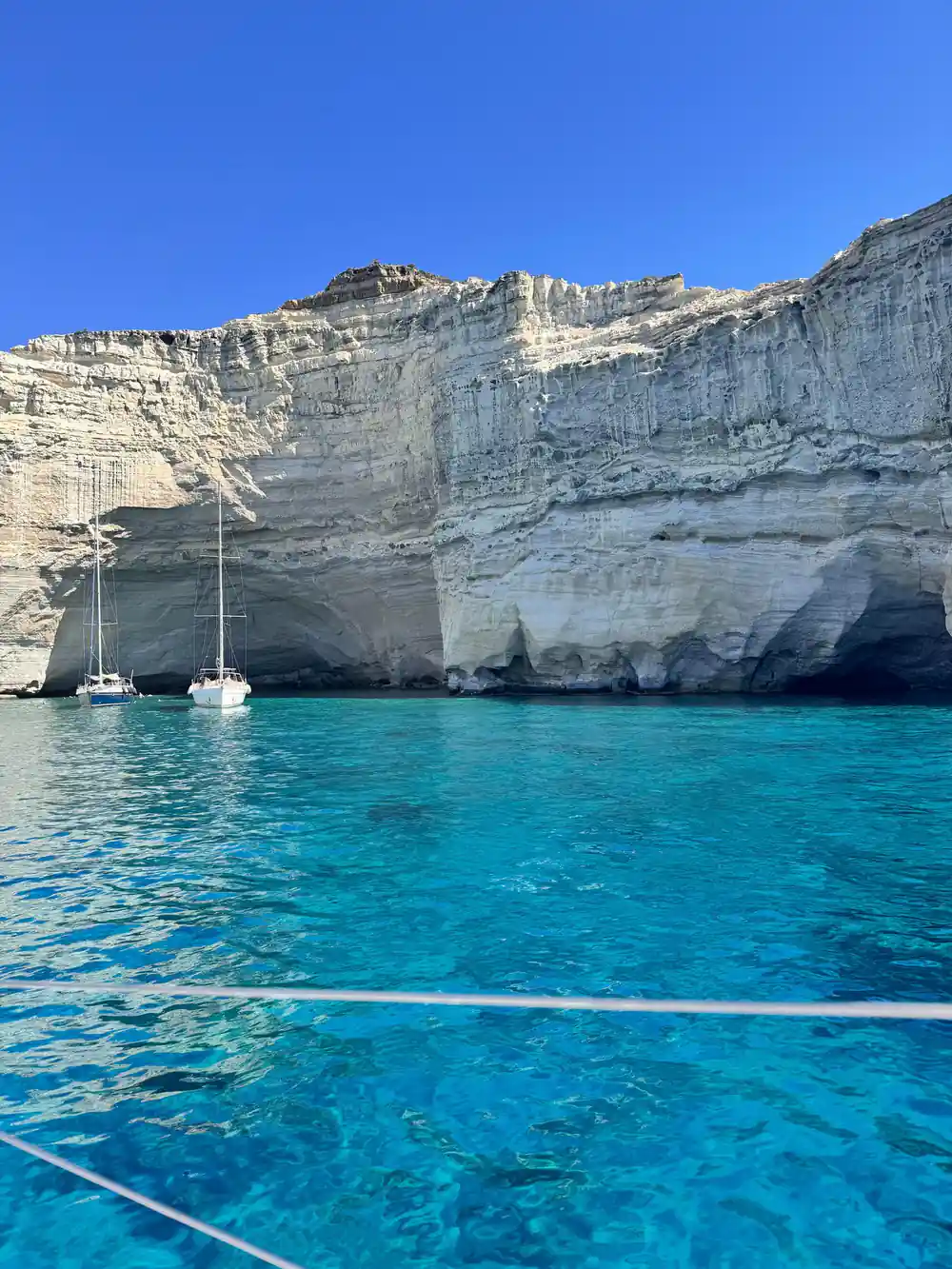
Place names around the Cyclades remember the people who used these coves long before anyone arrived with a towel and a snorkel. The best example sits a short sail away: Kleftiko, whose name means stolen in Greek and comes from the pirates who stole supplies from passing ships and hid them in the caves and coves of that bay.[11] Sarakiniko's own name comes down from the same sea-going world of raiders, traders and sheltered anchorages.
It is worth standing on the white rock with that in mind. The bay is calm and bright now, a place for long swims and easy snorkelling, and the only traffic is boats and bare feet. Sail a little further round the island and the older logic of the coast becomes obvious: boats hug the land, take shelter when they need it, and stop where the water is clearest. Kleftiko and Sarakiniko are not the same kind of place, but they share a stretch of water, and both look entirely different once you are floating below them.
Swimming, and the right hours
The water is the real reason to come. Around Milos the Aegean in July to September is 23-26°C (73-79°F), described as ideal temperatures for long swims and snorkeling.[4] The bay itself is shallow and sheltered, and the white rock throws light back into the water, which makes even a short snorkel feel like swimming inside a lamp. Bring goggles and you will spend most of the stop with your face down.
Timing changes the day more than anything else. Go early, or arrive by boat, and the day goes at your own pace rather than someone else's. The midday hours are the brightest and the hottest, and the white stone reflects everything upward, so a hat and sun cream matter. Swimming in more than one bay is the simplest way to compare water; if you would rather read this coast from a kayak, one operator paddles east from Fyriplaka beach along the volcanic coastline to Tsigrado and Gerakas beach.[12]
Where Sarakiniko sits in your day
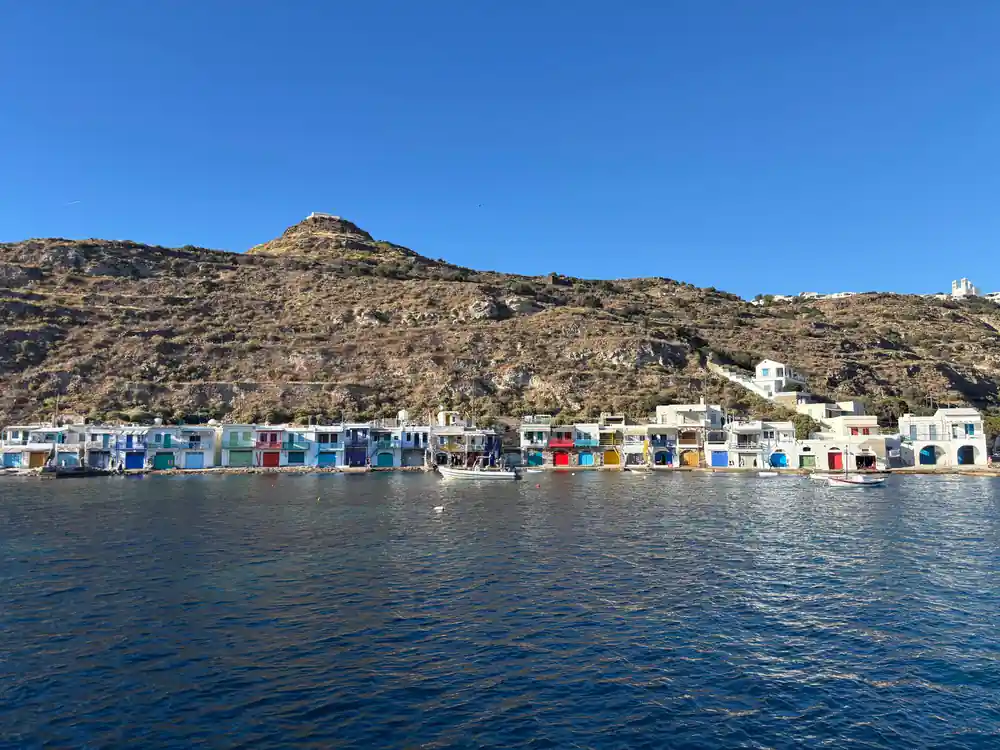
Sarakiniko is one stop on a much longer loop. The Milos Boat Tour: Kleftiko & Polyaigos Swimming With Meals runs 10 hours and calls at Klima, Arkoudes, Sarakiniko Beach, Glaronisia, Pollonia, Poliegos, Thiorichia Beach, Gerakas Beach, Kleftiko Caves, Sykia Cave and Vani Beach.[3] Sarakiniko, Kleftiko, Milos' white cliffs and the uninhabited island of Polyaigos all come inside a single day on the water, which is hard to arrange from the road.
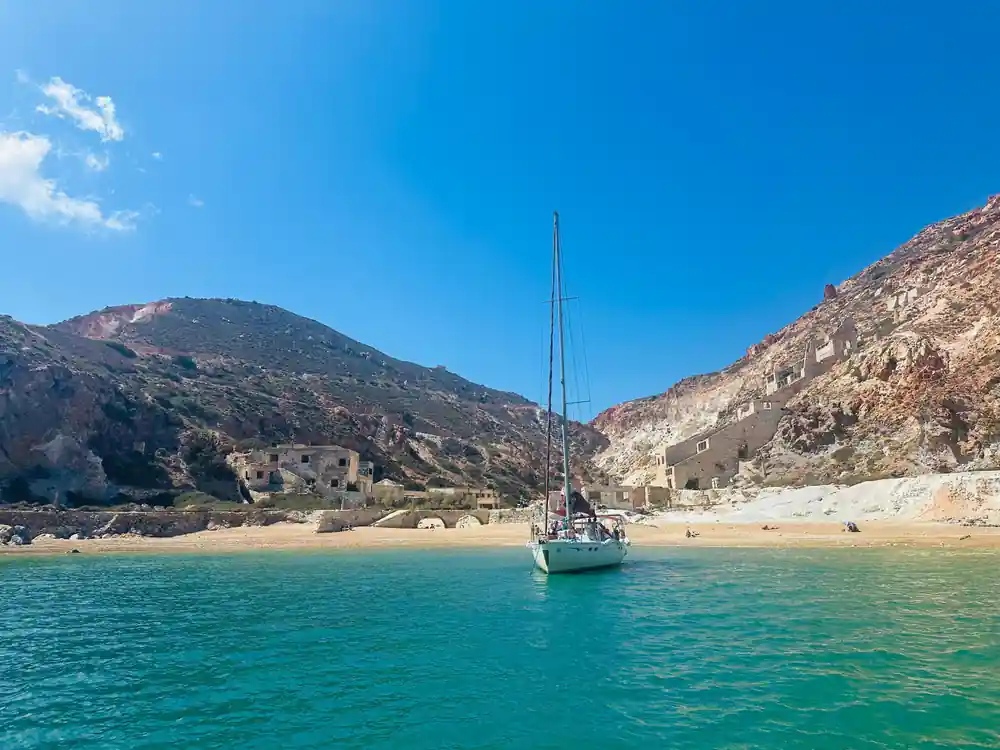
Polyaigos is the Aegean Sea's biggest uninhabited island.[13] Boat tours around Milos start from Adamantas, which sits in the centre of the island.[2] The leg from Adamantas to Sarakiniko Beach, Milos' white moonscape, sets the pattern for the hours that follow: leave the port, work along the coast, swim at the white rock, eat on board, then run on through the caves as the light softens. Full-day boat trips range from 6-8 hours long and can even go up to 12 depending on the sea conditions.[5]
Hours on the water on four Milos boat days
From-prices for a day on the water
All amounts are adult from-prices in US dollars for the four listings.[3][6][7][14]
When to plan your boat day
Plan your Sarakiniko day
Book the boat day
The Milos Boat Tour starts from US$185 and offers reserve now and pay later with free cancellation up to 24 hours in advance.[3]
Meet at the port
Boat tours around Milos start from Adamantas in the centre of the island, and the first stop on this one is Klima.[2][3]
Pack for swimming
Aegean water in July to September sits at 23-26°C (73-79°F), so pack a swimsuit and a light layer for the ride home.[4]
Watch for the white rock
Sarakiniko Beach comes early in the route, between Arkoudes and Glaronisia, before the boat turns for Poliegos.[3]
Swim at Kleftiko
The Kleftiko Caves come later; the name means stolen, from the pirates who hid supplies in its coves.[3][11]
Come home through Sykia
The route back passes Sykia Cave, a sea cave whose collapsed roof left an open top showing the sky.[3][16]
See Sarakiniko's white rock from the deck on a full-day Milos boat tour
from US$185Reserve now & pay later