The main points
- On open water there is no shade, so a hat with a strap, high-factor sunscreen and a light long-sleeved top matter more than anything else in the bag.
- The Meltemi blows from late spring to early autumn and often peaks in July and August, so pack a light windproof top for the crossing.[1]
- One small bag for phone, keys and documents, one larger bag for a towel and a spare shirt. Wet swimwear soaks everything else in the bag.
- Wet decks, steep ladders and slippery rocks at the swim stops make grip the one thing your footwear has to deliver, with a dry pair for the ride back.
- One small, soft bag per person is enough. Hard cases, heavy towels and valuables are better left in your room in Adamantas.
- Top choice Kleftiko & Polyaigos day from US$185 Duration10 hours[2]Rating4.82 from 282 reviews[2]Live guideEnglish[2]CancellationCancel up to 24 hours ahead[2] Check availability
- Guided cruise with lunch from US$152 Duration9.5 hours[3]Rating4.96 from 781 reviews[3]Live guideEnglish, French, Greek[3]CancellationCancel up to 24 hours ahead[3] See this tour
- Milos & Polyaigos sailboat from US$144 Duration10 hours[4]Rating4.92 from 1,913 reviews[4]Live guideGreek, English[4]CancellationCancel up to 24 hours ahead[4] See this tour
It is a strong seasonal northerly wind that usually blows from late spring to early autumn, often reaching its peak in July and August. In the right conditions, it creates an ideal sailing breeze for experienced crews.
Packing verdict for a Milos boat day
Wear on the day
- Sun hat with a chin strap, sunglasses on a cord and high-factor sunscreen
- Quick-drying swimwear, with light clothes over the top
- A light windproof layer for the crossing, even in high summer
- Shoes with grip that can get wet, plus a dry pair in a bag
Pack in the day bag
- A small dry bag for phone, keys and documents
- A larger dry bag for a towel and a spare dry top
- One shared bag per family rather than four small ones
- A refillable water bottle and sunscreen you can reapply
What is already on board the boat
Your boat day is a long one: the Kleftiko and Polyaigos tour with meals is listed at 10 hours, with a live English-speaking guide.[2] Boat tours around Milos start from Adamantas, in the centre of the island, where you walk along the port and find your boat.[5] That shapes your packing more than any gear list does. You leave your room in the morning and you do not come back for the hat you forgot.
A boat is not a beach with a car park behind it. You step off a ladder into deep water, float over white rock, and climb back aboard with wet hands and no free pocket. So ask a different question than you would at a beach club. Not what would be nice to have, but what can live in one small bag under a bench for a whole day and still be dry and easy to find when you want it.
Trip lengths vary. Full day boat trips on Milos generally run from 6-8 hours and can go up to 12 depending on sea conditions, so if you book a longer day, aim to carry less rather than more.[6] Everything in this list fits into a bag you can hold in one hand.
Sun, and why the usual amount is not enough
On land, sun is something you move in and out of. On a boat crossing from Adamantas there is no awning to retreat under, and the water below throws light straight back at your face and neck. A hat with a strap, sunglasses on a cord, high-factor sunscreen and a light long-sleeved top are the four things that decide whether the afternoon is pleasant or punishing.
Reapplying is the part people skip, because the breeze feels cool and the day feels easy. Cream goes on before you board, then again after every swim, and once more before the run home. A small tube in a zipped pocket works better than a large bottle at the bottom of the bag, since you can top up without unpacking anything at all.
Add a couple of small things that weigh nothing. Lip balm with sun protection, a thin neck scarf or buff you can wet and drape over your shoulders, and a spare hair tie if you have long hair. The middle hours of the day on deck are the ones that catch people out, especially on the way back when everyone is tired.
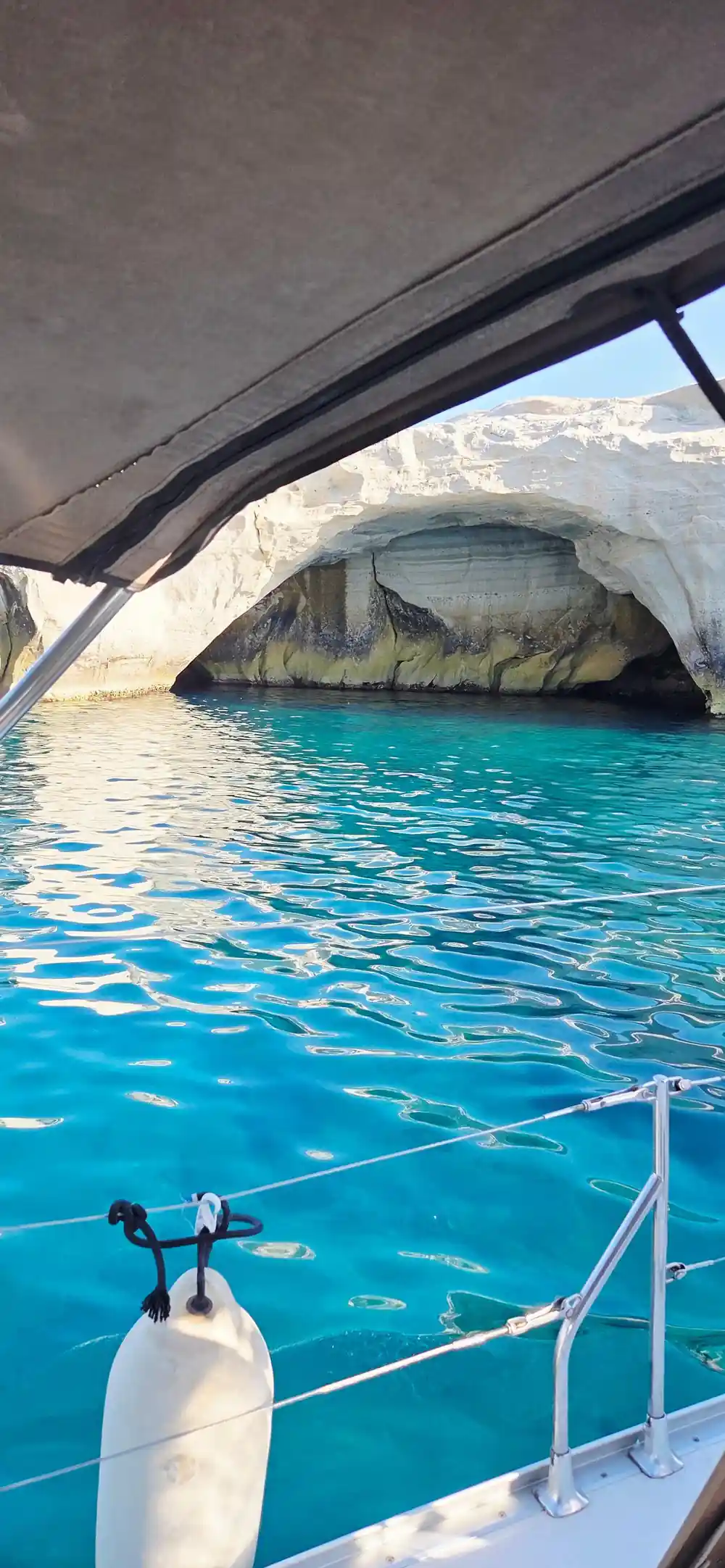
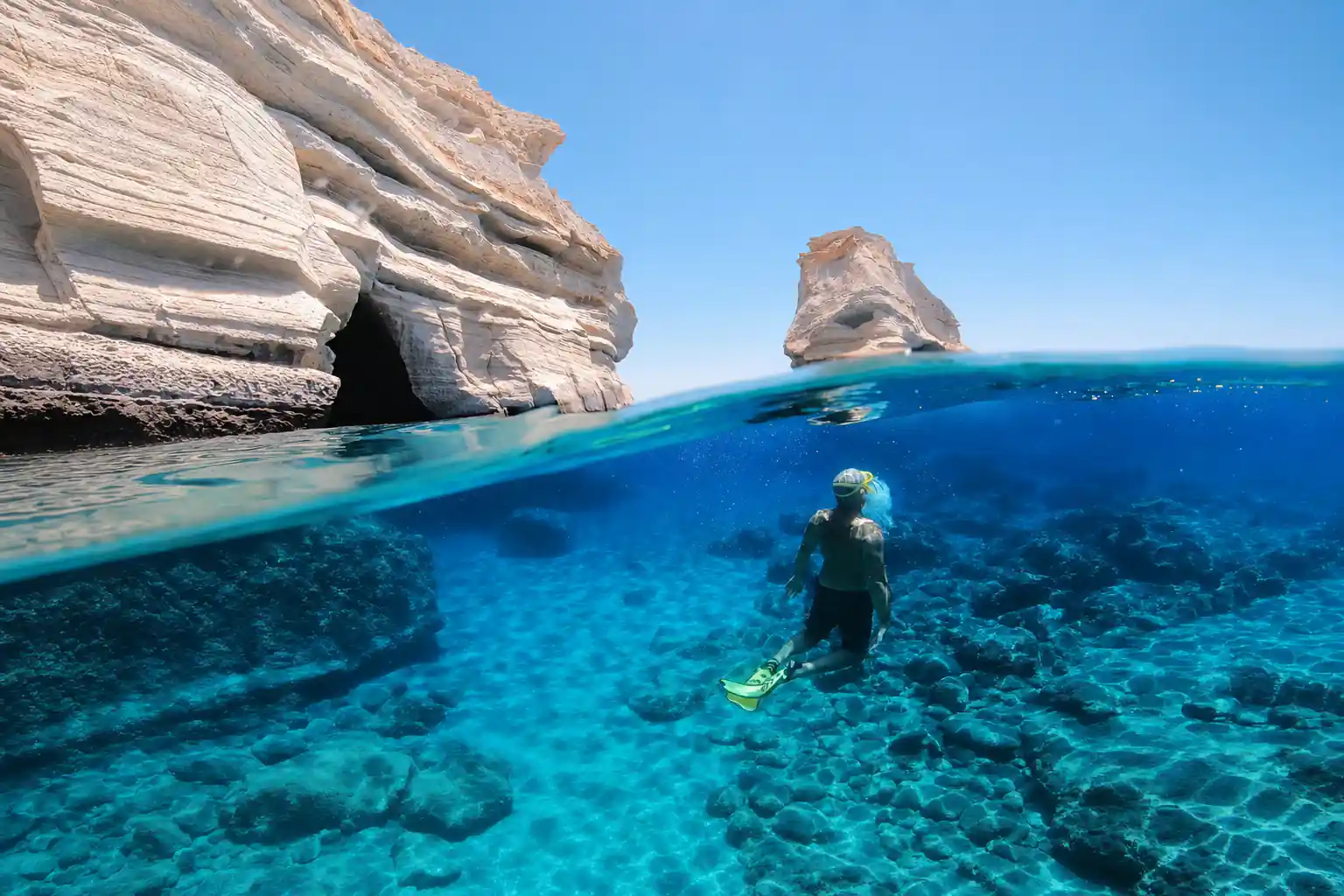
A split view of clear water and white rock stacks, the kind of stop you pack a dry bag for.
A layer for the crossing
Open water is cooler than the harbour, and the wind that makes Milos a sailing island is real. The Meltemi is a strong seasonal northerly wind that usually blows from late spring to early autumn and often reaches its peak in July and August.[1] On the outward leg you may be sitting into it, and a damp swimsuit plus a steady breeze feels cold faster than most people expect.
Pack a light windproof layer, ideally one that folds into its own pocket, and a spare dry top. Nothing heavy, nothing that takes hours to dry on a rail that is already crowded. If you feel the cold easily, put a thin long-sleeved rash vest on before you get wet rather than after, and keep the dry top for the ride home.
The reward for the wind is the swimming. From July to September the Aegean around Milos sits at 23-26°C (73-79°F), described as ideal temperatures for long swims and snorkelling.[7] You will want to be in the water for a while at each stop, which makes the dry towel and the spare layer the two items you will actually use.
Keeping things dry and keeping them findable
Two dry bags, not one. The small one takes your phone, your keys and anything paper. The larger one takes a towel, a spare shirt and the layer you peeled off at the first stop. Everything else goes in a soft bag that squashes flat under a bench, because a day on deck is no place for hard cases or a wheeled suitcase.
Label the bags if you are travelling as a group. Identical dry bags breed confusion the moment everyone starts pulling things out at the same time. Keep sunscreen, lip balm and your hat together in one outer pocket so you never have to empty the whole bag mid-crossing to find them.
A waterproof phone pouch on a cord is worth the small cost. It keeps the phone usable for photos at the swim stops and keeps it out of the water on the ladder. Spray reaches further along a boat than people expect, so anything that cannot survive a soaking is better off in your room.
from US$185
The full-day Kleftiko and Polyaigos boat tour with meals is listed at 10 hours with a live English-speaking guide.[2]
Footwear and what to wear aboard
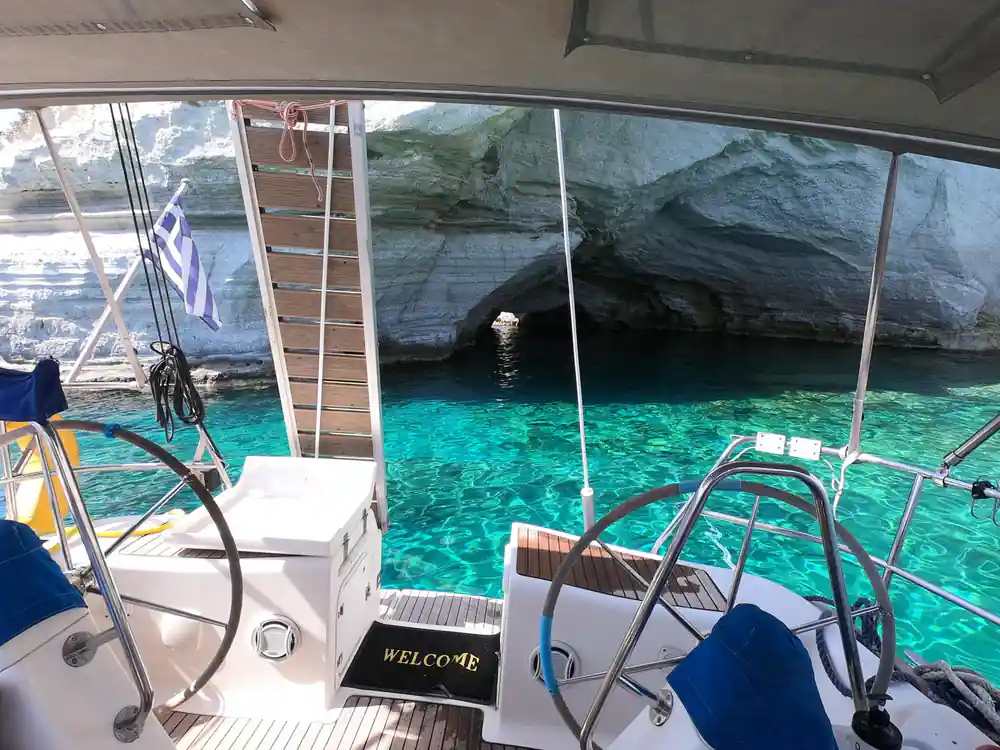
Decks are wet, ladders are steep, and the rocks at the swim stops are slippery. Bring shoes with real grip that you do not mind soaking, plus a dry pair and a plastic bag for the ride home. Smooth-soled sandals and bare feet are how a good day out ends with a scraped shin and a long walk back to the bus.
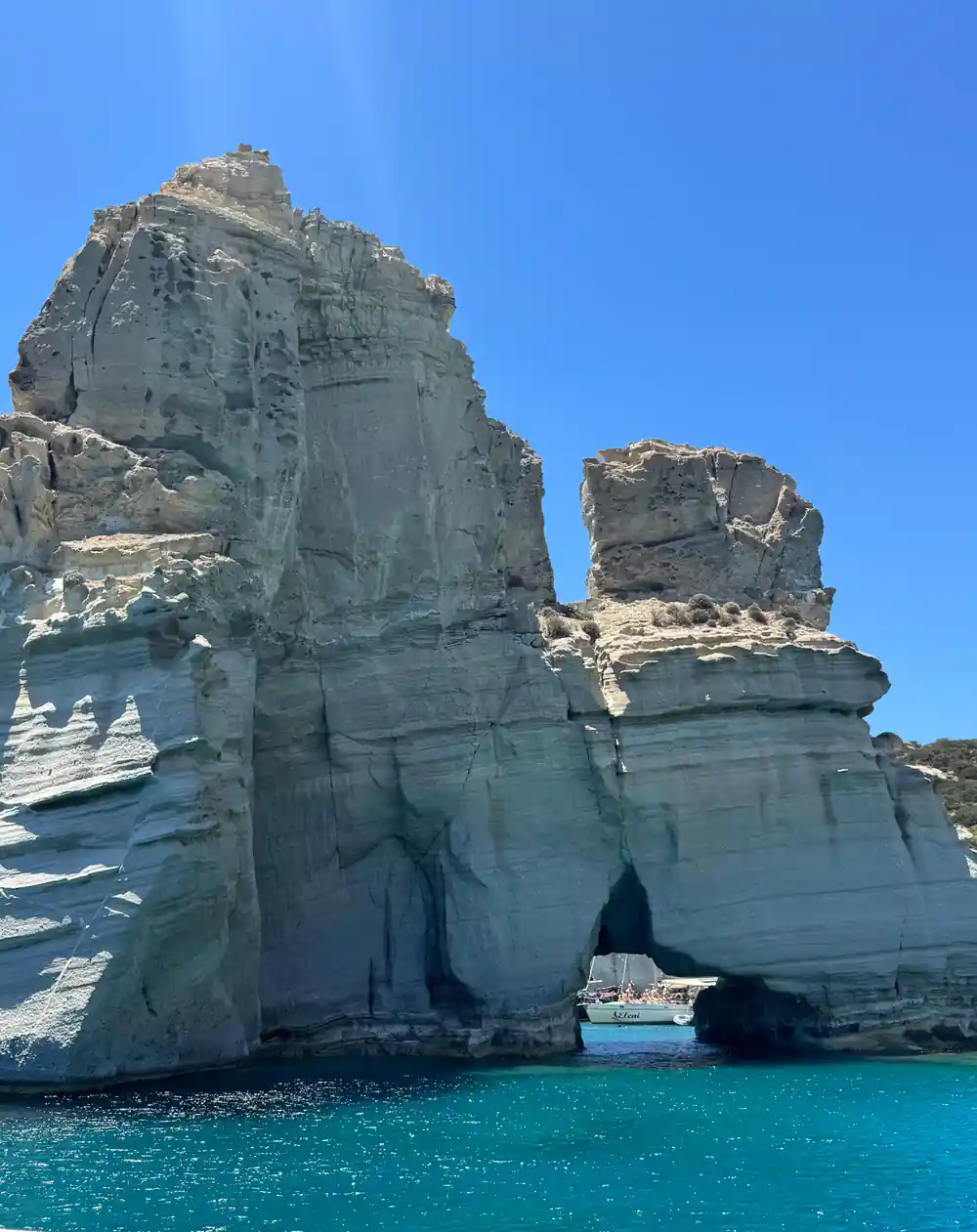
Kleftiko takes its name from the Greek word for stolen, because pirates once stole supplies from passing ships and hid them in its caves and coves.[8] It is a place to look up rather than down, and you will enjoy it more with your hands free, your shoes on and your camera in a pouch rather than between your teeth.
Wear swimwear under light, quick-drying clothes and take a cover-up for the return leg, when the sun is lower and you are tired. Sikia Cave is a sea cave that was once completely covered before its roof collapsed, leaving an open top and the blue Aegean sky above you.[9] It is shaded and cool inside, which is another argument for the spare layer.
Swim kit and snorkelling gear
If you own a mask that fits your face, bring it. A well-fitting mask is the difference between floating over the rocks at ease and giving up early on a swim stop you came a long way for. Fins are optional on a trip with several short stops, and thin water shoes help on rougher entries and on the walk back up the beach at the end of the day.
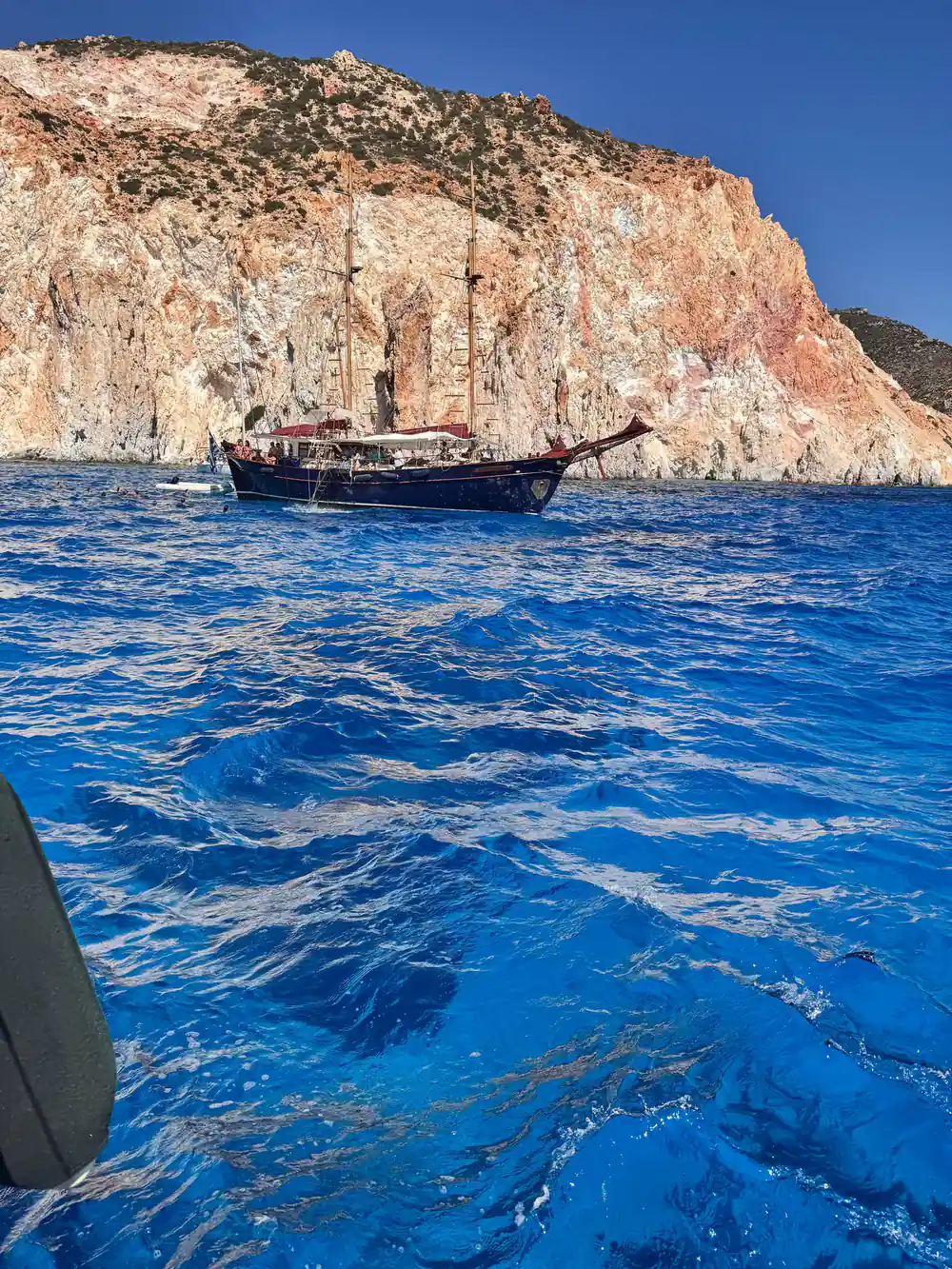
Polyaigos is the Aegean Sea's biggest uninhabited island, and it is only accessible by boat.[10] There will be nothing on shore to sell you a drink, a hat or a snack, so treat the boat as your supply line and carry what you need for the hours you are out there.
Glaronisia is a group of three small uninhabited volcanic islets off the north coast of Milos, known for hexagonal basalt columns that rise straight from the sea.[11] Bring a camera you are happy to hold one-handed, keep the other hand for the rail, and add a simple wrist strap. It is cheap insurance against a very expensive splash.
What to leave on shore
Leave the laptop, the second camera body, the jewellery and the beach umbrella. Swap the heavy bath towel for a thin, quick-drying one that folds small. If losing it over the side would ruin your day, it belongs in your room in Adamantas, which is where boat tours around Milos start.[5]
One small bag per person is plenty. Kit that has to be carried, watched and kept dry stops being fun after the first hour, and the best thing about a boat day is how little you actually need: a hat, some cream, a dry top, a mask and a towel.
Check the forecast the evening before and adjust your layers rather than repacking the whole bag. The sailing season on Milos runs from late spring through early autumn, May through October, so in the shoulder months the only real change is a warmer top for the crossing.[12]
Listed duration of day cruises that reach Kleftiko
From-prices per person for Kleftiko cruises
All amounts are from-prices in US dollars per person, taken from these GetYourGuide listings:[2][3][4][14]
When to go, and what that means for your bag
Getting ready to pack
Read the listing again
Check the listed duration, the guide language and the cancellation terms before you plan the rest of your day around it.
Sort dry from wet
Put anything that must stay dry in one small bag, and everything that will get soaked in another. Two piles, two bags.
Layers, not extras
A light long-sleeved top and a windproof layer cover sun, spray and the breezy run home. Leave the third jumper behind.
Shoes you can soak
Grip matters on a wet deck and on rocks. Bring shoes that can get wet and a dry pair in a plastic bag for the ride back.
Pack the night before
Fill the bottle, charge the phone, find the hat and put the bag by the door. Boat mornings start earlier than you think.
Ready to pack for Kleftiko and Polyaigos?
from US$185Reserve now & pay later