The main points
- The Milos Boat Tour: Kleftiko & Polyaigos Swimming With Meals runs 10 hours and stops at Kleftiko Caves, Sikia Cave and Poliegos on the way.[1]
- From US$185 per person on the listing, with reserve now and pay later and free cancellation up to 24 hours in advance.[1]
- Around Milos the Aegean in July to September is 23-26°C (73-79°F), described as ideal temperatures for long swims and snorkeling.[2]
- The sailing season on Milos runs from May through October, and the summer wind often peaks in July and August.[3][4]
- Boat tours around Milos start from Adamantas, in the centre of the island, so the port is where your day begins.[5]
- Top choice Kleftiko & Polyaigos meals from US$185 Duration10 hours[1]Rated4.82 from 282 reviews[1]Live guideEnglish[1]Free cancellationUp to 24 hours in advance[1] Check availability
- Day cruise to Kleftiko from US$152 Duration9.5 hours[6]Rated4.96 from 781 reviews[6]Live guideEnglish, French, Greek[6]Free cancellationUp to 24 hours in advance[6] See this tour
- Milos & Polyaigos sailboat from US$144 Duration10 hours[7]Rated4.92 from 1,913 reviews[7]Live guideGreek, English[7]Free cancellationUp to 24 hours in advance[7] See this tour
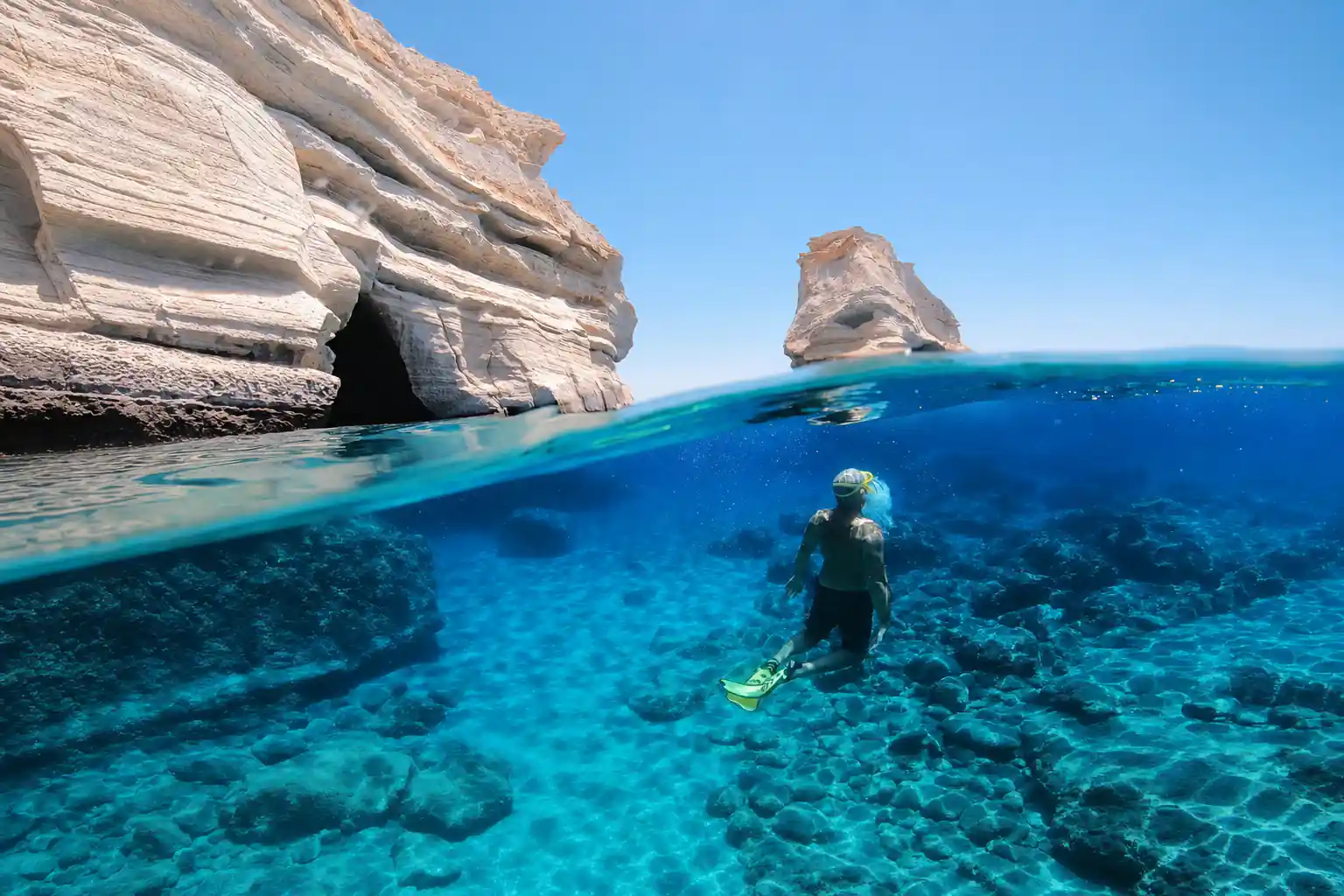
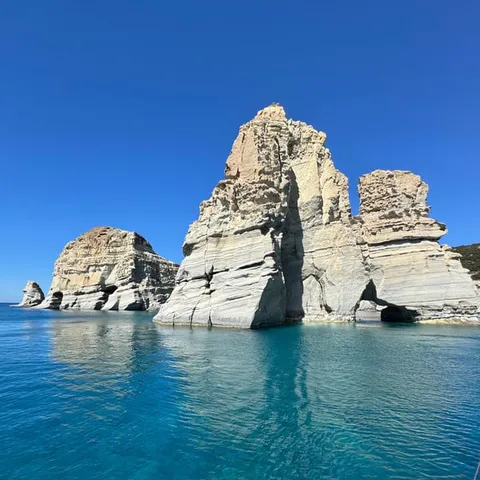
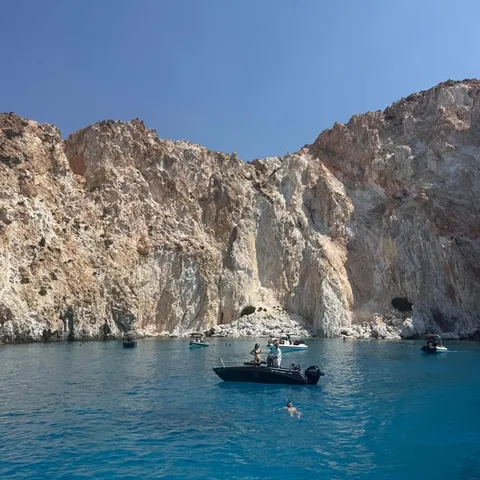
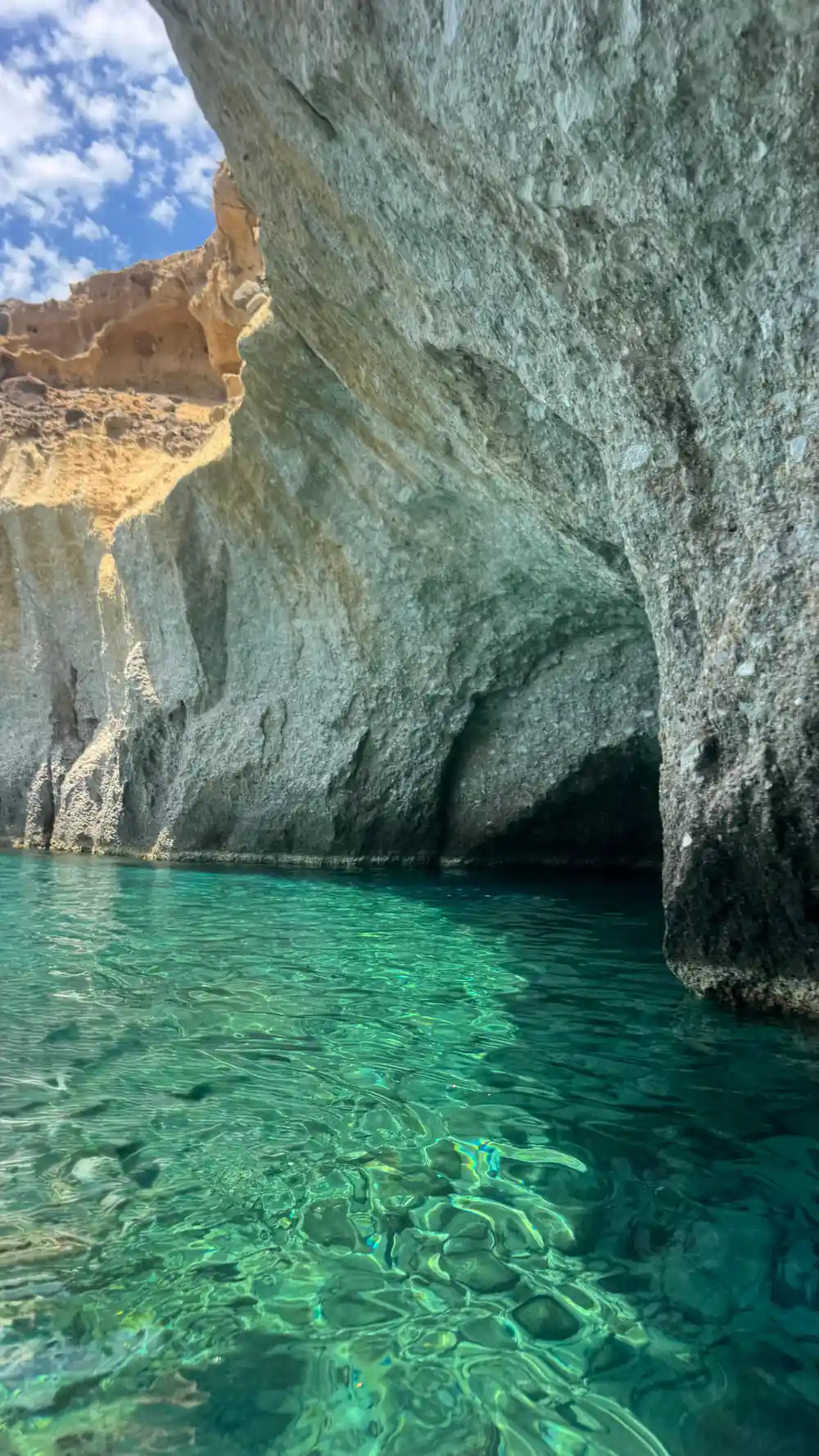
Sikia Cave was once completely covered, but at some point in the past, the roof collapsed. The end result is a stunning cave with an open top showing the blue Aegean sky.
Is the Kleftiko and Polyaigos boat day worth it for swimmers?
What to bring aboard
- A mask that fits your face, plus a snorkel you have used before
- High-factor sunscreen, a hat and sunglasses with a strap for the sail between stops
- A rash vest or thin neoprene top for wind on wet shoulders
- Shoes with grip for a wet deck and a ladder you climb barefoot
Why the water looks like that
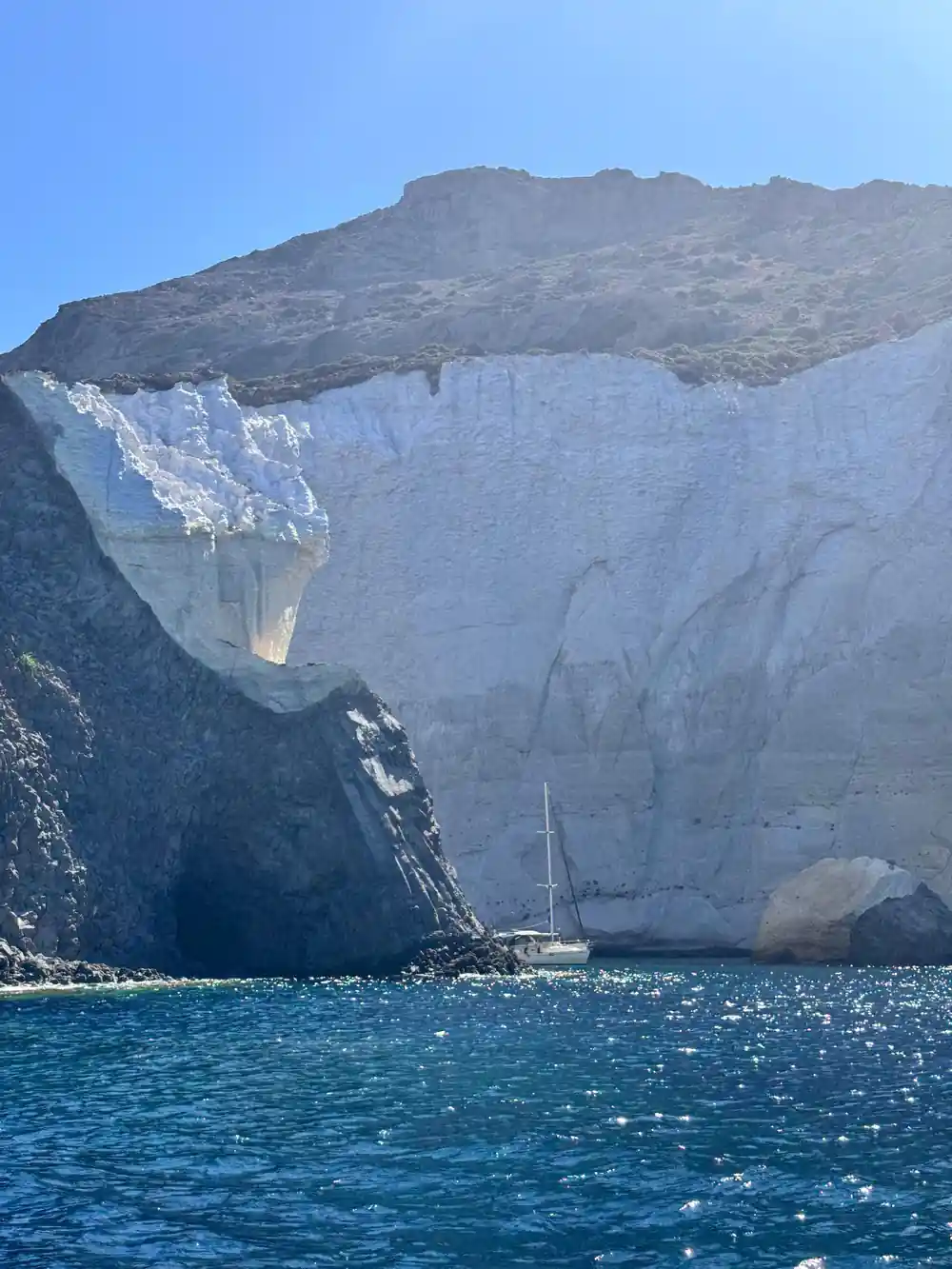
Milos is an old volcanic island, and that history is the reason the swimming here looks the way it does. The cliffs, the stacks and the fallen boulders are pale grey and almost white, so light does not just fall on the water, it bounces back up through it. Over a sandy or rocky bottom that is already bright, a metre of clear water can look turquoise, and even deep water keeps a green blue glow instead of going black.
The island has been worked for stone since the Neolithic. Mineral activity on Milos began around 8000 BC with the mining and trading of obsidian, a hard black volcanic glass used for tools and weapons.[9] On the north coast the same volcanic story is written into the rock, and Sarakiniko Beach, the island's most well-known shore, lies just five kilometers from Plaka.[10]
For a snorkeller this matters in a practical way. Bright bottoms make it easy to read depth, so you can usually tell where a ledge drops away, and the white walls of the caves throw light into places you would expect to be dark. On a calm, sunny morning you can see the seabed clearly from the surface with nothing more than a mask. Swim slowly and keep your fins high, because kicking up the bottom ruins the view for everyone behind you.
Getting in and out
Boat tours around Milos start from Adamantas, in the centre of the island, so you will usually walk to the port rather than cross the island to find your boat.[5] Once aboard, most of the swimming happens off a stern platform or a fixed ladder, and the skill that matters is simply getting down and back up with wet hands and bare feet. Sit on the edge, turn to face the boat, keep one hand on the rail and step down.
A few habits make the whole day easier. Fit your mask before you get in, on dry deck, and check the seal by breathing gently in through your nose with the mask on. Once you are in the water, wear the mask on your face rather than pushing it up onto your forehead, because one wave will knock it off. Walk the deck in shoes with grip, keep a hand free on the rail, and let a crew member pass you your fins rather than trying to put them on while the boat rolls.
Milos cliff jumping has its own etiquette. The rocky inlets around Kleftiko are where most of it happens, and the safe version is never a solo performance: watch where others land, check the depth yourself, keep your arms in and go feet first. Crews know which ledges are clean at the current sea level, so ask before you climb. A jump into flat water looks simple, but the sea is moving underneath even when the surface is glassy.
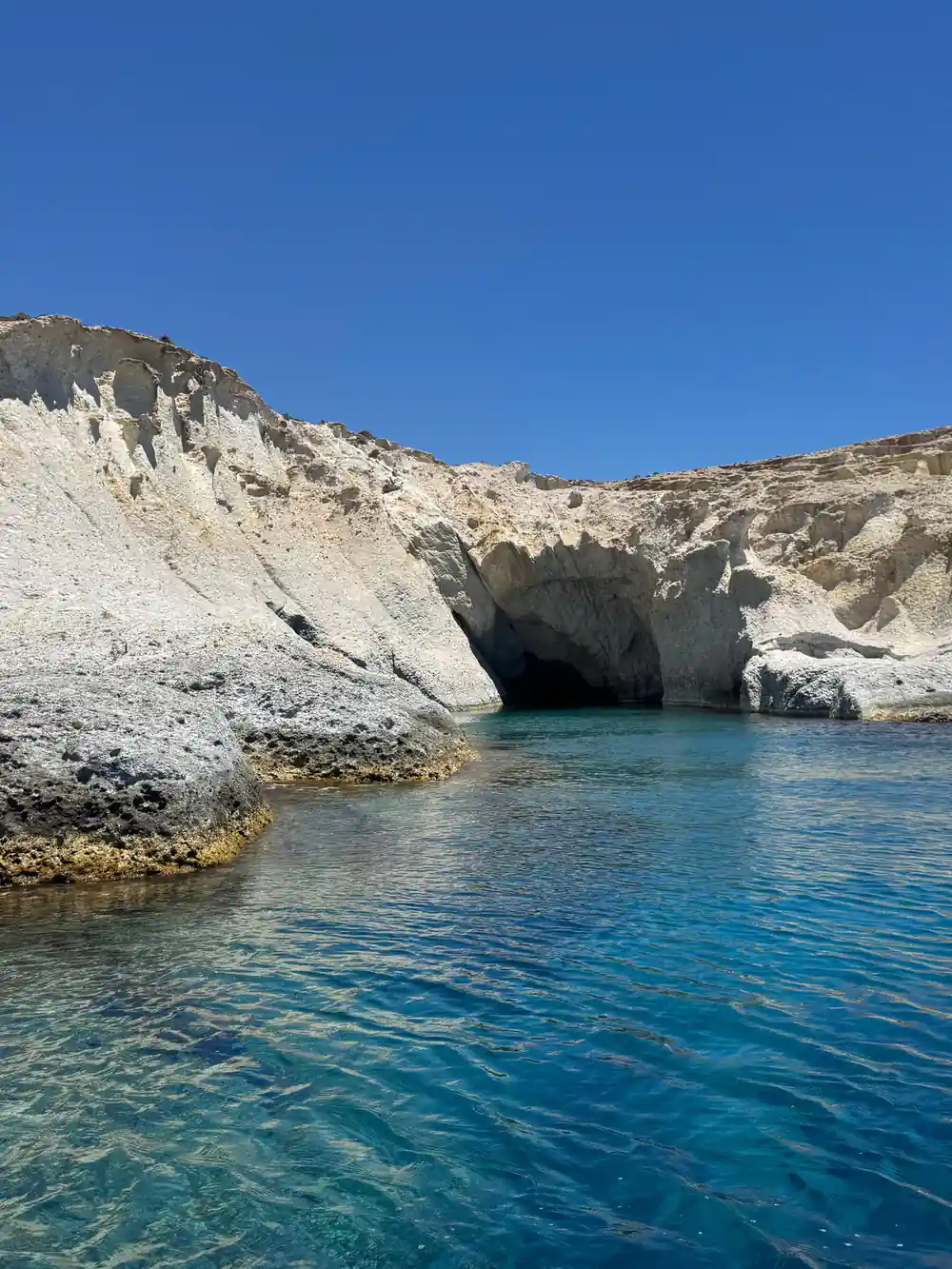
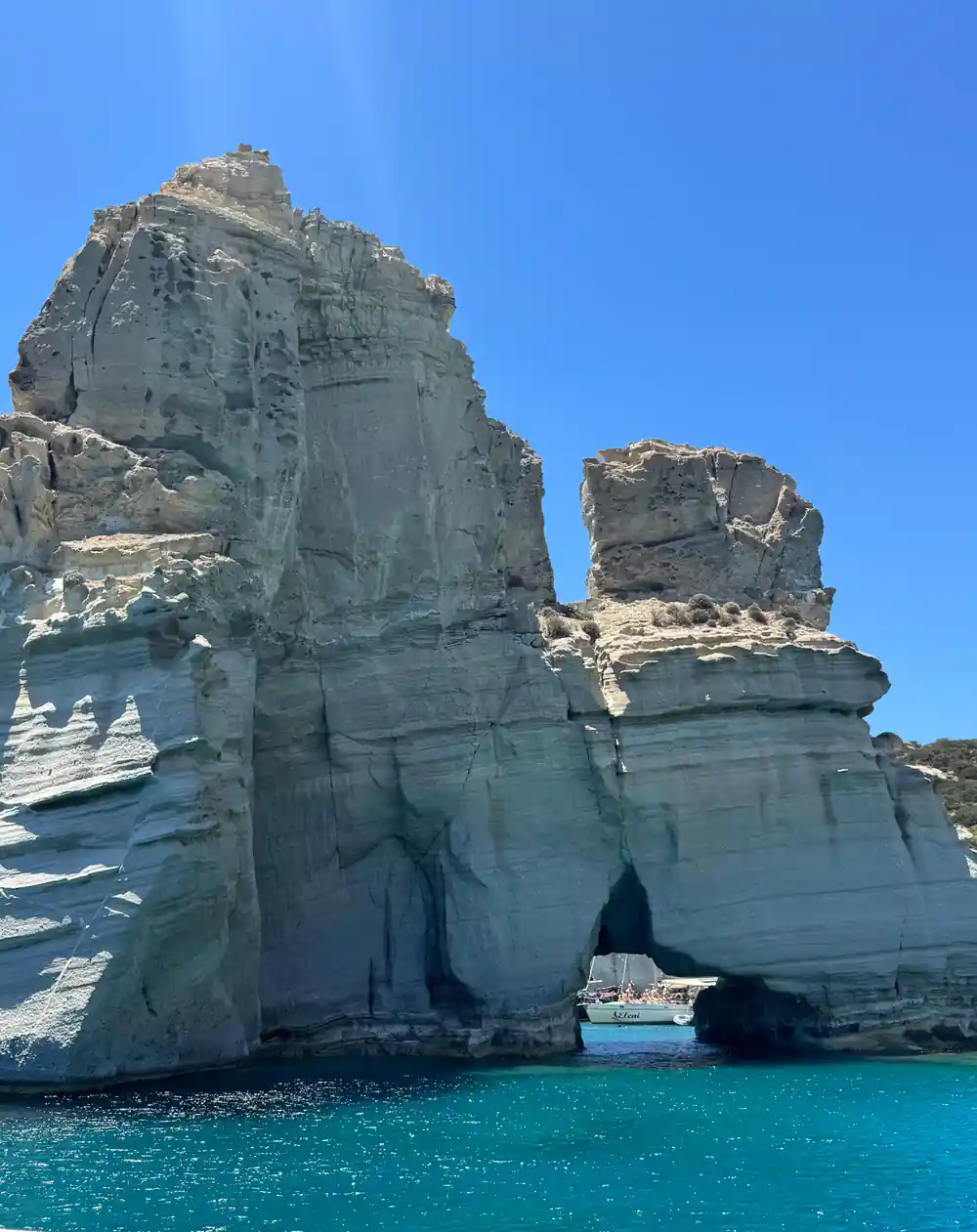
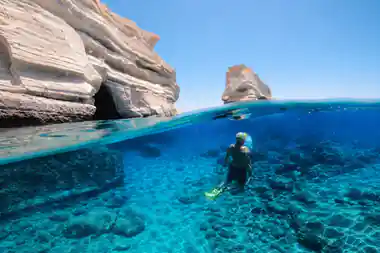
White rock stacks and arches standing clear of the water at Kleftiko
What there is to see underwater
Under the surface the Aegean is a working ecosystem rather than a coral reef. You will see bare rock, boulders rolled into gullies, patches of seagrass and the soft green algae that coats stone in summer, and the water is usually clear enough to take it all in at once. There are sea urchins in the dark crevices and sponges on shaded walls, so look before you put a hand or a foot down.
Fish are small and quick: wrasse, bream, damselfish and the occasional octopus or cuttlefish, with shoals that gather under a boat within minutes of anchoring. The biggest thing you can do for your own experience is to stop moving. Float on the surface, breathe slowly through the snorkel and let the noise settle, and the smaller fish come back first, then the larger ones, with the caves drawing the most life of all.
Sykia Cave is the classic stop for this. The cave was once completely covered, but at some point its roof collapsed and left an open top showing the blue Aegean sky.[11] That opening turns the cave into a sunlit room, and snorkelling into the shadow and out again under the gap is one of the most memorable swims of the day. Keep an eye on the swell inside, because the roof is gone but the walls still funnel any wave that reaches them.
Swimming at Kleftiko
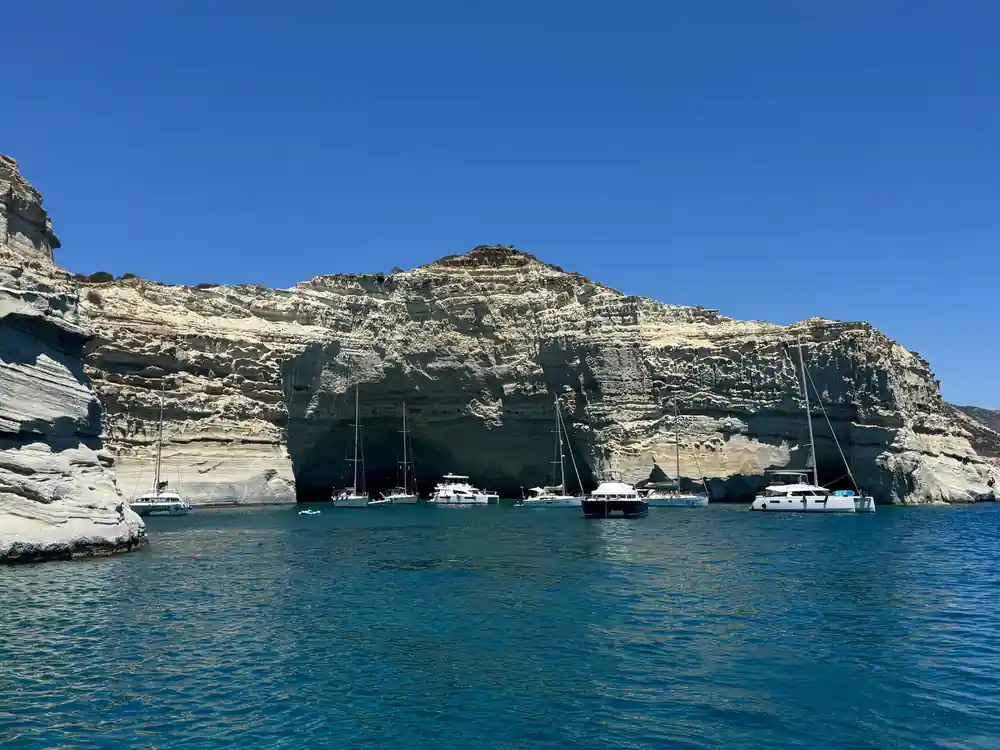
Kleftiko is a cluster of white rock stacks, arches and sea caves on the south west coast, and its name is a memory of the people who used it first. Kleftiko has a history as a pirate hideout, and the word means stolen in Greek, taken from the pirates who stole supplies from passing ships and hid them in its caves and coves.[12] Swimmers get that history for free, because the coves that once hid cargo are the same sheltered pools people float in today.
The full-day tour booked from this site lists Kleftiko Caves among its stops, along with Sikia Cave and the anchorages around Poliegos.[1] In practice you get a long swim, time to snorkel along the walls and a proper meal in between. Bring a rash vest if you burn easily, because the sun reflects hard off pale rock and you will be in and out of the water for hours.
Not everyone needs a boat. Kleftiko can also be reached on foot, so hiking in is a genuine alternative if you would rather swim alone.[13] The trade off is effort against variety. From the water you can drift through arches and reach caves that have no path to them at all, and you can do it several times in a day without carrying anything but a mask.
from US$185
The Milos Boat Tour: Kleftiko & Polyaigos Swimming With Meals is the full day booked from this site, rated 4.82 from 282 reviews.[1]
The Polyaigos anchorage
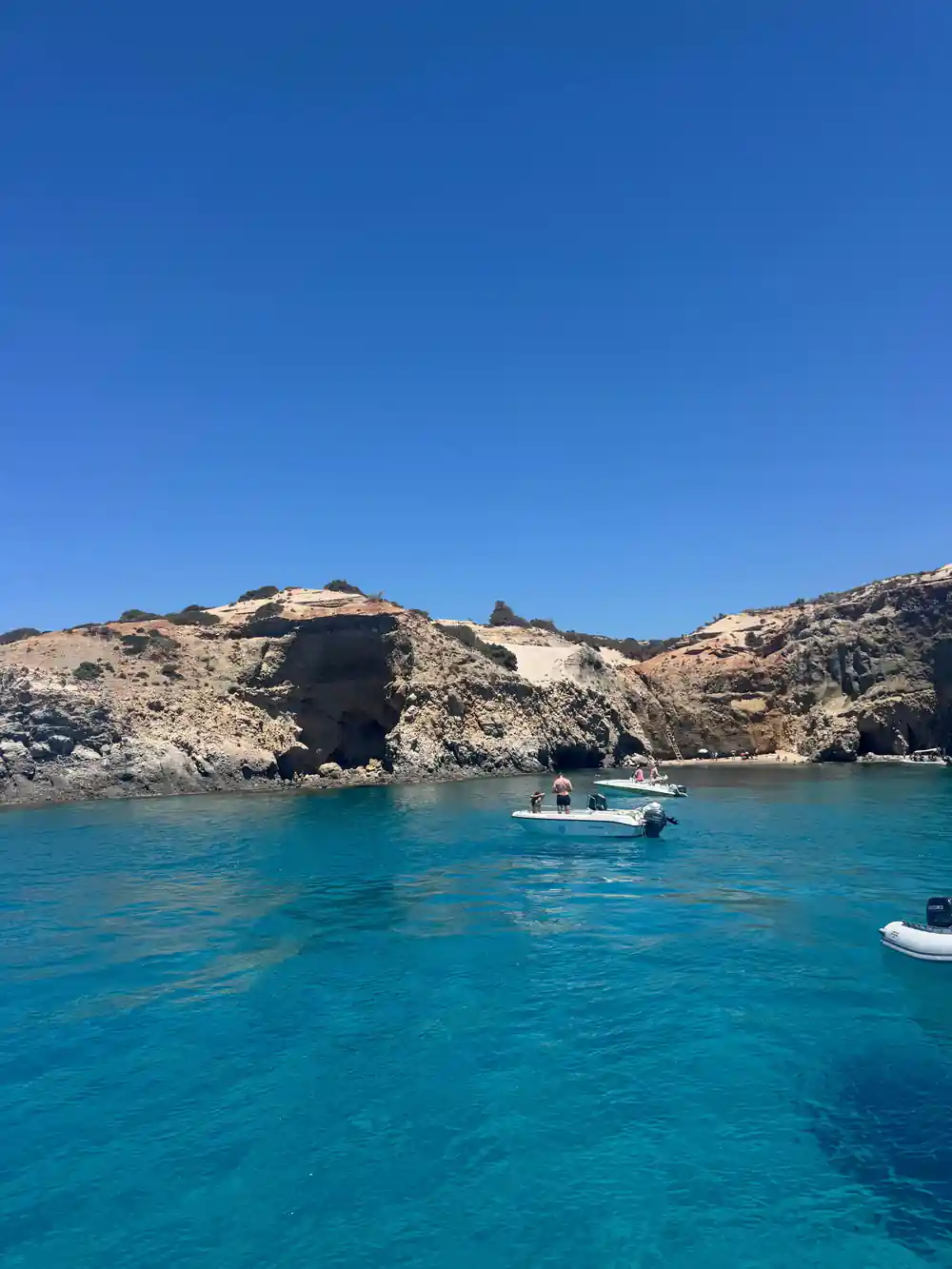
Sailing north east of Milos takes you to Polyaigos, a bare island of pale rock and low scrub. It is the Aegean Sea's biggest uninhabited island, which is why the quiet is so complete: no village, no road, just goats, cliffs and an anchorage.[14] For swimmers this is often the calmest water of the day, with a shallow shelf for people who like to stand up and a drop off a few strokes out.
On the way you pass Glaronisia, a group of three small uninhabited volcanic islets off the north coast of Milos whose name means Seagull Islands, known for hexagonal basalt columns that rise from the sea.[15] The columns are worth a slow pass even if the boat does not stop, because they show the volcanic plumbing that shapes the whole island in neat, almost geometric rows.
The full-day route usually touches Klima as well, the little fishing village tucked under the cliffs south of the port. Klima is about 5 kilometres from the port of Adamas and is known for its multi-coloured fishing houses.[16] By then you are usually tired, salty and ready for the run home, and the low light on the water on the way back is a good reason to stay on deck rather than below.
Temperature, month by month
The season sets the shape of everything. The sailing season on Milos runs from late spring through early autumn, specifically May through October.[3] Inside that window the warmest water comes later: around Milos the Aegean in July to September is 23-26°C (73-79°F), described as ideal temperatures for long swims and snorkeling.[2] Those are the months when you can stay in for half an hour without thinking about it.
The shoulder weeks are cooler on the skin and quieter on the water. A thin neoprene top or a short wetsuit turns a quick dip into a comfortable swim, and children often last longer with one on. On any day the wind matters as much as the water, because a breeze on wet shoulders feels far colder than the sea, so a towel and a windproof layer on deck are worth the space in your bag.
Plan around the water rather than the air. If long snorkeling is the point of the trip, put your boat day towards the middle or the end of your stay, when you have had a chance to acclimatise and can still move it if the forecast turns. Take a rash vest rather than relying on sunscreen alone, reapply after every swim, and drink more water than you think you need, because salt, sun and wind dehydrate you quietly.
When the sea is choppy
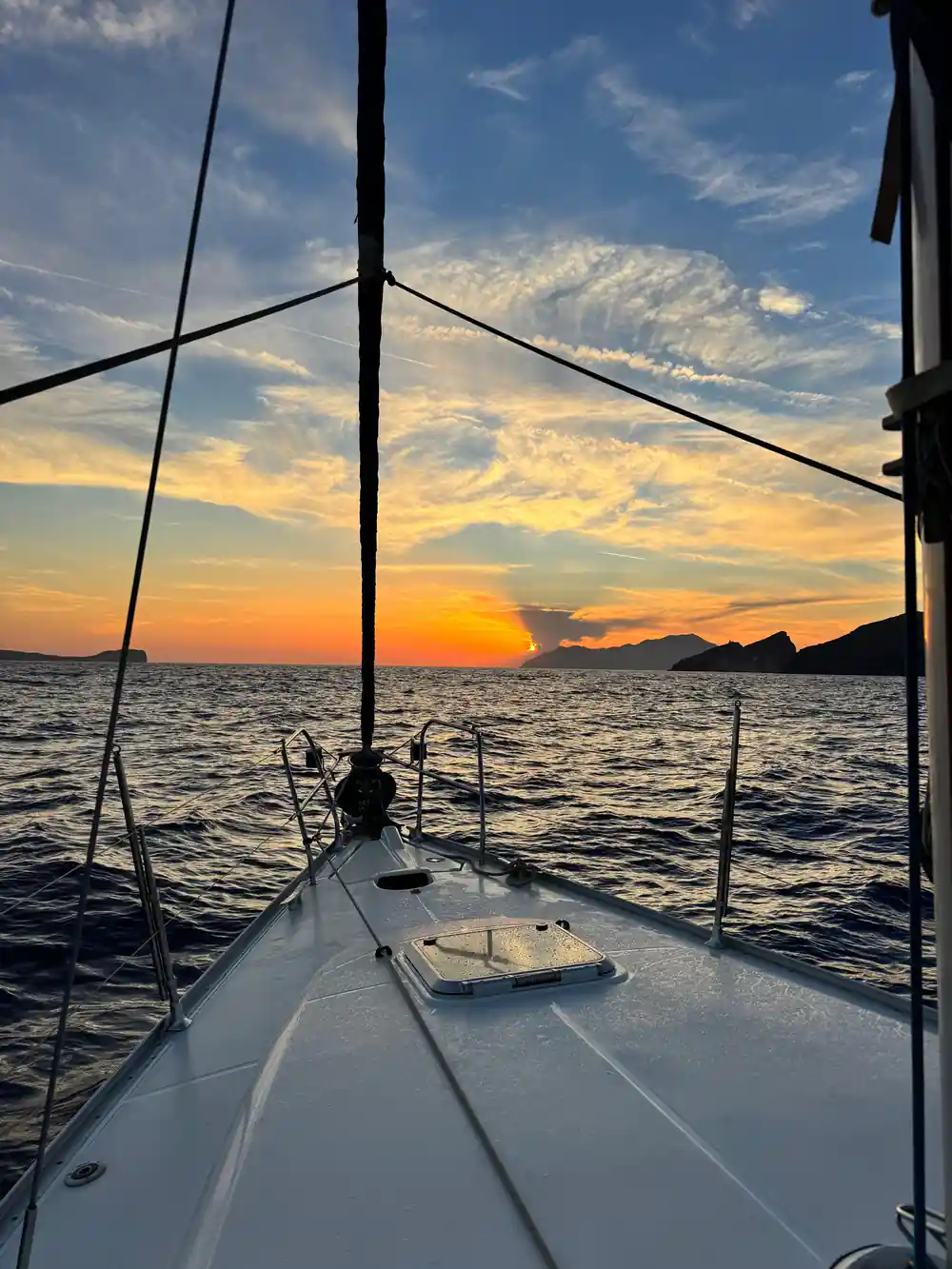
The summer wind in the Cyclades is a known quantity. The Meltemi is a strong seasonal northerly wind that blows from late spring to early autumn and often peaks in July and August, and in the right conditions it gives experienced crews an ideal sailing breeze.[4] For a swimmer it means mornings are usually the calmest part of the day, and the south and west coasts, where Kleftiko sits, can behave quite differently from the north.
Rough water changes the plan, not the point. Full-day boat trips range from 6-8 hours and can go up to 12 depending on sea conditions, so a skipper who takes a longer route to find shelter is doing the normal thing rather than cutting your day short.[17] If the swell is up, caves and narrow arches are usually the first stops to be dropped, because a swell inside a rock funnel is no fun to swim in.
Book with that in mind. On the full-day tour booked from this site you can reserve now and pay later, and cancel up to 24 hours in advance for a full refund.[1] That gives you room to watch the forecast and move your swim day to the calm side of the week. If you only have one free day, take an early departure and choose an itinerary with sheltered stops, then treat any change of route as the crew reading the sea for you.
How long Kleftiko and Polyaigos boat days last
Durations in hours as listed on the GetYourGuide listings cited here.[1][6][7][18][19]
What a Kleftiko swim day costs
US dollar from-prices per person from the GetYourGuide listings cited here.[1][6][7][18][19]
When to book a swim day on Milos
Plan your swim day
Pick your dates
Milos sails from May through October. If long swims matter most, aim for the warmest window, when the Aegean sits at 23-26°C (73-79°F).[2][3]
Match the tour to your energy
Full-day trips run 6-8 hours and can stretch longer depending on the sea, so a half day suits anyone who fades in the sun.[17]
Pack like a swimmer
Mask, snorkel, rash vest, quick-dry towel, dry bag and a refillable bottle. Sandals with grip help on a wet ladder.
Check the wind first
The Meltemi blows from late spring to early autumn and peaks in July and August, so a flexible booking beats a fixed plan.[4]
Learn the stops
Kleftiko Caves, Sikia Cave and the Poliegos anchorages appear on the full-day itinerary, and boats leave from Adamantas.[1][5]
Pick a calm day and let the boat do the driving
from US$185Reserve now & pay later