The main points
- White rock and bright water at once make a very contrasty scene. Shoot into the caves early in the day, then work the shade as the sun swings round.
- A boat rolls even on a calm day. Keep your shutter speed high, brace against something solid and shoot in bursts so one frame lands sharp.
- Kleftiko Caves are the one everyone wants, but the open roof of Sikia Cave and the basalt columns at Glaronisia are close behind.
- A modern phone handles white stone and bright water well. Tap the rock to set exposure and pull the slider down before you shoot.
- Rinse the housing in fresh water, wipe the lens with a microfibre cloth and keep spare cards and batteries in a dry bag.
- Top choice Kleftiko & Polyaigos from US$185 Duration10 hours[1]Rating4.82 from 282 reviews[1]Live guideEnglish[1]CancellationFree up to 24 hours in advance[1]PaymentReserve now & pay later[1] Check availability
- Guided day cruise from US$152 Duration9.5 hours[2]Rating4.96 from 781 reviews[2]Live guideEnglish, French, Greek[2]CancellationFree up to 24 hours in advance[2]PaymentReserve now & pay later[2] See this tour
- Half-day speedboat from US$155 Duration5 hours[3]Rating4.93 from 648 reviews[3]Live guideEnglish[3]CancellationFree up to 24 hours in advance[3]PaymentReserve now & pay later[3] See this tour
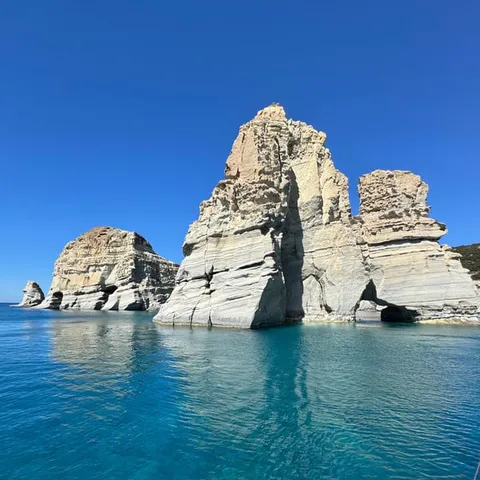
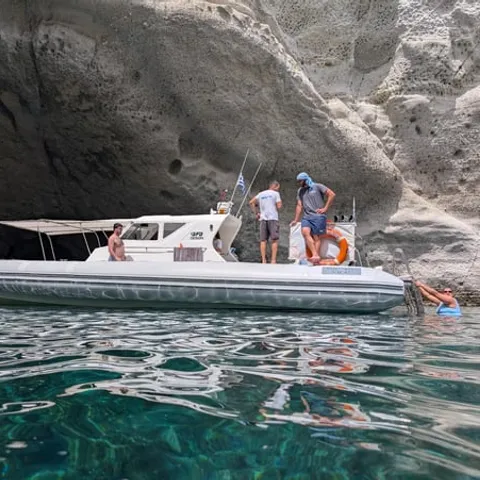
The word Kleftiko actually means "stolen" in Greek, and the name is said to come from the pirates who were stealing supplies from passing ships and hiding them in the caves and coves of the area.
Worth packing the good camera
In your camera bag
- A padded dry bag that actually closes
- A lens hood and a polarising filter for glare off the water
- Two microfibre cloths, one for the lens and one for your hands
- A small towel so the camera never sits on a wet bench
On deck
- Shoot the caves early in the day while the sun is still low
- Ask the crew before standing up or moving near the rail at a stop
- Watch your footing on wet decks, especially with a camera in your hands
- Keep a little cash for harbour coffees and a tip if you want to
Why the light at Kleftiko keeps photographers honest
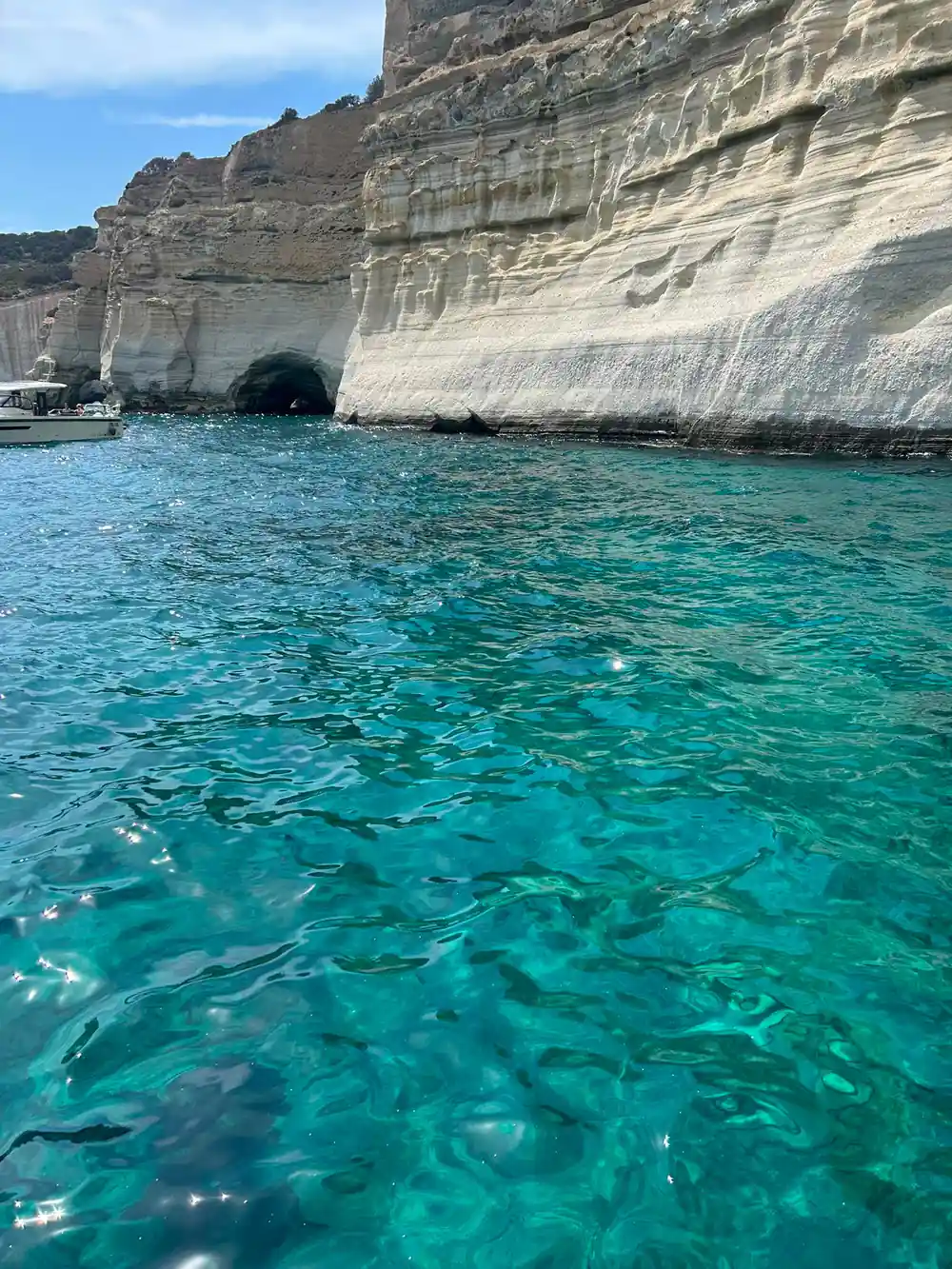
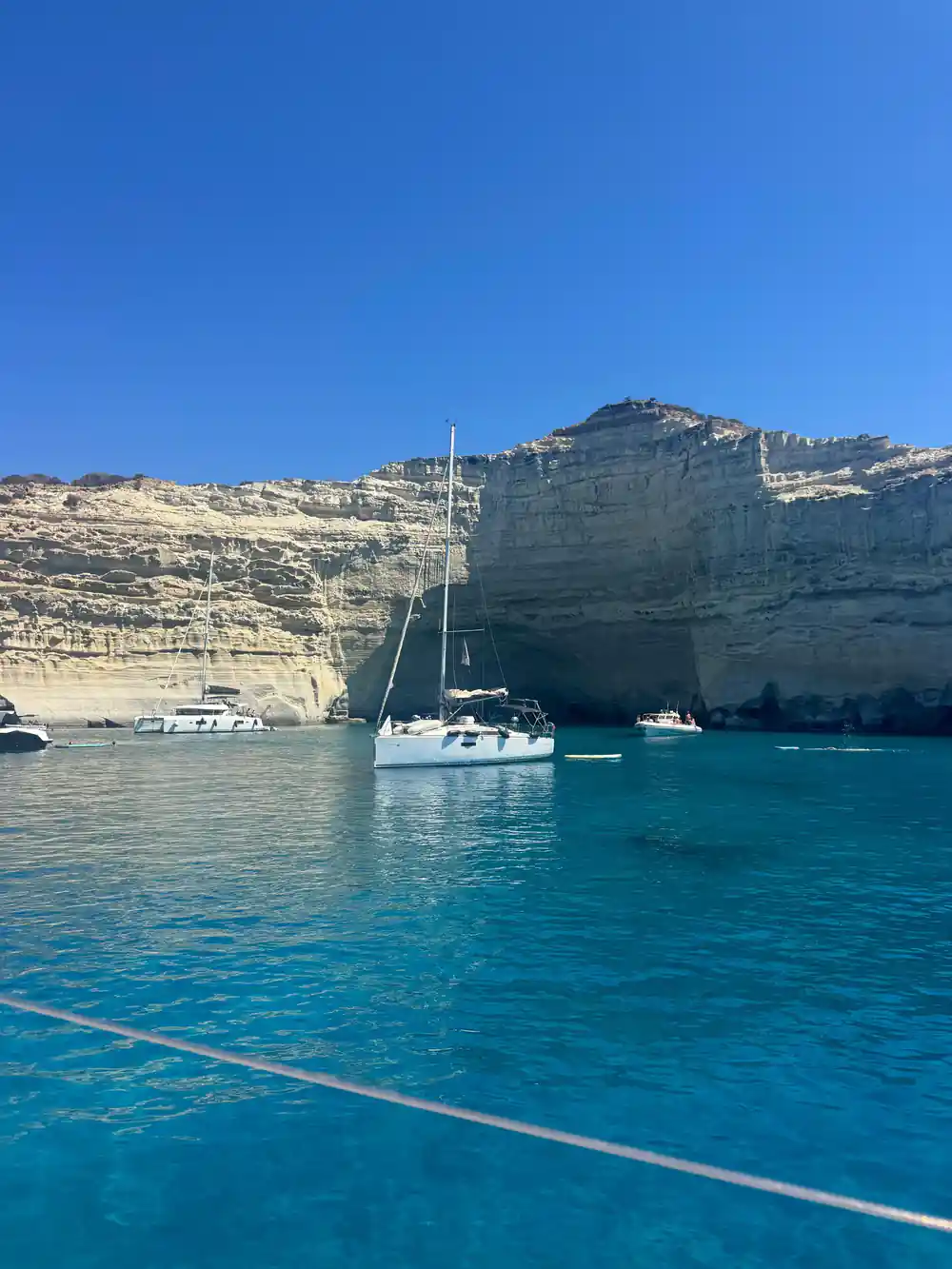
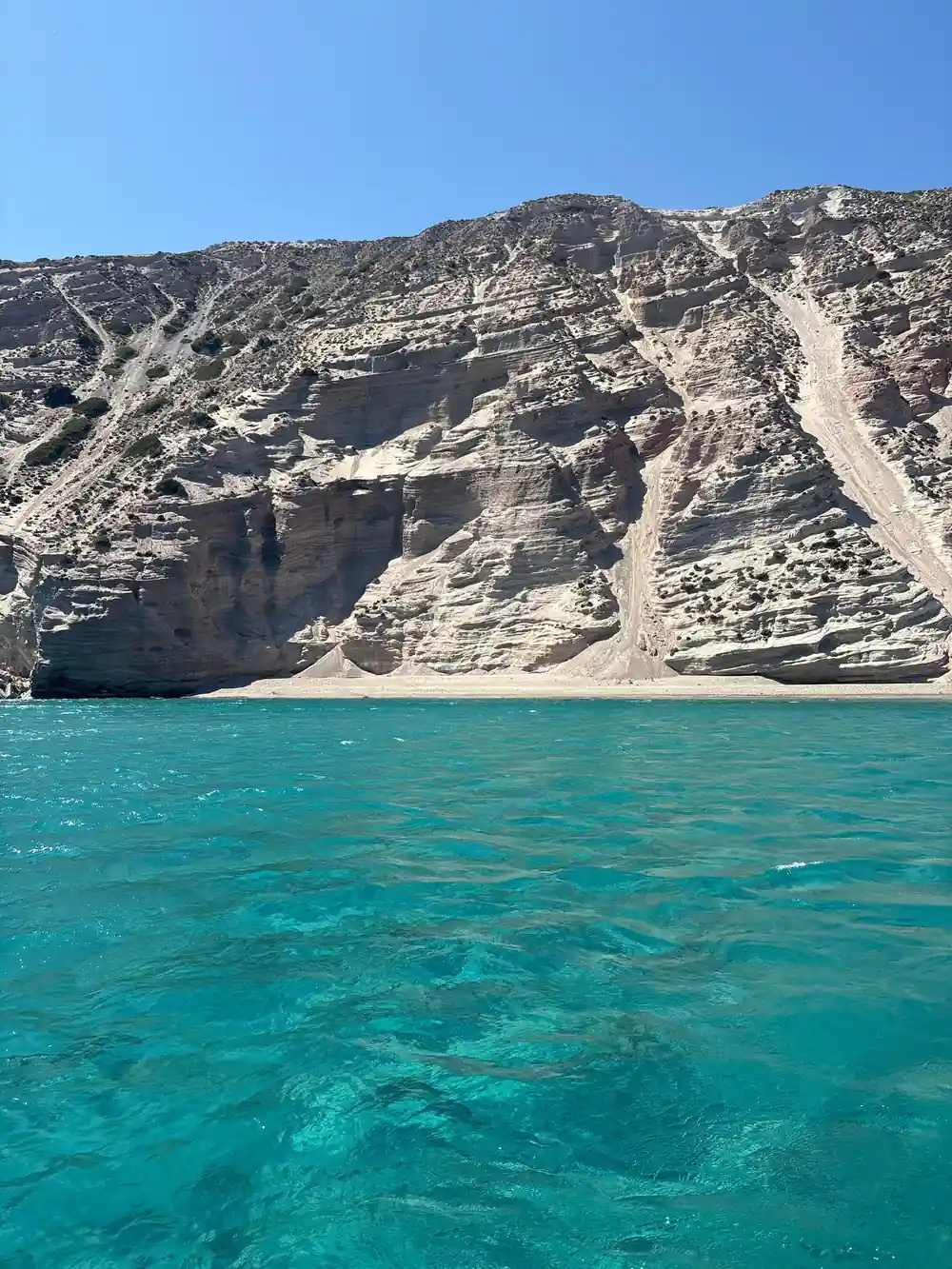
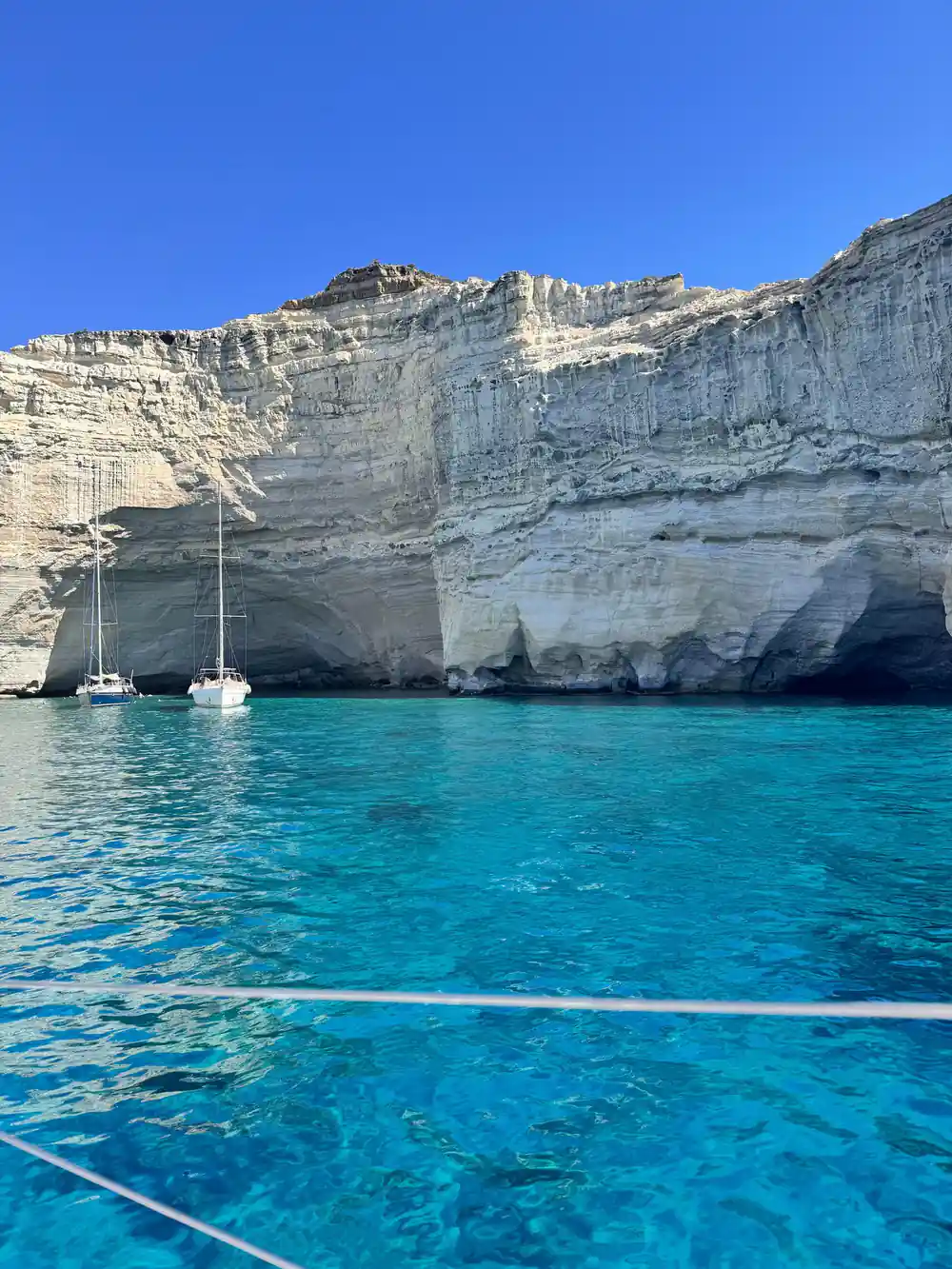
Kleftiko is a bay of pale limestone stacks, sea arches and collapsed caves on the south west coast of Milos, and almost everything in it is white or blue. That is the whole problem for a camera. In the middle of the day the stone bounces light back at you and the sea bounces it back as well, and the contrast runs away from any sensor. Cave mouths read as black holes, the sky burns out, and the colour that made you book the trip disappears. Work the edges of the day instead, and keep the sun behind you or just off your shoulder whenever you can.
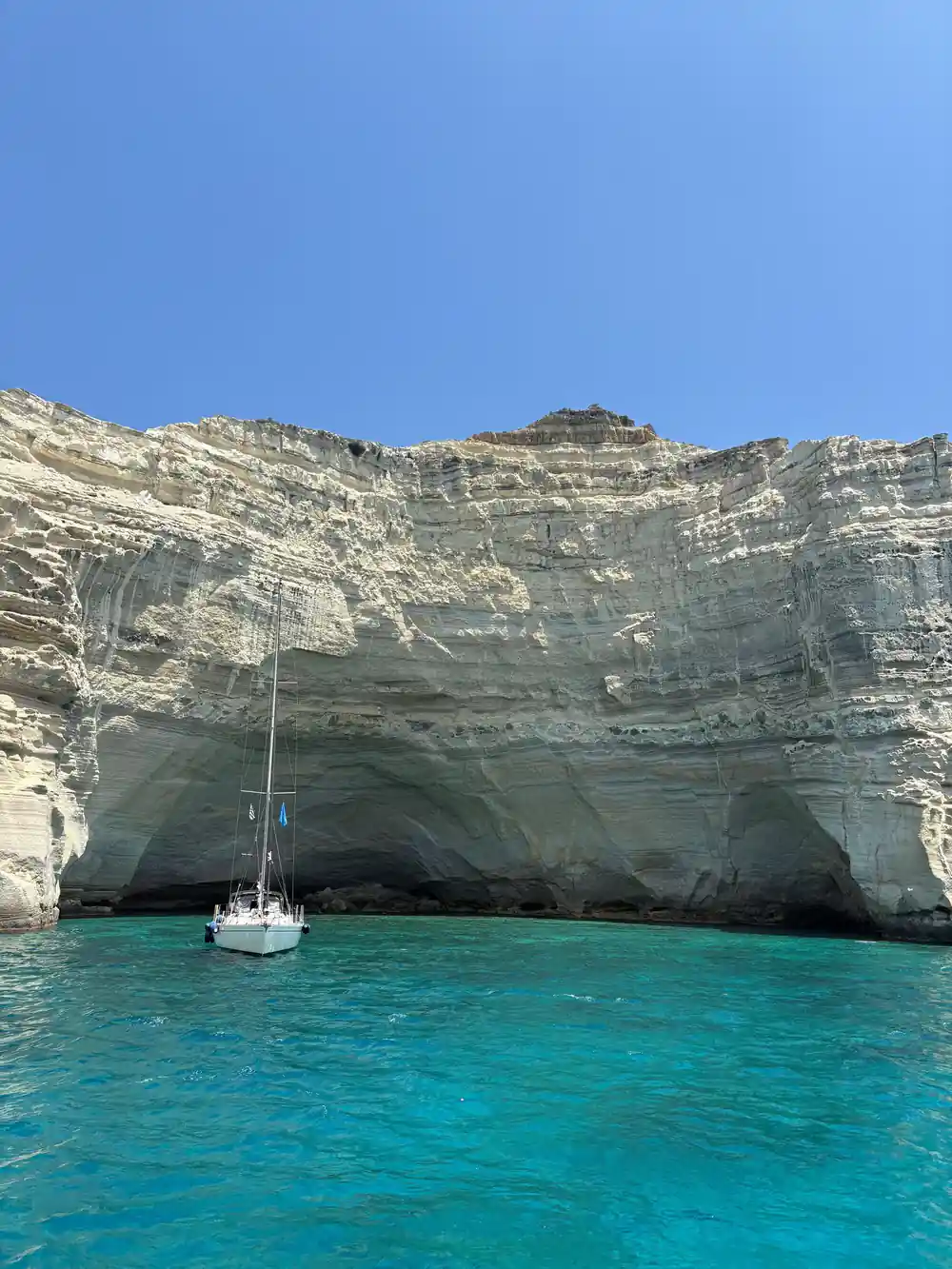
The name helps you read the place. Kleftiko has a history as a pirate hideout, and the word means stolen in Greek, a name that comes from pirates taking supplies from passing ships and hiding them in the caves and coves.[4] Those caves are still the best subject on this coast. They photograph well when a little light bounces in off the water rather than pouring straight down from the top, so look for the pale green glow where the sea meets the rock inside, and expose for that glow rather than for the bright water outside.
Shooting from a boat that never quite stops moving
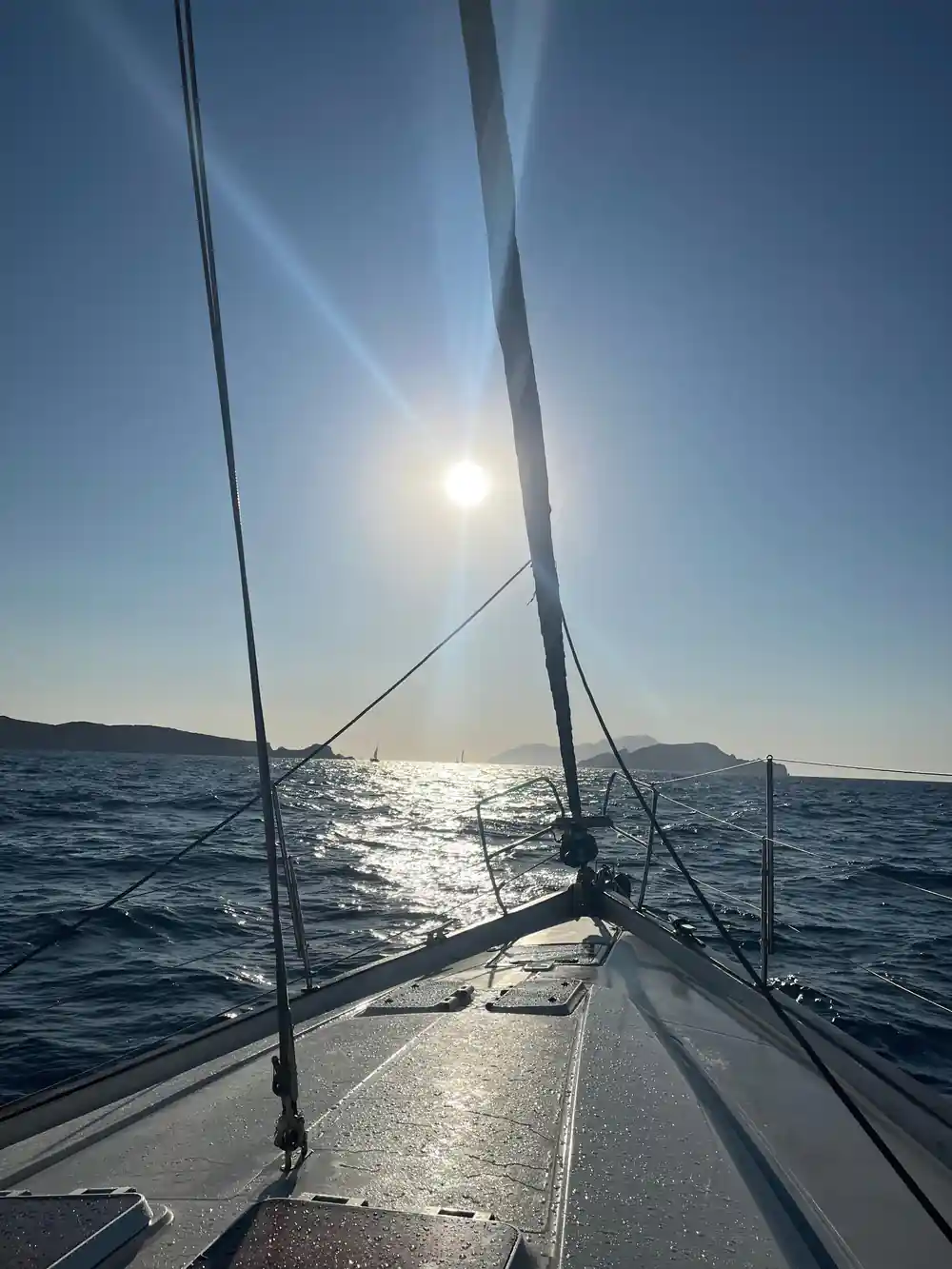
The boat is always moving, even when it feels still. A swell that barely registers on your feet is enough to soften every frame at a slow shutter speed, and the closer you are to your subject the more it shows. Keep the shutter speed high, accept a little more noise in the file, and shoot in bursts rather than single frames. Lean into something solid, a rail, a mast, the cabin roof, and let your body move with the boat instead of fighting it. Whether you are shooting from a Horizon Yachts catamaran or a small wooden kaiki, the technique is the same.
Where you stand matters more than what you carry. The bow rises and falls, the stern lifts less, and the middle of the boat stays steadiest of all. If the crew let you move around, find the place where the horizon sits level in your frame and stay there for a while. A glance at an Adamantas webcam before you leave tells you what the port and the horizon are doing this morning. Full day boat trips on this coast run somewhere between 6-8 hours and can even go up to 12 depending on the sea conditions.[5] That is a long day on the water, and the light at the last stop will be nothing like the light at the first.
White rock stacks and arches standing clear of the water, seen from the deck
The stops where the best Kleftiko Milos photos happen
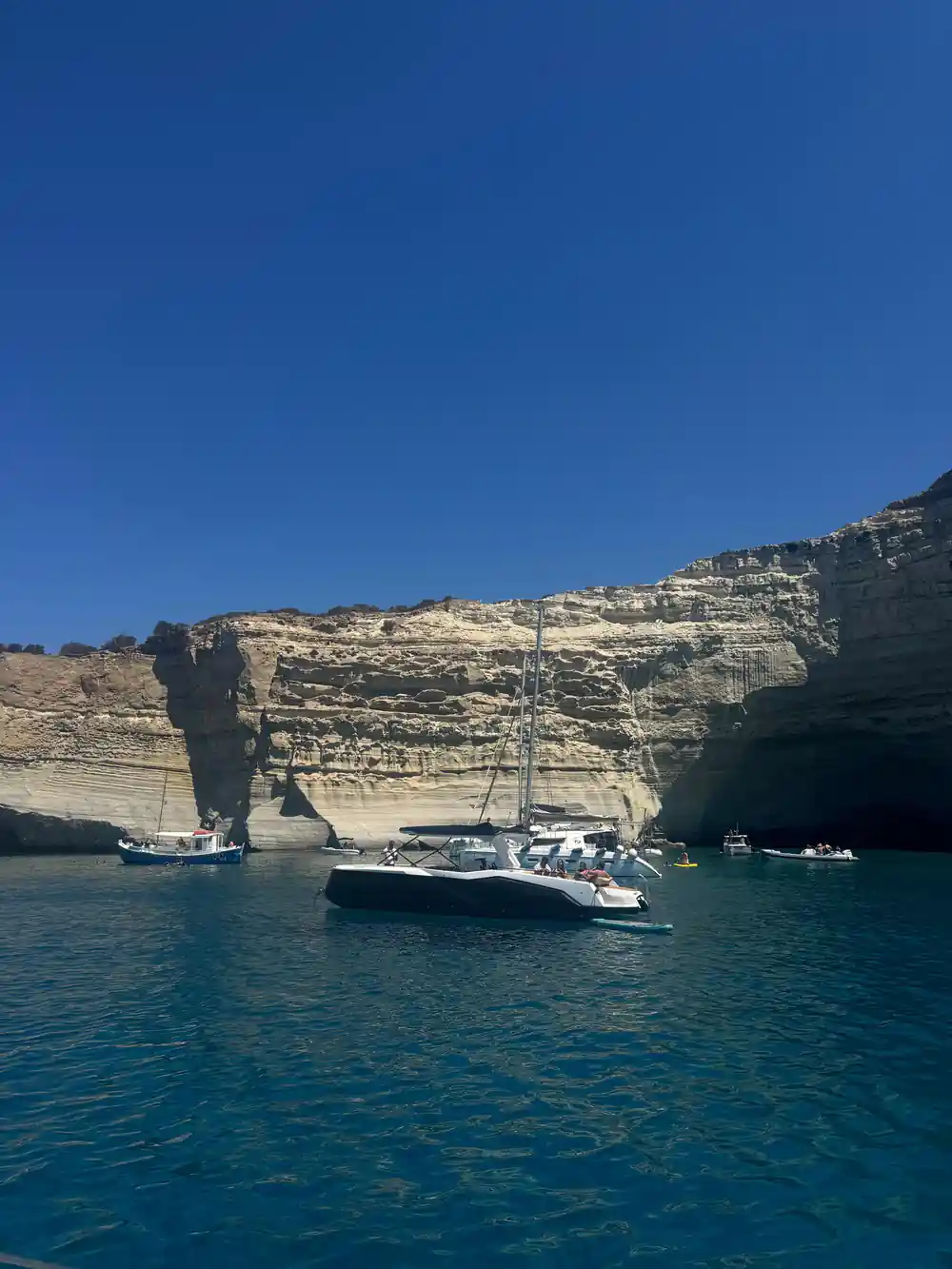
On the full day route the boat works its way around the island, calling at Klima, Arkoudes, Sarakiniko Beach, Glaronisia, Pollonia, Poliegos, Thiorichia Beach, Gerakas Beach, Kleftiko Caves, Sykia Cave and Vani Beach.[1] Not every one of those is a photo stop. Some are a slow pass while the guide talks, and others put the anchor down so people can swim. Listen for the anchor going down. That is when you can move freely around the deck and find a clean angle.
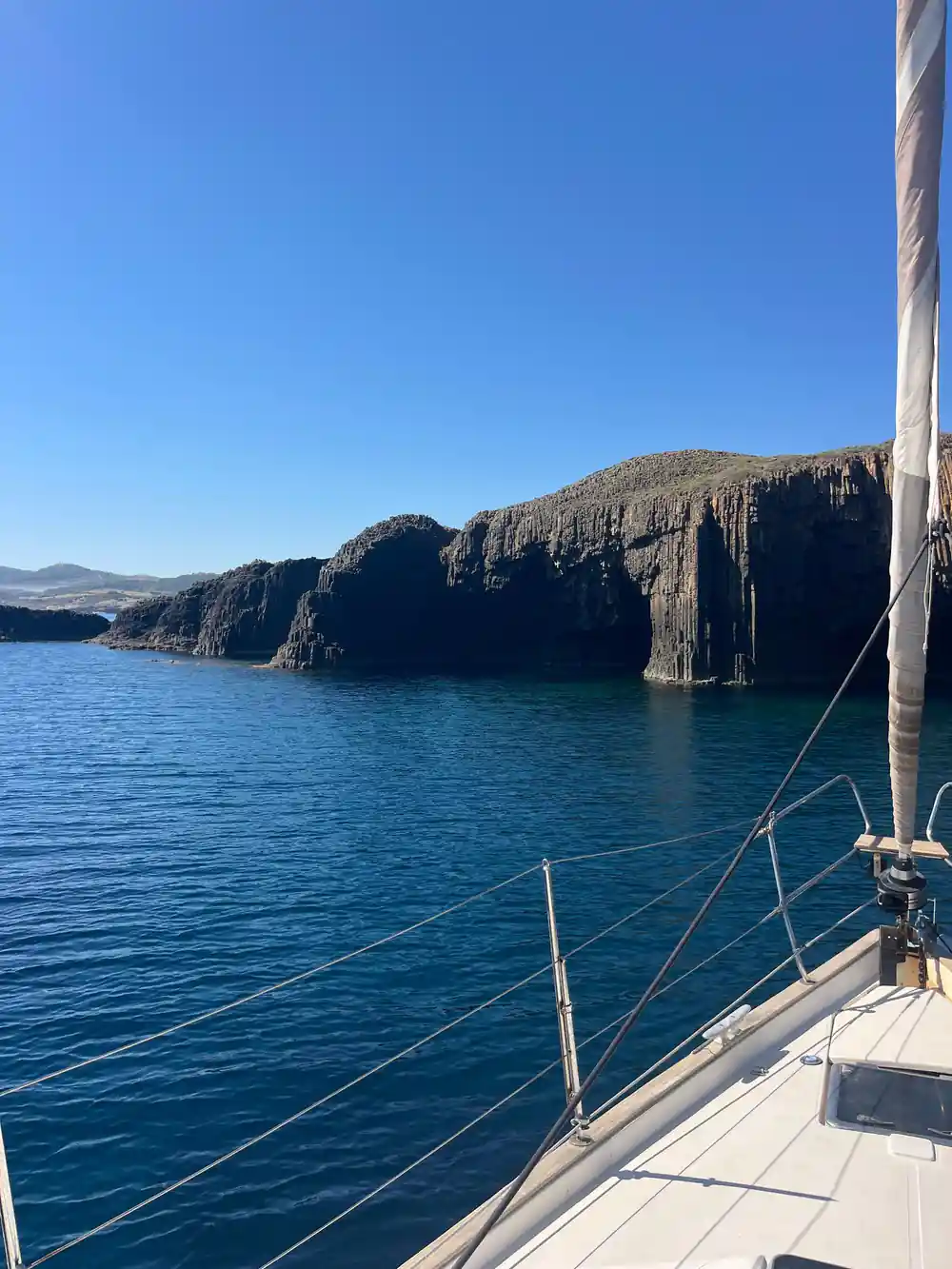
Kleftiko Caves are the headline, but the quieter stops often give the better picture. Sikia Cave was once completely covered, and its roof has since collapsed, leaving an open top that shows the blue Aegean sky,[6] and it photographs beautifully from a low angle inside the cave. Glaronisia is a group of three small uninhabited volcanic islets whose name means Seagull Islands, known for hexagonal basalt columns rising straight from the sea.[7] Columns are geometry, and geometry is the easiest thing to shoot from a rocking deck.
The Poliegos stop is worth saving card space for. Polyaigos is the Aegean Sea's biggest uninhabited island and it is only reachable by boat,[8] and an empty island means no tavernas and no roads in the background of your shot. The best Milos photos often come from these quiet stretches of coast rather than from the famous viewpoints, so keep shooting after the anchor drops and everyone else has jumped in.
Your phone will do more than you think out here
Phone cameras have become very good at exactly the scene you will meet here: bright water, white rock and a wide sky. Their software stacks frames, which steadies a shot taken from a moving deck, and it holds highlights in the sky better than a single frame from a big camera often does. Tap on the brightest part of the rock to set exposure, then pull the exposure slider down a little so the white stone keeps its texture. A slightly darker file is far easier to work with later than a blown out one.
Avoid the digital zoom. It crops the picture and magnifies the movement of the boat at the same time. Use the main lens and get closer with the boat, or crop later at home. Shoot in the highest quality your phone offers, turn on grid lines to keep the horizon level, and leave the flash alone. Underwater, a cheap pouch will do for snorkelling shots near the surface, and the summer sea here is warm enough to stay in for a long time.
from US$185
Kleftiko & Polyaigos Swimming With Meals runs 10 hours and offers free cancellation up to 24 hours in advance.[1]
Salt, spray and keeping your kit alive at sea
Salt is the quiet enemy of a boat day. It dries into a fine haze on a front element, which flattens contrast and softens every photo, and it is easy to miss until you are home. Wipe the lens with a microfibre cloth, then breathe on the glass and wipe again. A lens hood helps, and a clear filter in front of an expensive lens is cheaper to replace than the lens itself. Keep the camera in a dry bag between stops and only take it out when there is something worth shooting.
Changing lenses on deck is a bad idea. Spray and dust get in, and a dropped lens cap never comes back. If you must change, go below or wait for the anchor and find a sheltered corner. Watch out for sun cream on your fingers. It smears screens and glass, and it is hard to clean once it has dried. Keep a small towel in your bag for your hands, drop a silica sachet into the camera bag to soak up the damp, and rinse everything in fresh water at the end of the day.
Drones, the crew and the rules on board
Ask before you unpack a drone. The skipper knows the anchorage, the other boats and the swimmers, and their answer on the day is the one that counts. Launching from a moving deck is difficult anyway, and a drone that lands in the water is gone. If you do get the go ahead, fly from a still moment at anchor, keep well clear of swimmers and other boats, and keep the drone in sight the whole time. Some of these bays are busy precisely because they are beautiful.
Wind is the other thing to plan around. The Meltemi is a strong seasonal northerly wind that blows from late spring to early autumn and often peaks in July and August,[9] and it can make a small drone work hard to hold its position. On days when it is blowing, put the drone away and shoot the caves from the water instead. The same wind clears the haze and gives you crisp, deep blue pictures from deck level, so the day is rarely wasted.
Underwater shots and the rest of the sailing day
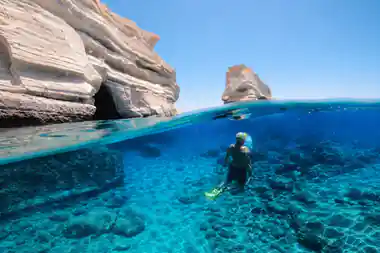
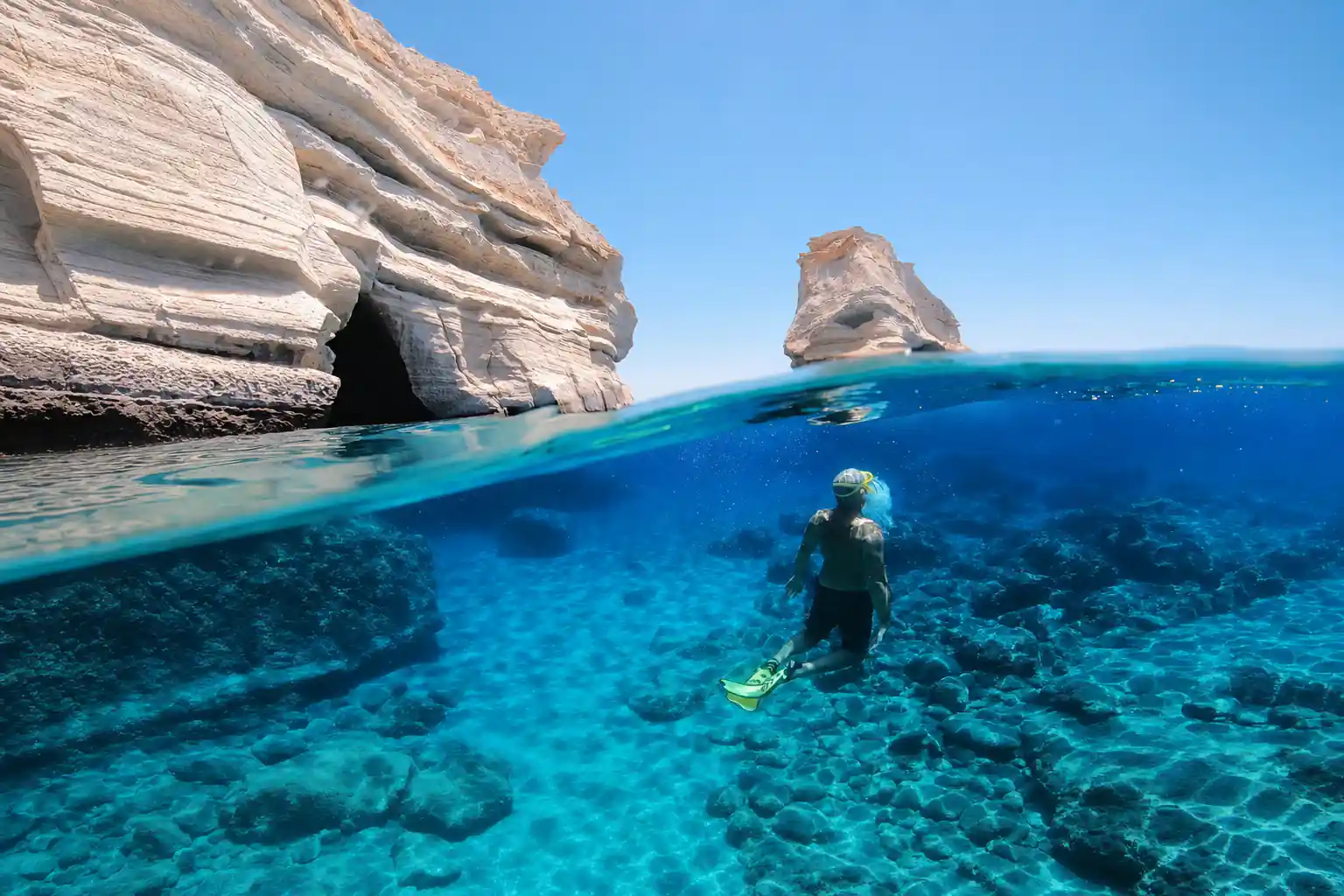
Underwater, the sea around Milos in July to September is 23-26°C (73-79°F), described as ideal temperatures for long swims and snorkeling.[10] Warm water and clear light make this the easiest place to try a split shot, with half the frame below the surface and half above. Get low, hold the camera just at the waterline, and let the white rock stacks rise out of the top of the frame. A snorkel mask and a bit of patience are all you need. Take care near the rocks when there is any swell running.
The day does not end at Kleftiko. Klima village sits approximately 5 kilometres from the port of Adamas and is known for its multi-coloured fishing houses,[11] and Sarakiniko Beach, the most well-known shore on Milos, is five kilometers from Plaka.[12] Both are stops on the full day tour,[1] and both look best in the soft hour before the boat turns for home. Boats here run through a season that lasts from May through October,[13] so there is no need to cram everything into a single trip.
How long the Kleftiko boat tours run
From-prices on the main Kleftiko day tours
From-prices per adult on the listings:[1][2][3][14]
When to book a photography day on the water
Shooting from the boat
Watch the forecast before you pack
The Meltemi blows from late spring to early autumn and often peaks in July and August.[9] A windy day changes what you can shoot.
Bag your kit the night before
Dry bag, microfibre cloths, spare battery and a clear filter. Spray is far easier to keep out than to clean off later.
Claim your spot on deck
The middle of the boat moves least and the stern lifts less than the bow. Settle there before the first stop.
Shoot the caves as you slide in
Kleftiko Caves and the collapsed roof of Sikia Cave look best from a low angle, with the boat still gliding rather than stopped.
Clean up before you go ashore
Rinse the housing in fresh water, dry the lens with a clean cloth and check the seal on any underwater case.
Shoot Kleftiko from the water on a full day boat tour
from US$185Reserve now & pay later