The main points
- Mineral activity started developing on Milos circa 8000 BC, through obsidian mining and trading.[1]
- Both beaches are stops on the full-day Kleftiko and Polyaigos boat tour, where the old sulphur and manganese workings show in the cliffs.[2]
- Boat tours around Milos start from Adamantas, which is located in the centre of the island.[3]
- Milos's sailing season runs from late spring through early autumn, specifically May through October.[4]
- The Milos Boat Tour: Kleftiko & Polyaigos Swimming With Meals is from US$185 and runs for 10 hours.[2]
- Top choice Kleftiko & Polyaigos tour from US$185 Duration10 hours[2]Reviews4.82 from 282 reviews[2]GuideEnglish[2]CancellationFree cancellation, 24 hours ahead[2] Check availability
- Kleftiko guided day cruise from US$152 Duration9.5 hours[5]Reviews4.96 from 781 reviews[5]GuideEnglish, French, Greek[5]CancellationFree cancellation, 24 hours ahead[5] See this tour
- Milos & Polyaigos sailboat from US$144 Duration10 hours[6]Reviews4.92 from 1,913 reviews[6]GuideGreek, English[6]CancellationFree cancellation, 24 hours ahead[6] See this tour
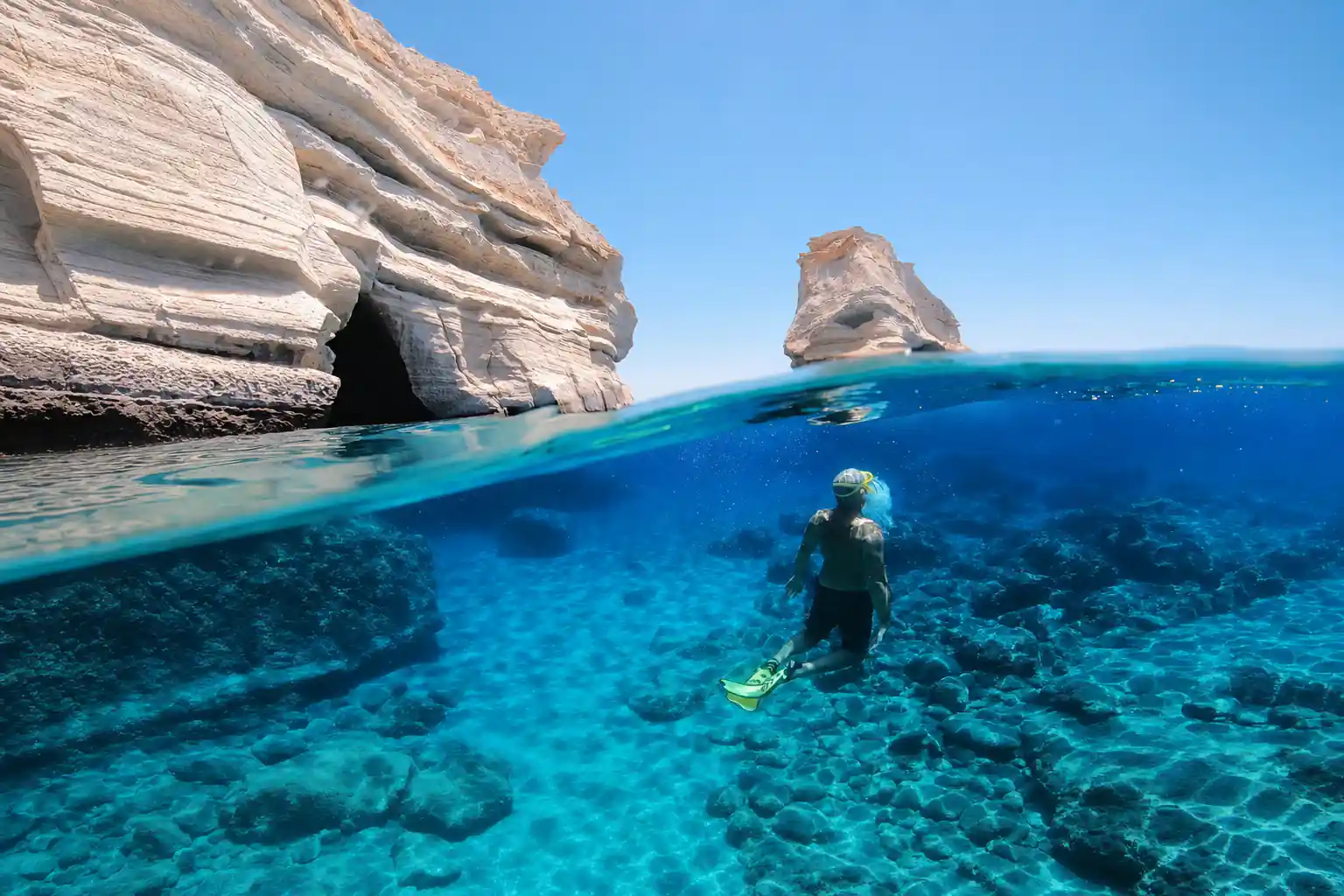
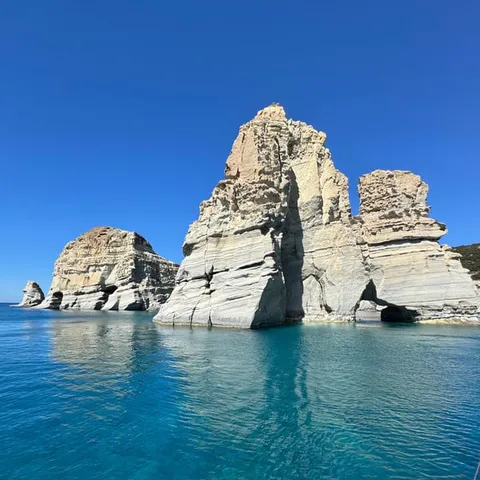
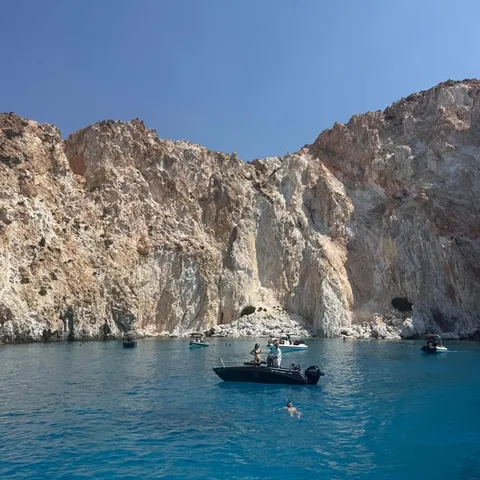
At the dawn of the Neolithic age, circa 8000 BC, mineral activity started developing on Milos thanks to obsidian mining and trading.
Is a boat day the best way to see the mineral coast?
Before you sail
- Book inside the sailing season, which runs from late spring to early autumn
- Take high-factor sunscreen, a hat and sunglasses, because there is little shade offshore
- Choose the full-day route if you want the sulphur works and the manganese coastline
- Pack a light windproof layer for the crossing and a dry bag for your phone
On the water
- Use the swim ladder and follow the crew's guidance near cliffs and caves
- Keep clear of loose rock under the overhangs while snorkelling
- Carry a little cash for drinks and tavernas once you are back ashore
- Keep your booking confirmation handy and check the meeting point at the port
An island that has always been a quarry
Milos is a volcanic island, and a boat is the best way to see it in cross-section: stacked pale ash, dark lava, ochre and rust bands, and cliffs that change colour as you move along them. People have been digging here since the Neolithic. Mineral activity started developing on Milos circa 8000 BC, through obsidian mining and trading.[1]
The stone at the centre of that early trade was obsidian, a hard, shiny black glass of volcanic origin that breaks into pieces with edges sharper than most metal blades. It was used for the making of tools and weapons.[1] From the deck you meet it as black glassy streaks and dark bands in the cliffs, or as loose lumps on a beach, and once you have learned the look you cannot unsee it.
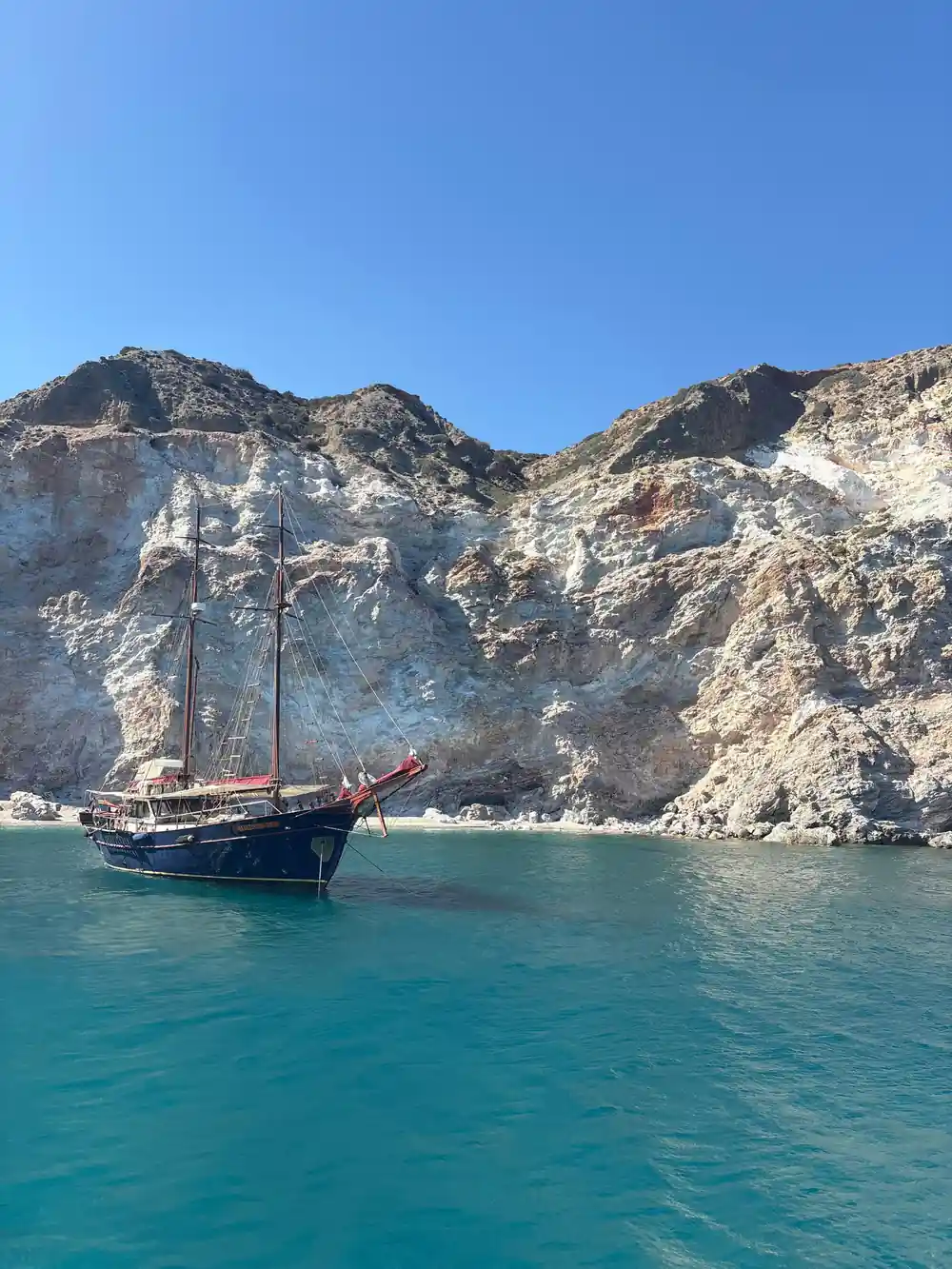
The old workings are not a single hole in the ground with a gate and a ticket desk. They are the shoreline itself: loose scree, banded rock, pale dust washing into the water, and flat benches cut into slopes where material was lifted away. From a boat you read all of that at once, in order, as the coast goes past.
Obsidian, and the oldest sea trade
Obsidian is heavy, and Milos is small. Most of the stone that left the island left by water, and the island sits roughly in the middle of the Cyclades with long sightlines to its neighbours. Long before anyone swam these coves for pleasure, this was a working coast, and the harbour was the busiest part of it.
Boat tours around Milos still start from Adamantas, in the centre of the island.[3] Walk along the quay in the evening and you will see ferries, fishing boats, catamarans and sailing yachts sharing the same stretch of harbour. It is the same water, used in the same practical way.
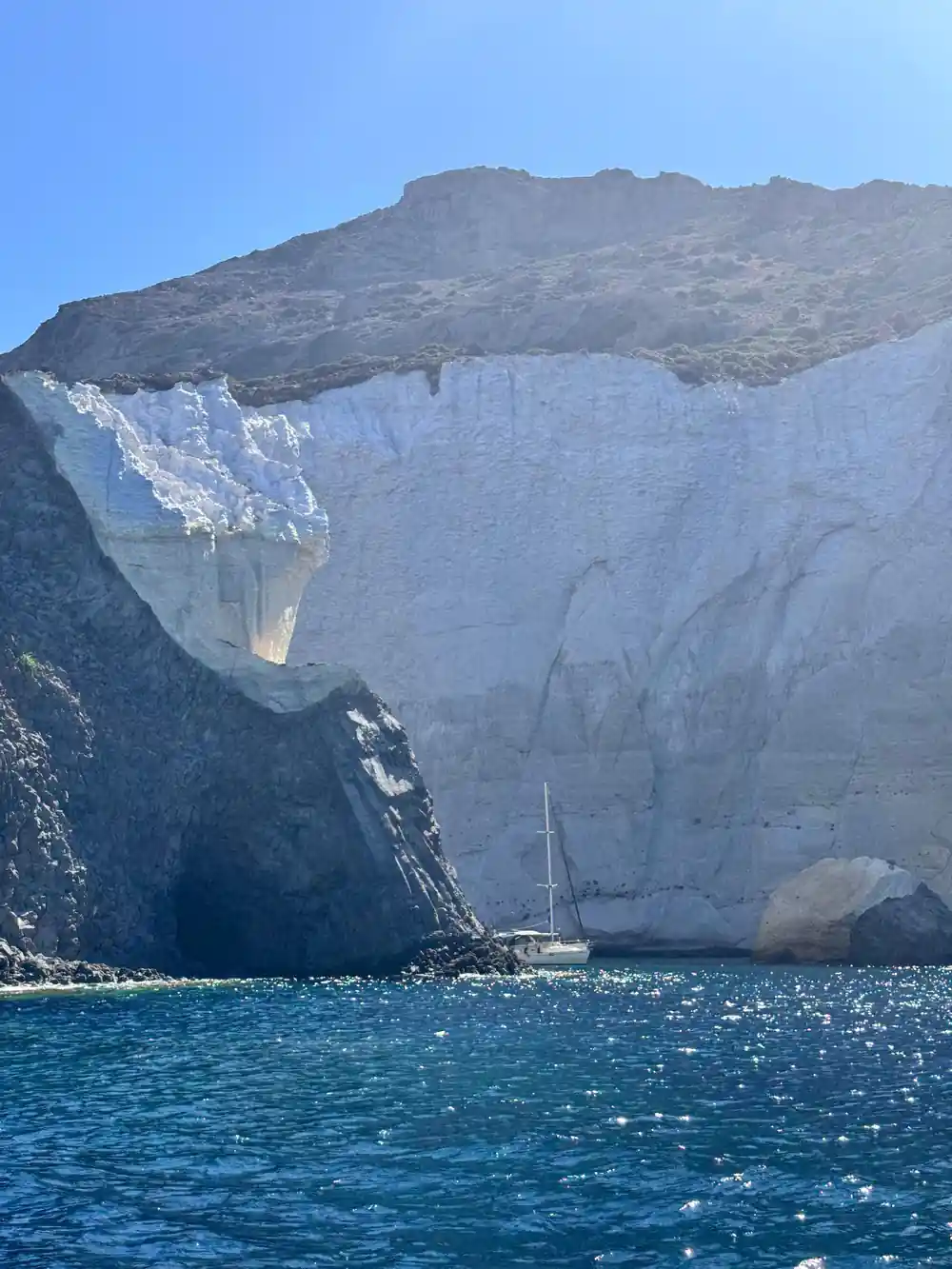
Just along the coast the rock turns white. Sarakiniko Beach, five kilometres from Plaka, is the most well-known shore on Milos, and its smooth, water-carved stone looks more like a quarry face than a beach.[7]
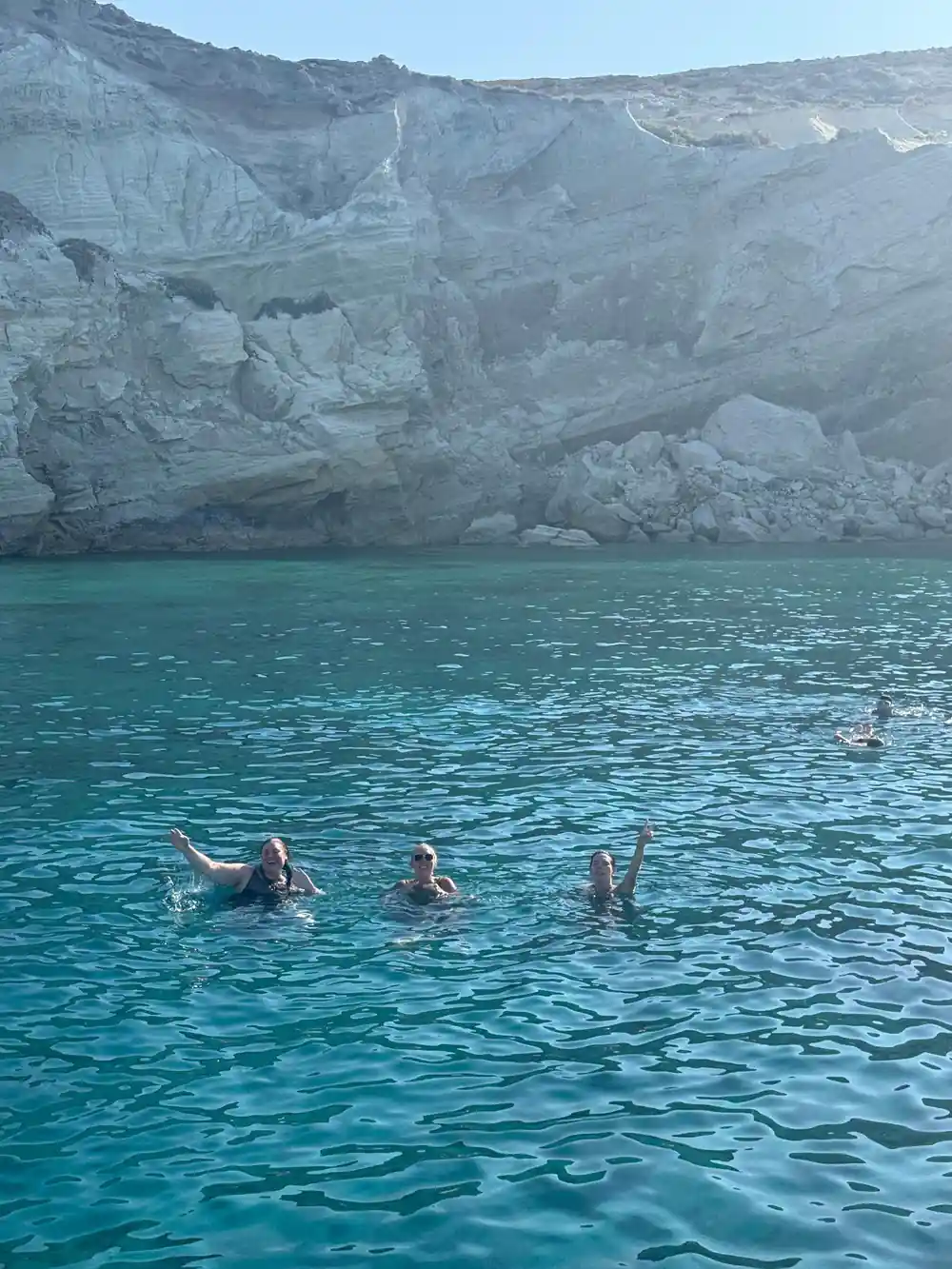
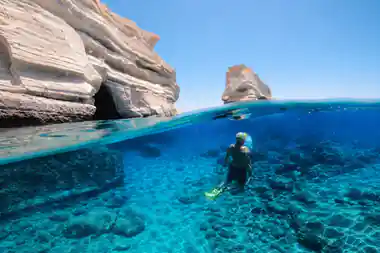
White rock stacks and clear water off the Milos coast, where the island's volcanic layers meet the sea.
The sulphur works at Thiorichia
Thiorichia Beach is one of the stops on the full-day Milos boat tour to Kleftiko and Polyaigos.[2] It is the stop where the island's industrial past is easiest to see: a pale, sulphur-stained slope running down to the water, low concrete walls, and rusted metalwork still standing among the ruins.
Sulphur paints this place in yellows and greys. The beach has the flat, worked look of somewhere material was moved and loaded, and the old buildings sit close enough to the sand that a swim stop and a look at the workings happen in the same visit. Snorkelling over the shallows here, you are floating above the same minerals that were dug out of the slope above you.
From the water the whole arrangement makes sense: the incline, the loading point, the dark volcanic rock behind it and the shallow shelf in front. On foot you would only ever see one wall at a time, and much of the reward of the stop is the view back at the cliff from open water.
Manganese at Vani
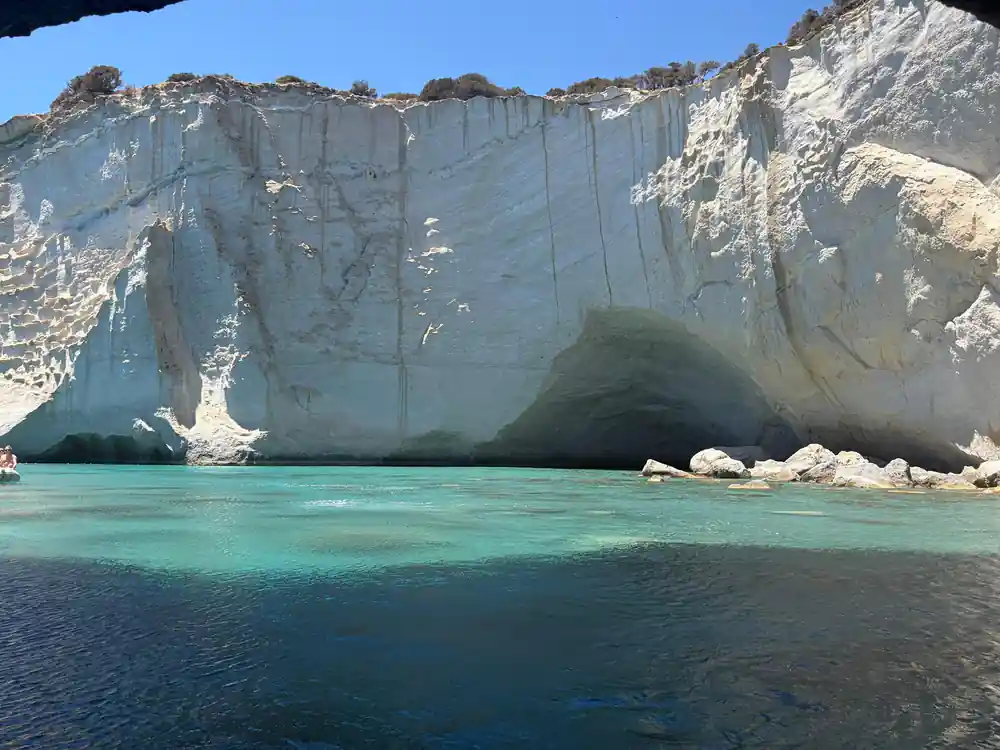
Vani Beach also appears among the stops on the full-day Kleftiko and Polyaigos boat tour.[2] Here the colour is different again: dark, metallic-looking crusts and black streaks running through pale rock, the kind of staining manganese leaves behind in volcanic ground.
Manganese is not a glamorous mineral. It turns up as soot-black patches on a cliff face, thin veins in a boulder, or a dark sheen on stone that the sea has polished. Once you know the look, you start spotting it along the west and north coast, and the cliffs stop being one grey wall and become a stack of different materials laid on top of each other.
This is the part of the coast where a skipper's commentary earns its keep, because the interesting things are small: a seam, a stain, a change in grain. From a moving boat you see the pattern, and the detail arrives when the boat stops for a swim and you can float over the rock with a mask on.
from US$185
The Milos Boat Tour: Kleftiko & Polyaigos Swimming With Meals is from US$185 and runs for 10 hours with a live English-speaking guide.[2]
What is mined today
Obsidian was the beginning, not the end. Milos has been dug, blasted, crushed and shipped for a very long time, and the modern trade is in pale industrial minerals rather than black glass. Bentonite and perlite leave the island by ship, and the loading areas, stockpiles and white dust are all part of the harbour landscape.
Seen from the sea, the island still reads as a working Milos quarry: pale benches cut into hillsides, machinery close to the water, ships waiting offshore, and a haze of white dust above the road out of the port. It is not a museum landscape. It is a place where the ground itself is the product, and the scale of that is far clearer from offshore than from a car window.
The same mineral ground gives you the coast you came for. Soft ash and pumice wear away into caves, arches and stacks, while harder lava and basalt survive as ribs, headlands and the dark platforms that make good swimming stops. A quarry and a cove are the same geology with different amounts of time applied to them.
Why you can see it from the boat and not the road
Much of this coast has no road behind it, and the mineral seams, old workings, caves and stacked cliffs sit on slopes that only open to the sea. A boat day puts the whole section in front of you in order. If you would rather cover part of the same ground more slowly, a kayaking tour starts from a kiosk at Fyriplaka beach and paddles east along the volcanic coastline to Tsigrado and Gerakas beach.[8]
Kleftiko itself does not require a boat. Most visitors arrive by sea, but it is also possible to hike there on your own.[9] The inland approach is a long walk in open country, and the reward at the end is the same white rock, arches and turquoise water that everyone else is swimming in.
Full-day boat trips range from 6-8 hours long and can even go up to 12 depending on sea conditions.[10] Plan the day around that rather than around a fixed lunch booking, and keep the evening free. The Meltemi is a strong seasonal northerly wind from late spring to early autumn that often peaks in July and August; in the right conditions it creates an ideal sailing breeze for experienced crews.[11]
How this explains the coast
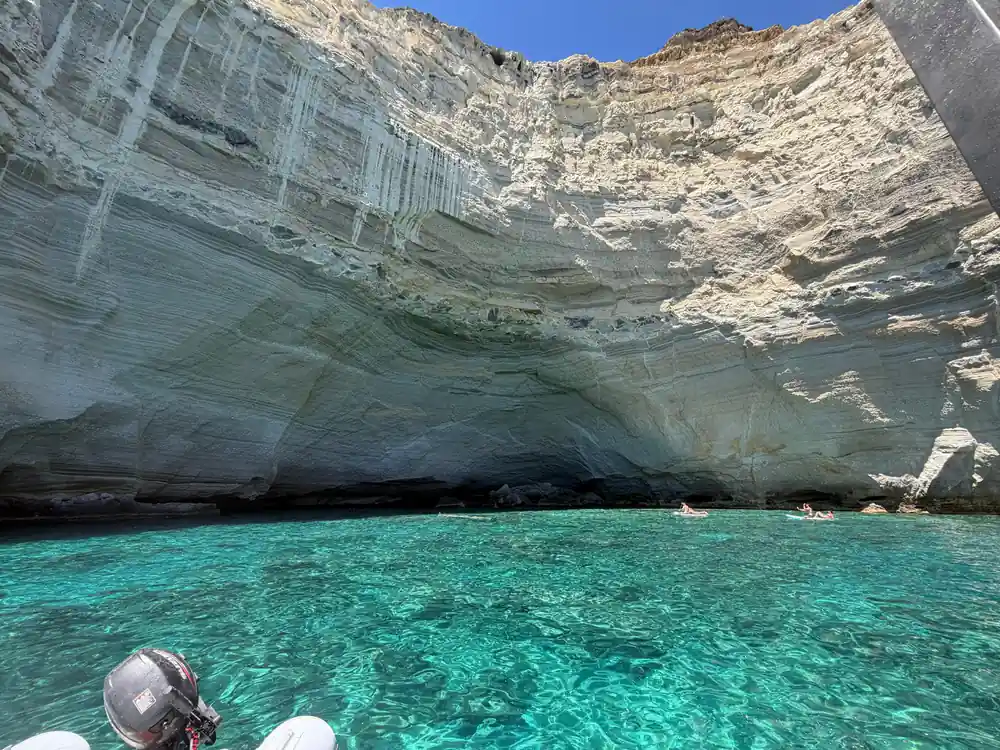
Everything you swim past is a version of the same story. Sikia Cave was once completely covered; at some point its roof collapsed and left an open top showing the blue Aegean sky.[12] Glaronisia, off the north coast, is a group of three small uninhabited volcanic islets whose name means Seagull Islands and which are famous for hexagonal basalt columns rising straight from the sea.[13] Further out, Polyaigos is the Aegean Sea's biggest uninhabited island.[14]
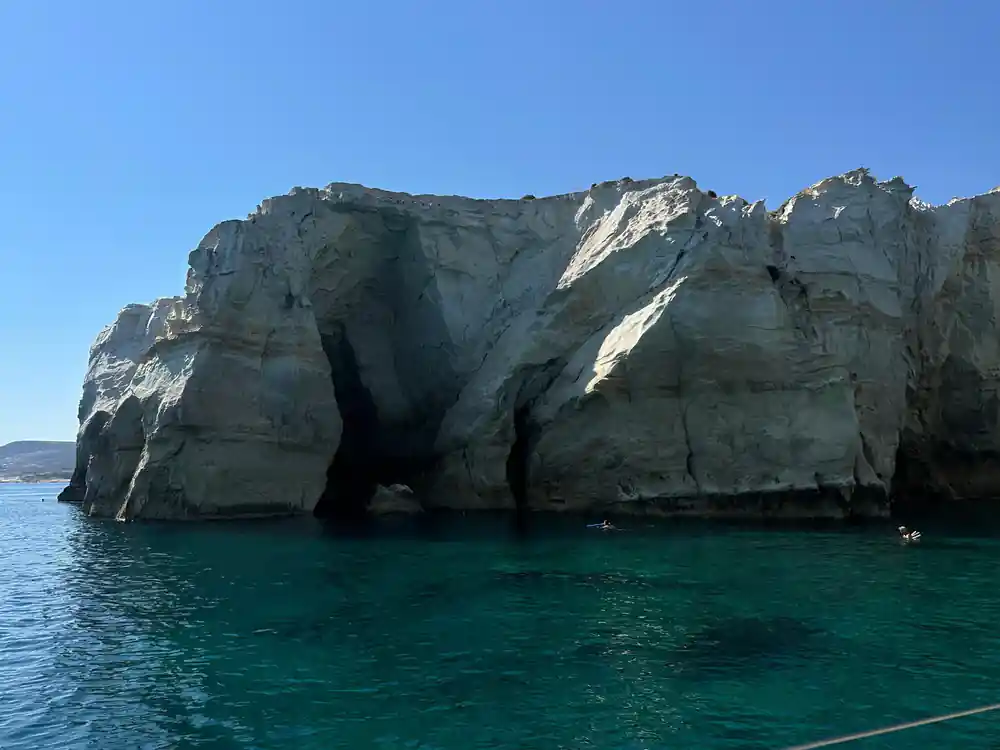
Kleftiko's name and its shape belong together. The word means 'stolen' in Greek, and the name is said to come from the pirates who stole supplies from passing ships and hid them in the caves and coves of the area.[15] The arches, tunnels and sheltered pools that make it a fine swim stop are the same features that once made it a fine hiding place.
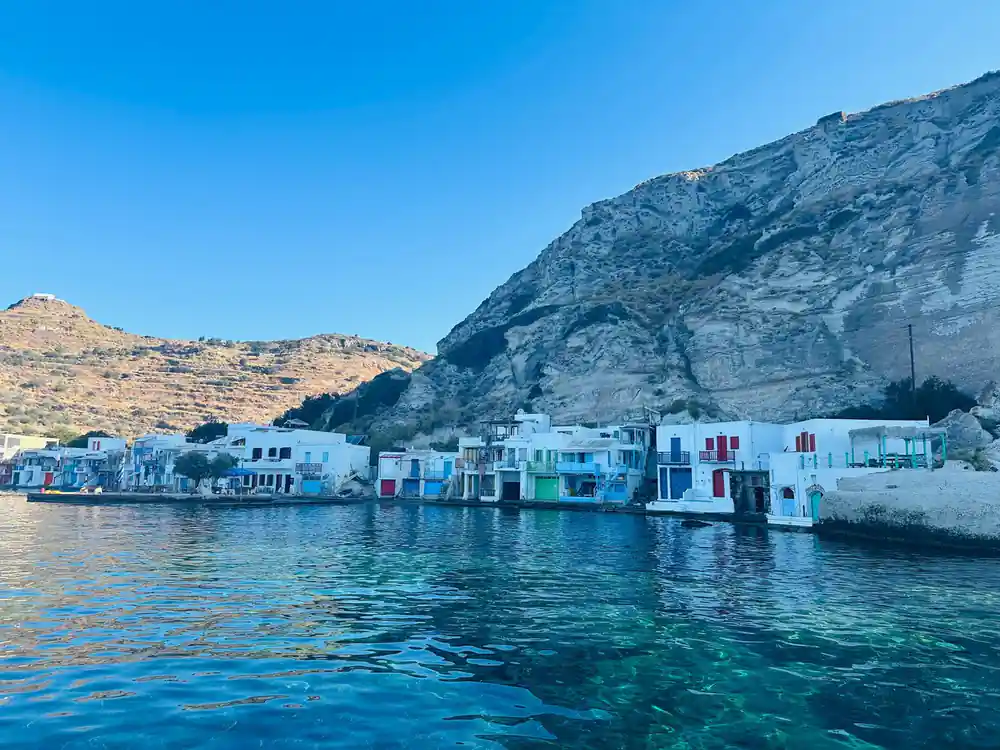
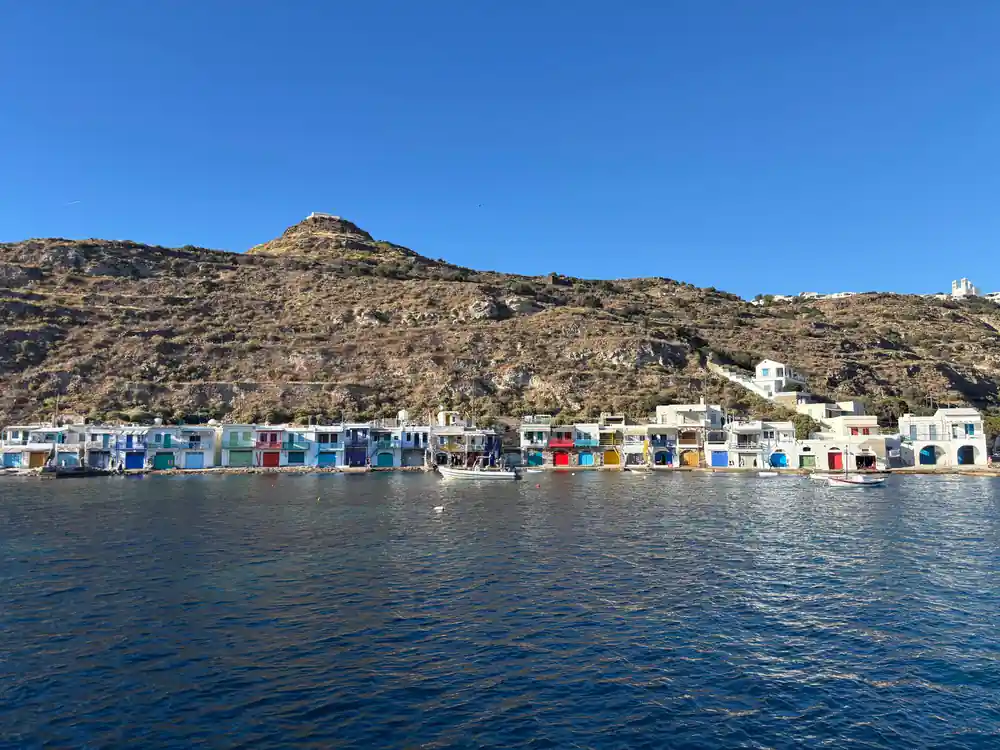
Inland the island keeps a second set of stories. Milos catacombs, Milos sanctuary sites and the Milos fishing village of Klima sit away from the mineral coast, and Klima's multi-coloured fishing houses are approximately 5 kilometres from the port of Adamas.[16] The Catacombs of Milos appears among the stops on the Milos Sightseeing Sailboat Cruise.[17] A day on the water and a day inland make a good pair.
How long the Milos boat tours run
Durations in hours on GetYourGuide: Kleftiko & Polyaigos[2], Kleftiko day cruise[5], Milos & Polyaigos sailboat[6], Kleftiko speedboat[18], Semi-Private Kleftiko sail[19]
From-prices for boat days on the mineral coast
From-prices in US dollars, as listed on these GetYourGuide tours[2][6][18][20].
When to book a Milos boat tour
Planning the mineral coast
Pick your day length
Full-day boat trips range from 6-8 hours long and can go up to 12 depending on sea conditions.[10]
Book the full-day route
The Milos Boat Tour to Kleftiko and Polyaigos runs for 10 hours with a live English-speaking guide.[2]
Travel in season
The sailing season runs from late spring through early autumn, specifically May through October.[4]
Pack for wind and sun
Light layers, a hat, high-factor sunscreen and a rash vest for the swim stops will cover most of a day offshore.
Watch the cliffs
Look for black glassy streaks, yellow sulphur staining and dark manganese patches on the rock as the boat moves along the coast.
See the obsidian coast from the water on a Kleftiko and Polyaigos boat day
from US$185Reserve now & pay later